
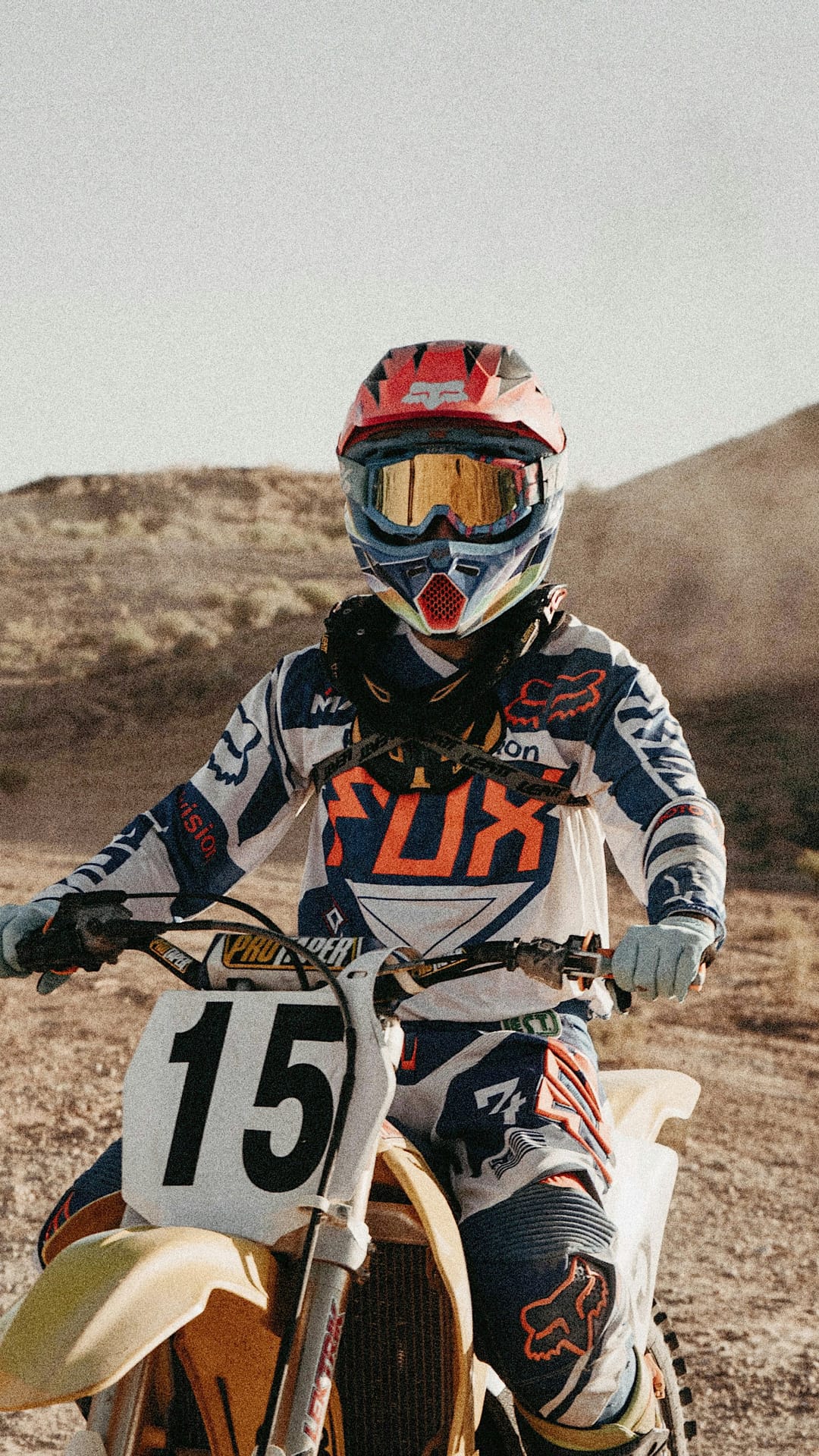
Chase Hollow: The Kid from the Dirt Roads Who's Rewriting Motocross History
There's a certain kind of quiet confidence that only comes from years of eating roost on backwoods tracks before anyone knew your name. Chase Hollow has that look. At 24, he's already three seasons into his 450 class career, sitting second in the overall standings, just 14 points behind series leader Damon Pruett.
Growing Up on Two Wheels
Chase Hollow was born in Selma, Alabama, the youngest of three boys in a household where Saturday meant the track, not the couch.
"My dad raced amateur his whole life," he says, wiping the dust from his goggles. "Never went pro, but he was fast. I grew up watching him and thinking — I want that. Not the trophies, just that feeling of being totally locked in."
By the time he was eight, Chase was racing 50cc. By twelve, he was already beating kids four years older on the local amateur circuit.
The Hard Years
His first two pro seasons were defined by crashes and bad luck. A broken collarbone in 2023 cost him six rounds. An engine failure at Southwick in 2024 — while he was leading — still stings.
"You find out who you are in those moments. That's when character gets built. I think I needed all of it."
The Riding Style
Ask anyone in the pits about Hollow and the same word comes up: smooth. He's not a holeshot guy, but once he's in a rhythm, he's nearly impossible to rattle.
"The track tells you where the speed is," he says. "A lot of guys ride with their ego. I'd rather adapt."
Eyes on the Championship
With four rounds left, Hollow stays focused on the process, not the points.
"The year I was most obsessed with the standings was the year I rode the worst. Now I just focus on the next moto."
Chase Hollow is no longer a name to watch — he's a name to reckon with.
Quick Fire
Favorite track? Unadilla. "It rewards smart riding."
Pre-race ritual? "Walk the track twice. Headphones in, no talking."
Biggest influence? "My dad, honestly. Still."
If not motocross? "Probably something outdoors. Can't sit still."
Advice for young riders? "Ride more, talk less. The bike doesn't lie."
Chase Hollow races for Saber KTM Motorsports. Follow his season at the official AMA Pro Motocross website.
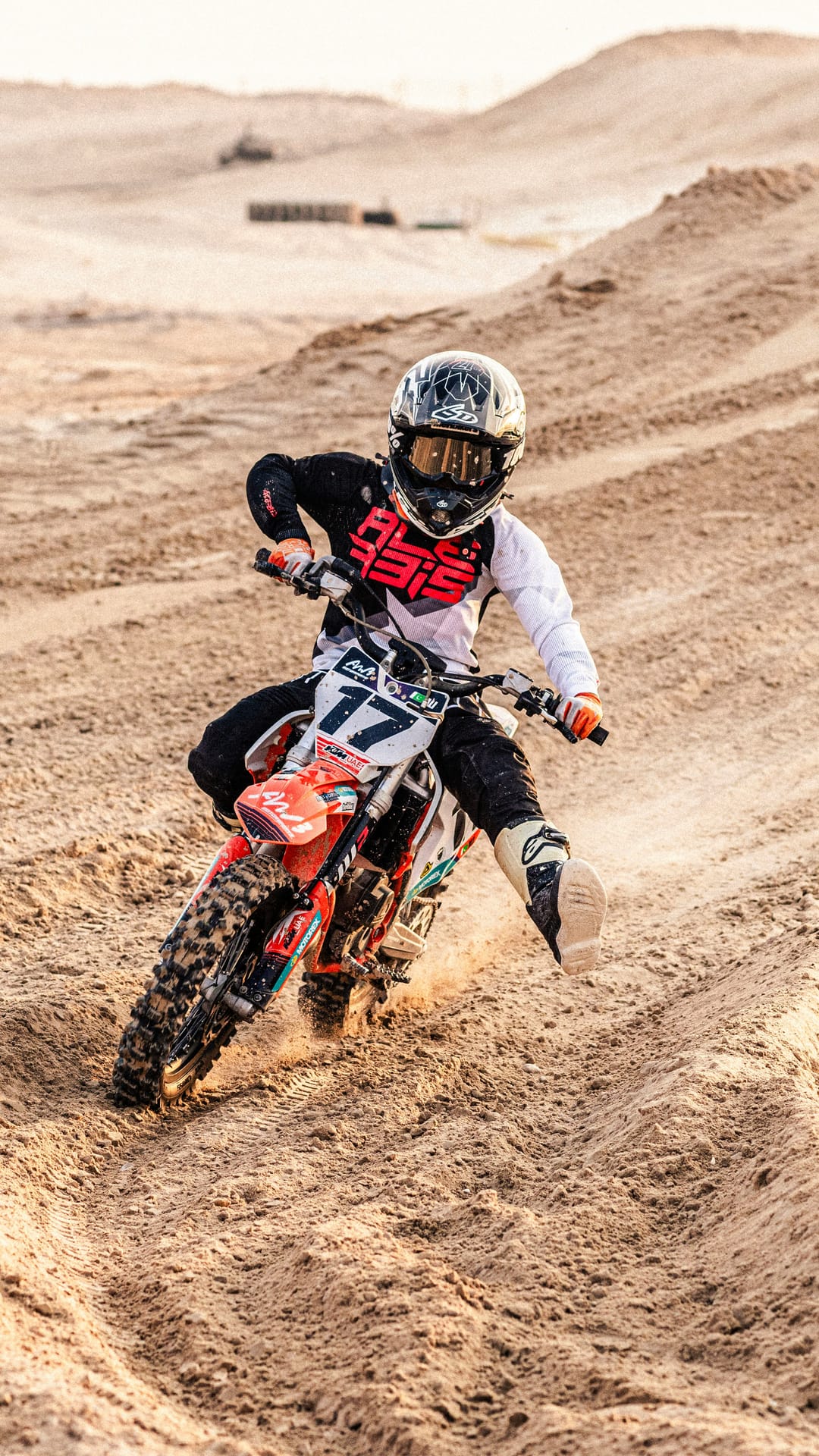
Controlled Chaos: Pruett Dominates Castillo National as Hollow Fights Back in Moto Two
DESERT HILLS, NV — The RedBull Castillo National delivered everything a motocross fan could ask for: a brutal track, scorching heat, and a points battle that just got a whole lot more interesting.
When the gate dropped on Sunday afternoon at Desert Hills Motorsports Park, Damon Pruett looked every bit the championship leader he is. But by the time the checkered flag flew on Moto Two, Chase Hollow had reminded the entire paddock why nobody is counting him out.
Moto One: Pruett's Show
From the moment the first gate dropped, Moto One belonged to Pruett. The Yamaha factory rider grabbed the holeshot cleanly, slotted into a smooth rhythm through the opening rhythm section, and never looked back.
Behind him, the opening laps were messy. Tyler Voss tangled with Jake Merin through the off-camber section at the bottom of the hill, sending Merin wide and dropping him outside the top ten. Hollow, meanwhile, came through the first turn in sixth and immediately set about picking his way forward.
By lap five, Hollow was up to fourth. By lap nine, he was third — but Pruett was already nearly eight seconds clear. The gap only grew from there.
Pruett took Moto One by 11.4 seconds over rookie sensation Luis Ferreira, with Hollow rounding out the podium in third. It was clinical, efficient, and a little demoralizing for the rest of the field.
"I just clicked into a zone early," Pruett said post-race. "The track was rough but I found some lines nobody else was using in that far rhythm. Once I had the gap I just managed it."
Moto Two: A Different Story
If Moto One was a coronation, Moto Two was a fight.
Hollow launched off the gate with more aggression than he'd shown all day, threading through the first turn chaos to slot into second behind Voss. Pruett, uncharacteristically, came through in fifth after getting boxed out at the start.
The crowd sensed it immediately.
Hollow dispatched Voss with a clean inside move on lap three and pulled away at a pace that drew audible reactions from the crowd. Back in the pack, Pruett was working — methodically, surgically — moving through Ferreira, then Merin, then Voss in quick succession.
By the halfway point, it was Hollow leading, Pruett in second, a gap of 4.2 seconds between them.
What followed was one of the best stretches of racing the 2026 season has produced. Pruett chipped away — a tenth here, two tenths there — while Hollow responded by opening up his lines and pushing harder than his usual conservative style allows.
Pruett closed to within 1.8 seconds with three laps to go.
He never got closer.
Hollow crossed the line 2.1 seconds ahead, arms up, letting the moment land. The Moto Two win was his first of the season.
"I needed that," Hollow said, voice still raw from the effort. "Not for the points. Just to know I could do it when it mattered."
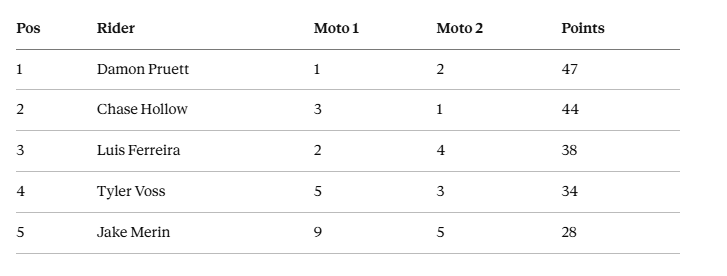
Overall Results
With Pruett taking Moto One and Hollow taking Moto Two, the overall went to Pruett on a tiebreaker — his third overall win in four rounds. But the points gap, which stood at 19 heading into the weekend, now sits at 14.
450 Class Overall — Castillo National
Track Conditions & Notes
Desert Hills lived up to its reputation as one of the roughest tracks on the circuit. By Moto Two, the inside line through the triple section had deteriorated into a series of sharp braking bumps that caught several riders off guard. Soil temperatures exceeded 104°F at gate time, with heat shimmer visible off the starting straight.
Three riders did not finish Moto Two due to mechanical issues, including points contender Ryan Ashby, who now falls 31 points back after a DNF.
What's Next
The series heads to Millbrook, Ohio in two weeks for Round Five. Historically a track that rewards technical riding over raw aggression — which should suit Hollow just fine.
Full results and championship standings available at the official AMA Pro Motocross website.
The Ladder Out of the Trench: What War Costs and Who Pays It
The Ladder Out of the Trench: What War Costs and Who Pays It
By Staff Writer | June 3, 2026 | Opinion
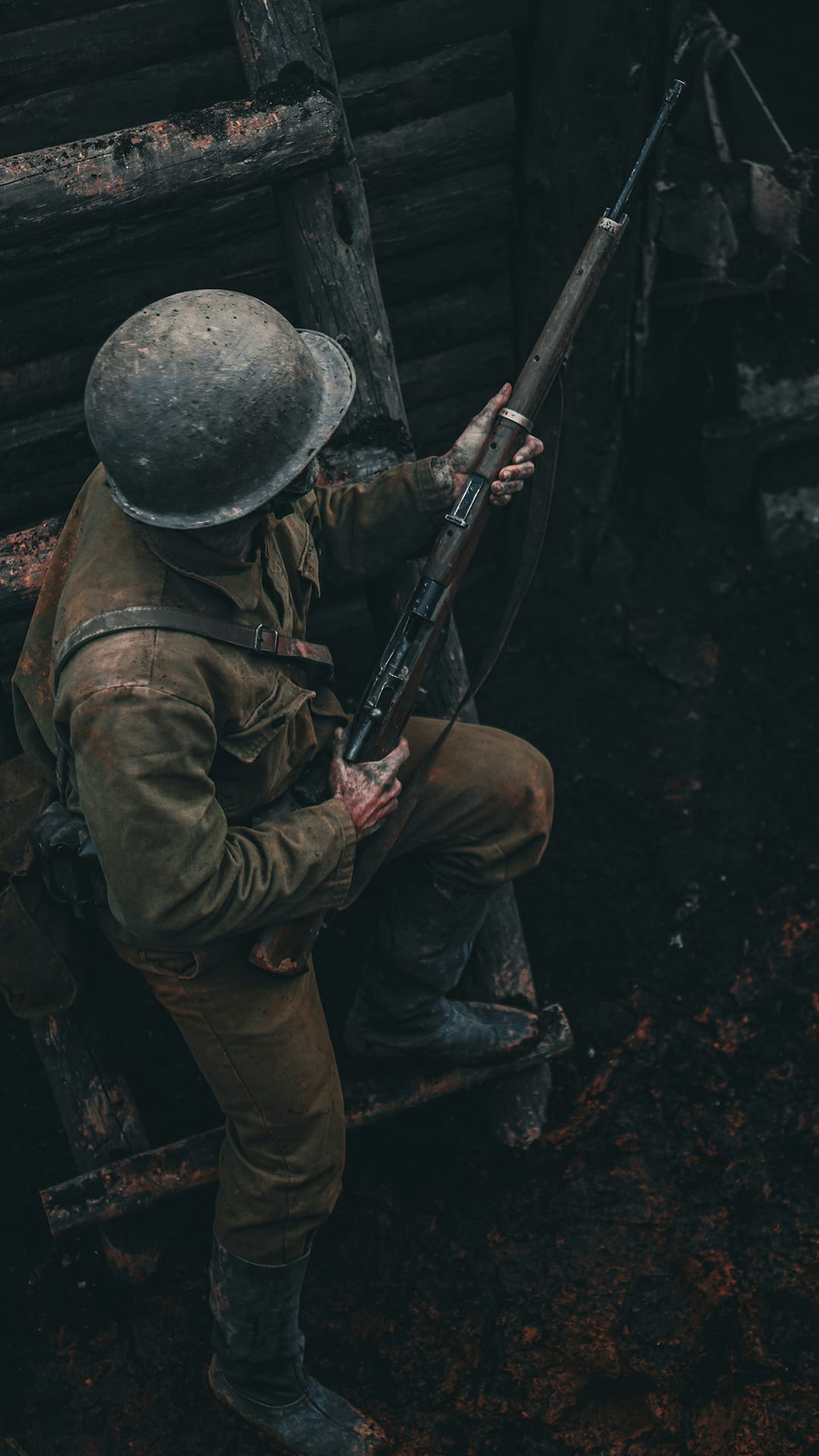
Look at the photograph long enough and you stop seeing a soldier.
You see a person. Someone's son. Someone who, a few years earlier, had a name that people called casually — across a dinner table, from the bottom of a staircase, in the easy way that names get used when there's no urgency to them. Now he's in a trench, rifle in hand, climbing toward something that may kill him. The mud on his uniform has been there long enough to dry. He is not panicking. That, somehow, is the most disturbing part.
He has gotten used to this.
The Cost Nobody Counts Correctly
War has always had an official price tag.
Governments count it in casualties and kilometers. Historians count it in dates and treaties. Defense budgets count it in procurement contracts and logistics chains. These are real numbers, and they matter — but they are also, in a fundamental sense, the wrong unit of measurement.
The true cost of war is not counted in any ledger. It lives in the body of a man who flinches at a car backfiring twenty years after the last shot. It lives in the silence of a family that never spoke about what happened because the person who came home was not entirely the person who left. It lives in the villages that were rebuilt but never quite recovered, in the soil that grew strange things for a generation after the shells stopped falling.
War's real invoice is paid slowly, in installments, by people who never signed anything.
What It Does to the Person Inside the Uniform
There is a phenomenon that military psychologists now understand with considerable precision, even if the culture around it remains uncomfortable.
The human mind is not designed for sustained exposure to violence, death, and the constant proximity of one's own erasure. It adapts — because it must — but adaptation is not the same as survival intact. The coping mechanisms that keep a soldier functional in a trench can become the source of profound suffering the moment he tries to live an ordinary life again.
Hypervigilance that was life-saving becomes exhausting. Emotional detachment that was protective becomes isolating. The capacity to switch off empathy — necessary when empathy would be paralyzing — doesn't always switch back on cleanly.
We have given this a clinical name. We have built institutions around it. But we have not, as a culture, fully reckoned with the fact that these are not disorders that soldiers arrive with. They are injuries that war gives them. There is a meaningful difference, and the distinction matters enormously for how we think about the people who carry them.
The Generation That Comes After
The damage does not stop with the person who was there.
Research into intergenerational trauma has made increasingly clear what families of veterans have understood intuitively for decades: that the psychological wounds of war do not stay contained within the individual who sustained them. They move through families like a slow current — shaping parenting styles, attachment patterns, the way conflict is handled or avoided, the stories that get told and the ones that never do.
Children grow up in the emotional weather of their parents' unprocessed experience. They inherit fears they cannot name and silences they cannot explain. By the time the connection is understood, if it ever is, another generation has already been shaped by it.
The soldier climbing the ladder out of the trench carries more than a rifle. He carries a future that will be defined, in ways he cannot yet imagine, by what happens in the next few minutes. So will his children. So, perhaps, will theirs.
The Seduction of Necessity
None of this is an argument that war has never been necessary. History is complicated, and the honest version of it includes moments where the alternative to fighting was something worse.
But necessity, even when genuine, does not cancel cost. The two things exist simultaneously — and the habit of emphasizing necessity while minimizing cost is one of the ways that wars keep happening.
When we aestheticize combat, when we build cultural narratives around glory and sacrifice without equal time on devastation and waste, we make the decision to go to war easier than it should be. We make it easier for the people who make that decision — who are rarely the ones climbing the ladder — to make it again.
The photograph is not glorious. The mud is not glorious. The fact that the man in it has normalized climbing into rifle fire is not glorious.
It is a tragedy that learned to look routine.
What We Owe the People in the Photograph
At minimum, honesty.
Not the sanitized version of war that ends with parades and monuments — though monuments have their place. The full version. The one that includes the trench and the mud and the forty years of bad dreams and the children who grew up wondering why their father went somewhere unreachable when the room got loud.
We owe it to every person who has ever climbed that ladder to look clearly at what we are asking of them, what it costs them, and what it costs the people who love them.
And we owe it to ourselves to remember that the decision to send people up that ladder is always, without exception, a choice — and that choices of that magnitude deserve more than the language of necessity and glory.
They deserve the full weight of what they actually are.
Opinions expressed in this article are those of the author and do not represent the editorial position of this publication.
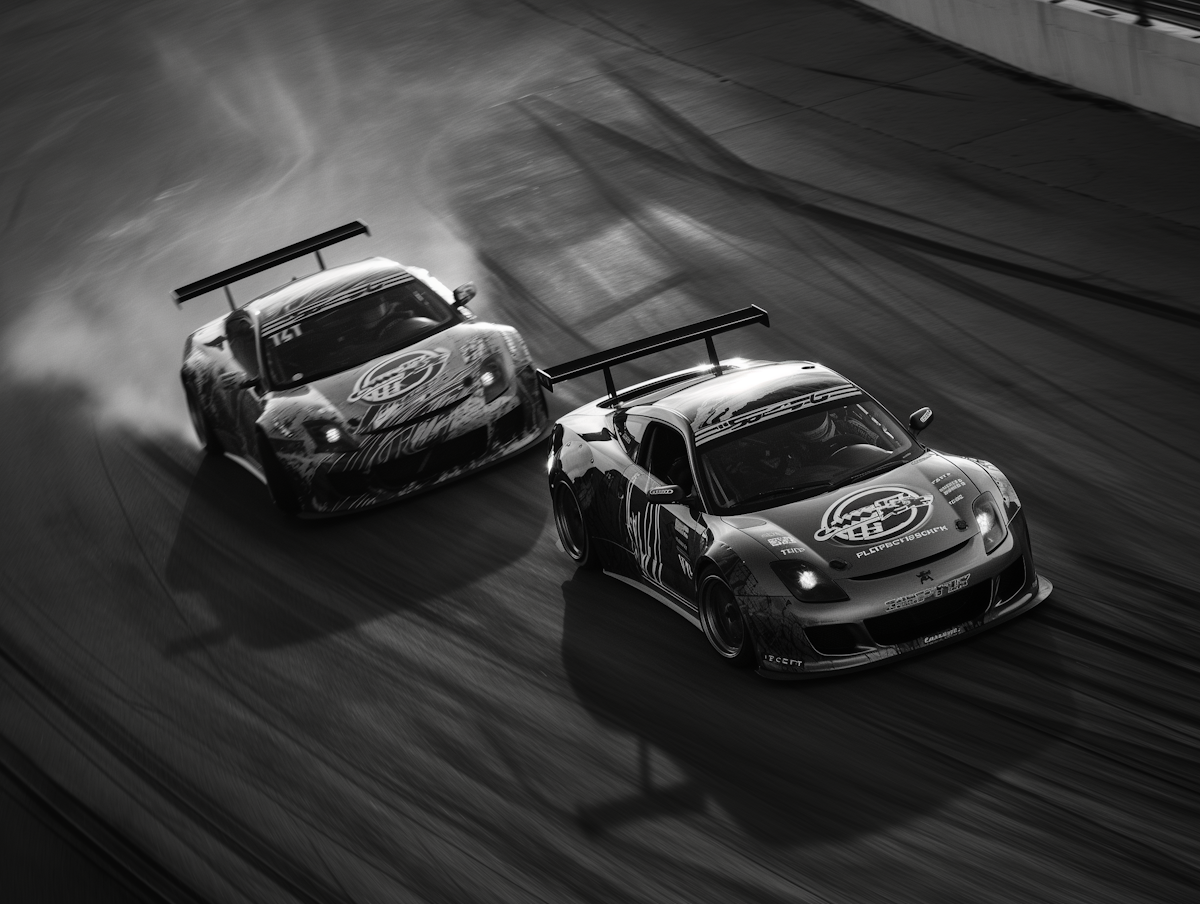
Last Lap, Last Chance: Brennan Cole Steals Talladega in a Finish Nobody Will Forget
TALLADEGA, AL — Nobody wins at Talladega. Talladega just decides who it lets survive.
That's the unwritten law of superspeedway racing, and for 187 laps on Sunday afternoon, it looked like the 2026 YellaWood 500 would end the way most Talladega races do — in a wall of sheet metal and broken dreams. Then Brennan Cole did something nobody expected, in a moment nobody saw coming, on the very last lap.
He went low. Alone. And it worked.
The Race: Organized Chaos
For the better part of three hours, the YellaWood 500 followed the familiar Talladega script. The two-car tandems formed and broke apart. The lead changed 34 times among 11 different drivers. Nobody got too comfortable. Nobody pushed too hard.
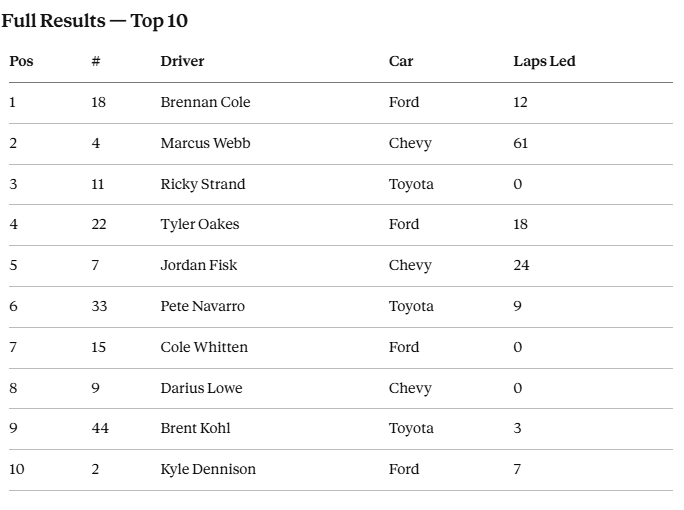
Marcus Webb led the most laps — 61 in total — running a disciplined race in the No. 4 Chevy for Hendrick-affiliated Crestline Racing. Webb's strategy was textbook: stay clean, stay in the top five, wait for the field to sort itself out in the closing stages.
Behind him, the usual suspects traded paint and positions. Kyle Dennison spun coming off Turn Two on lap 112, collecting the No. 27 of Trey Paulson and bringing out the caution that reset the field for the final run. It was the fifth yellow flag of the afternoon, and the one that set up everything that followed.
The Final Restart
With 18 laps to go, the field lined up two-by-two for what most assumed would be the decisive restart. Webb chose the inside lane. Cole, in the No. 18 Shell-Pennzoil Ford for Meridian Motorsports, lined up outside in third.
The restart was clean — unusually so for Talladega.
Over the next fifteen laps, the two lanes surged back and forth, neither able to establish a dominant push. Webb held the lead but the outside lane, energized by a strong tandem between Cole and veteran Ricky Strand, began to build momentum through laps 183 and 184.
Coming to the white flag, Cole made his move — sliding to Webb's outside and drawing even as they thundered through Turns One and Two for the final time.
Then, inexplicably, he went low.
The Move
It's the kind of decision that ends careers at Talladega just as often as it makes them. With half a lap remaining, Cole broke from his tandem with Strand, dove to the apron, and threaded a gap between Webb and the inside wall that, by any reasonable measurement, did not exist.
"I saw it open up and I just committed," Cole said afterward, still visibly wired from the finish. "If I hesitate, it closes. You can't think at Talladega. You just go."
Webb, caught completely off guard, had nowhere to respond. Cole cleared him by inches through Turn Three, held the line through Four, and hit the tri-oval with a half-car length lead he never relinquished.
Brennan Cole crossed the finish line 0.084 seconds ahead of Webb, with Strand completing an unlikely top three after getting shuffled back in the final corner chaos.
Reaction
The win is Cole's second of the 2026 season and moves him to fifth in the Cup Series standings, 38 points behind points leader Jordan Fisk with eleven races remaining in the regular season.
For Meridian Motorsports, it's their first Talladega win since 2019 — a drought that had become something of a storyline in its own right.
"This place has haunted us," said team owner Rick Casteel, barely containing his emotion in Victory Lane. "To get it done like this, with a move like that — I don't have words."
Webb, gracious in defeat, was philosophical: "That's Talladega. You do everything right for 188 laps and one guy makes one move in the last half lap. Can't be mad. That's the track."
Key Moments
- Lap 23: Early wreck in Turn Four collects four cars, including pre-race favorite Dominic Hale, effectively ending his day.
- Lap 112: Dennison spin triggers the pivotal late-race caution.
- Lap 187: Cole's low-side move seals the win.
What's Next
The Cup Series returns to short track action next weekend at Bristol Motor Speedway — a complete contrast to the wide-open draft racing of Talladega. For Cole, the momentum couldn't come at a better time.
Full standings and race replays available at NASCAR.com.
Into the Oldest Desert: Why Namibia Is the Most Extraordinary Journey You Haven't Taken Yet
The Namib is the oldest desert on Earth.
Not the largest. Not the hottest. But the oldest — somewhere between 55 and 80 million years, depending on which geologist you ask, making it older than the mountains that frame it, older than most of the life forms that have learned, improbably, to exist within it. When you stand on top of one of its dunes at first light and look out over the landscape, that age is somehow present. You can feel it. The scale of time, compressed into sand.
There is nowhere else on Earth quite like this. And most people will never go.
That is their loss. And, for now, your opportunity.
Why Namibia
Namibia does not make itself easy to visit, which is a significant part of why it remains one of the last genuinely uncrowded destinations on the African continent.
It is large — larger than France and Germany combined — with a population of under four million, most concentrated in the north. The distances between places of interest are enormous. The roads, outside the main highways, require either a 4x4 or a very high tolerance for uncertainty. There is no mass tourism infrastructure, no package-tour ecosystem, no conveyor belt of arrivals moving through scripted experiences.
What there is, instead, is space. And silence. And the particular reward that comes to travelers willing to do the work of getting somewhere that isn't waiting for them.
The Dunes of Sossusvlei
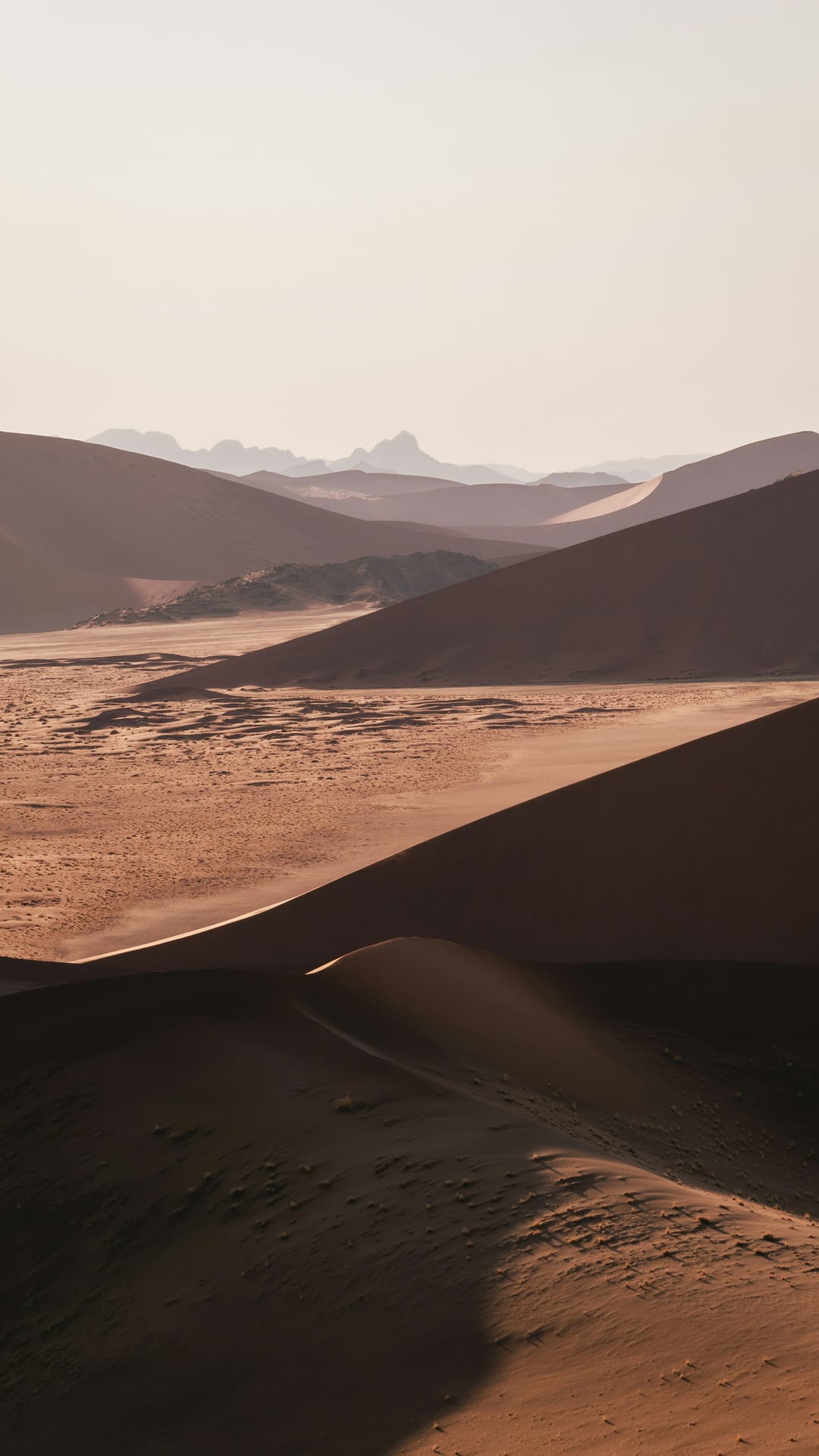
The dunes of Sossusvlei, in the Namib-Naukluft National Park, are the images that appear when you search for Namibia — and they are, in person, even more extraordinary than the photographs suggest.
The tallest dunes here — Big Daddy, Dune 45, the unnamed ridgelines that stretch to the horizon in the hazy middle distance — rise to nearly four hundred meters. Their color shifts through the day: rust-orange at sunrise, blood-red at noon, deep brown in shadow, the ridge lines knife-sharp against a sky that never seems to fully commit to blue. The contrast between the dark, wind-sculpted flanks and the bright crests where the light catches is the kind of visual geometry that makes photographers put down their cameras because no photograph will do it justice.
Wake up before dawn. Drive through the park gate the moment it opens. Climb Dune 45 — a forty-five minute ascent on soft sand, harder than it looks, worth every step — and watch the light change over the pan below.
Then walk into Deadvlei — the ancient clay pan ringed by the tallest dunes, populated by the skeletal remains of camel thorn trees that died nine hundred years ago when the river changed course and the water disappeared. The trees are still standing. They are too dry to decompose. They have been standing in this pan, surrounded by this sand, for nine centuries.
Stand among them. Take the photograph. Then put the camera away and just stand there.
The Skeleton Coast
North of Swakopmund, the Namibian coastline becomes something else entirely.
The Skeleton Coast — named for the whale and seal bones that once littered its beaches, and for the ships and men that the cold Benguela Current and the treacherous offshore fog claimed over centuries — is one of the most remote and inhospitable stretches of coastline on Earth. It is also one of the most beautiful.
The northern Skeleton Coast, accessible only by small aircraft and closed to independent travelers, is the preserve of a handful of ultra-remote camps that offer guided exploration of a landscape that most humans have never seen and never will. Desert-adapted lions. Elephant herds that have learned to survive in near-waterless terrain. The confluence of desert and ocean — two of the planet's most extreme environments meeting at the waterline.
The southern section, around the Cape Cross Seal Colony and the ghostly diamond-mining town of Kolmanskop, is more accessible — a long day's drive from Swakopmund on roads that will test any vehicle — and rewards the effort with a landscape that feels genuinely post-apocalyptic. Kolmanskop, abandoned in the 1950s, is slowly being reclaimed by the desert. Sand fills the rooms of the old German colonial buildings to window height. The light through the broken windows is extraordinary.
Etosha and the North
A Namibia trip that doesn't include Etosha National Park is an incomplete one.
The park's central feature is the Etosha Pan — a vast, flat, calcrete-covered depression that stretches for nearly five thousand square kilometers, blindingly white in the midday sun, shimmering with heat mirages that make the herds of elephant and wildebeest in the distance look like they're floating. Around the pan's edge, a series of waterholes draw wildlife with a reliability that makes game viewing here unlike anywhere else in Africa.
You park at the waterhole. You wait. Everything comes to you.
Lion, elephant, rhino, giraffe, cheetah, leopard — all present in Etosha, all observable from the waterholes if you're willing to sit quietly long enough. The black rhino, critically endangered and increasingly rare elsewhere, is seen here with a frequency that nowhere else in Africa can match.
Stay in the park camps. Wake up before dawn. Be at the waterhole when the light is still pink.
How to Do It
Namibia rewards independent travel more than almost anywhere else on the continent — but it requires genuine preparation.
Self-drive is the right way. A 4x4 is essential for anything beyond the main highways. Carry extra fuel, extra water, a good paper map, and the understanding that cell coverage is intermittent at best. The roads are generally well-maintained on the main routes; the secondary tracks are another matter.
Plan for distance. The drives between major destinations are long — Windhoek to Sossusvlei is five hours on good roads; Sossusvlei to Swakopmund is three; Swakopmund to Etosha is six. Build in extra days.
The light is everything. The Namibian desert is at its most extraordinary in the hour after sunrise and the hour before sunset. Plan your movements around the light, not the convenience.
Book camps early. The best accommodation in Sossusvlei and around Etosha books out months in advance, particularly during the dry season (May through October) when game viewing is at its peak.
Stay longer than you plan to. Everyone who goes to Namibia wishes they had stayed longer. Build in the extra week before you go.
The Thing About Emptiness
There is a quality to Namibia that is difficult to describe to someone who hasn't experienced it.
The country is, by any measure, empty. The distances are vast, the population sparse, the infrastructure minimal. There are stretches of road where you will drive for an hour and see nothing — no other vehicle, no building, no evidence of human presence — just the road and the desert and the sky.
Most people, arriving from cities, find this initially unsettling. Then, after a day or two, they find it the opposite.
The emptiness is the point. It creates a quality of presence — of actually being where you are, completely, without distraction — that is increasingly rare and increasingly valuable. You cannot half-experience Namibia. It demands your full attention, and in return it gives you something that no city, no matter how beautiful, can replicate.
Go. Stay long. Come back changed.
Best visited during the dry season, May through October. The rainy season (November through April) brings its own beauty but significantly complicates travel on secondary roads. Windhoek is the main entry point, with connections from Johannesburg and several European hubs.

Above It All: New York City Seen, Felt, and Understood From the Top Down
From above, New York makes sense in a way it never does from the street.
The grid resolves. The density — which at street level feels like pressure, like the city pressing in from every direction — becomes pattern. You can see the rooftop gardens tucked between buildings, the water towers standing sentinel on every block, the yellow cabs threading through canyons of brick and glass like blood cells through a circulatory system that has been running, without pause, for over two centuries.
The city is alive up here. It is also, from this angle, comprehensible — a machine of extraordinary complexity, doing exactly what it was designed to do, at a scale and intensity that no other city on Earth replicates.
Then you go back down. And it becomes something else entirely.
The Architecture of Ambition
New York was never built to be beautiful. It was built to be useful — to pack the maximum amount of economic activity into a finite island and keep it running at maximum capacity regardless of weather, season, or circumstance.
That the city is beautiful is almost accidental. A byproduct of ambition and competition and the accumulated decisions of thousands of builders and architects working across two centuries, each one trying to outdo or outlast the last.
The result is one of the most visually complex urban environments on Earth — not because anyone planned it that way, but because nobody planned it at all. The pre-war brick towers stand next to mid-century glass curtain walls stand next to contemporary towers of folded steel, all of them compressed into blocks so narrow that the facades are often more visible from the upper floors of neighboring buildings than from the street below.
The water towers are the detail that surprises most first-time visitors who look up.
Every rooftop in old New York has one — wooden stave cylinders, unchanged in design since the 1880s, holding water pressure for the floors below. They are the city's most honest architectural element: purely functional, undesigned, and yet somehow perfectly proportioned against the skyline. The fact that they still exist — that the most technologically dense city in the world still relies on 19th-century wooden barrels for water pressure — is one of the better metaphors New York offers for how it actually works. Old systems, kept because they function. New layers built on top of them. The whole thing more durable than it has any right to be.
The Rooftop City
What the aerial photograph reveals, and what most visitors never see, is that New York has a second city on top of the first.
The rooftops of Manhattan are a parallel landscape — gardens, terraces, water towers, mechanical systems, the occasional basketball court, the rarer rooftop farm — invisible from the street and extraordinary from above. In the older neighborhoods, where the building heights are more consistent, the roofscape has a horizontal continuity that the vertical facades below don't suggest. It is quieter up there. The sound of the city arrives as a background hum rather than the wall of noise it is at street level.
The green roofs — visible as patches of color in the aerial view, small gardens on the tops of buildings that from the street show nothing but stone and glass — are a more recent addition, part of a decades-long effort to reintroduce permeability and life into an island that paved over almost everything. They are small. They matter more than their size suggests, absorbing rainfall, reducing heat, providing the particular psychological benefit that comes from any living thing in an otherwise mineral landscape.
The Street, After the View
The best way to understand New York is to see it from above first and then walk it at ground level — the view from the rooftop, the experience on the pavement.
The grid, so legible from above, dissolves at street level into the specific texture of each block. The hardware store that has been on the same corner for forty years next to the restaurant that opened last month. The building facade that has three different eras of signage layered on it, the oldest visible only in the ghost letters left by paint weathered down to brick. The subway entrance that descends into a system that moves millions of people a day through tunnels that in some places date to 1904.
New York rewards the walker who is willing to look. Not just at the famous things — the skyline, the park, the landmarks that appear on every list — but at the accumulated evidence of continuous habitation. The layers. The repairs. The thousand small decisions that make a block feel like a place rather than just a location.
Five Things Worth Seeing Differently
The High Line. Not the destination it's become — the crowd, the food vendors, the Instagram compositions. Go early, before the crowds, in the blue hour just after dawn when the light is flat and the city is quiet. Walk it slowly from end to end. Look at the buildings at eye level and above. The whole point of it is the lateral view, which is unlike any other view the city offers.
The Brooklyn Bridge, on foot. Not for the photograph from the walkway — though that photograph is worth taking — but for the experience of the structure itself. The cables. The gothic arches. The century and a half of wire and stone holding everything together over the river. Stand in the middle and look downtown. Give it the time it deserves.
A rooftop, any rooftop. The bars and restaurants have them. The better hotels have them. The view from the top of any building in Midtown or Lower Manhattan at dusk — when the light turns the brick warm and the windows across the city begin to glow — is one of the better things a city has ever produced.
The outer boroughs. Brooklyn is known. Queens is known enough. The Bronx, for most visitors, exists as a name on a subway map. This is a significant oversight. The Grand Concourse — a four-mile art deco boulevard built in the 1900s and lined with residential buildings of genuine architectural ambition — is one of the most undervisited streets in any major American city. Go.
The water. Manhattan is an island, and most visitors forget this entirely. The Hudson River Park along the west side. The Brooklyn waterfront looking back at Lower Manhattan. The Staten Island Ferry, which is free, and which gives you the approach to the skyline from the water in a way that no other vantage point replicates.
What the City Teaches
New York has been teaching the same lessons for two hundred years, and they are available to anyone willing to stay long enough to receive them.
That density, handled correctly, is not claustrophobia but energy. That the proximity of millions of different lives — different languages, different hours, different ambitions — produces something that no smaller, simpler place can replicate. That the city's famous hardness is, in large part, the efficient callus that forms when you are surrounded by too much of everything: too much noise, too much need, too much beauty, too much failure, all of it in close proximity and continuous operation.
And that somewhere in the middle of all of it — in the rooftop garden nobody sees from the street, in the corner diner that has been making the same coffee since 1962, in the hour before the city fully wakes up and the grid is yours alone — is something worth coming back for.
Every time.
New York City is served by three major airports. The subway runs 24 hours. The best time to visit is when you can — the city rewards every season differently.
Read the Water: What Surfing Teaches You That Nothing Else Can
The wave doesn't wait.
That is the first thing surfing teaches you, and it teaches it fast. You can be perfectly positioned, perfectly prepared, paddle timing exactly right — and if you hesitate at the moment the wave reaches you, it is gone. Not delayed. Not rescheduled. Gone, rolling toward shore without you, and now you're paddling back out to wait for the next one.
There is no negotiating with a wave. There is only reading it correctly and committing, or missing it entirely.
Most of life works the same way. Surfing just makes it impossible to pretend otherwise.
The Ocean Is Not Your Friend
This is the thing that well-meaning surf instructors sometimes soften and shouldn't.
The ocean is indifferent to you. It was moving before you arrived and it will be moving after you leave, on a timeline that makes your presence in the water a footnote. It will give you the best rides of your life and, without malice or intention, hold you down long enough that you genuinely wonder if you're coming back up.
Learning to be in an environment that is fundamentally indifferent to you — that does not respond to effort or attitude or how much you want something — is one of the more valuable educations available to a person. It strips away the magical thinking that effort always produces commensurate reward. It replaces it with something more honest: that preparation matters, timing matters, reading the situation correctly matters, and that even when all of those things are right, sometimes the wave does what the wave does.
This is not pessimism. It is accuracy. And accuracy, in the water and out of it, is what keeps you safe.
The Paddle Out
Nobody talks about the paddle out.
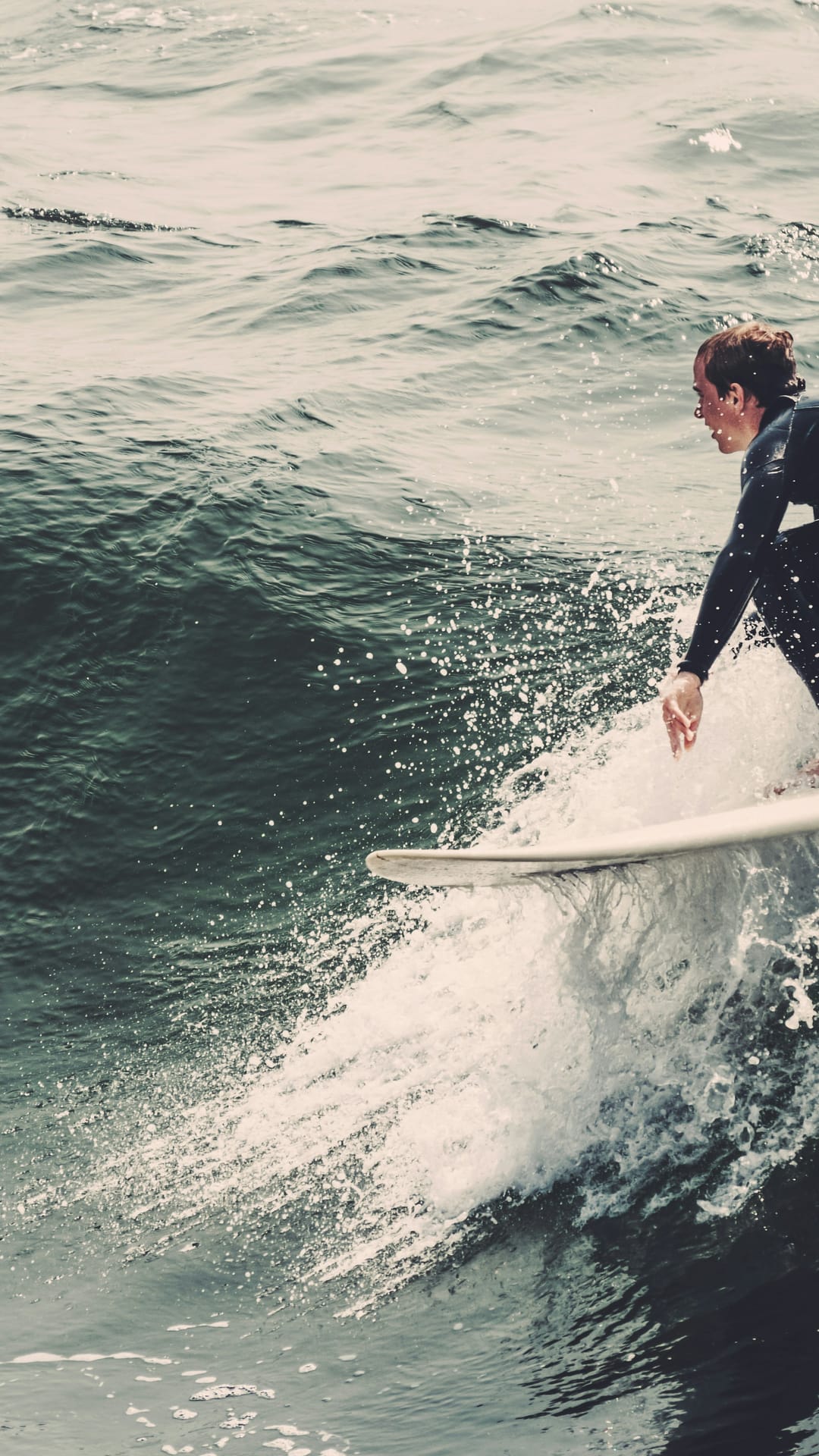
The photograph shows the ride — the surfer on the wave, board angled, spray catching the light. That is the moment worth capturing. That is the thirty seconds that makes the session.
What the photograph doesn't show is the forty minutes of paddling before it. Duck-diving under walls of whitewater. Arms burning. Getting pushed back by a set that arrives exactly when you've finally made progress. Starting again.
The paddle out is not the point of surfing. It is the price of surfing. And the price is non-negotiable — there is no other way to get to where the waves are breaking than to go through everything that stands between you and there.
The people who last in the water are not the ones for whom the paddle out is easy. It is never easy. They are the ones who have accepted, without resentment, that the paddle out is part of the deal. That the price is worth paying. That every session begins with going through the difficult part before you get to the good part.
Most worthwhile things work this way. Surfing just makes the structure explicit.
Timing Is Everything
Surfing is a masterclass in timing, and timing cannot be fully taught. It has to be developed — through repetition, failure, and the gradual accumulation of a feel for the water that no instruction manual can give you.
The surfer who catches every wave they paddle for is not stronger than the others. They are earlier. They read the swell further out, they position correctly before the wave arrives, and they are already moving at the moment the energy reaches them rather than reacting to it after the fact.
This principle — be early, read what's coming, be in motion before the moment demands it — transfers completely to almost every domain of life. The career move made before necessity. The conversation had before it becomes a confrontation. The decision made from position rather than from crisis.
Surfing teaches it physically, in the body, in a way that intellectual understanding alone cannot. You feel the difference between being early and being late. You feel what correct timing is, in your arms and your balance and the acceleration of the board beneath you.
That feeling, once learned, is difficult to unlearn.
Falling Is Part of It
Every surfer falls. The best surfers fall constantly — they are, by definition, attempting things at the edge of what's possible, which means falling is a regular feature of every session.
What distinguishes experienced surfers from beginners is not that they fall less. It is how they fall, and what they do immediately after.
You learn, with enough time in the water, to fall correctly — to protect your head, to relax rather than tense against the impact, to let the wave take you where it's going rather than fighting a force that will always win. And then you learn to surface, reorient, and paddle back toward the break without drama. Not because falling doesn't matter. But because the water doesn't give you time to treat it as a crisis.
The reset after a fall is a skill. In surfing and in everything else.
What the Wave Gives You
Here is what experienced surfers struggle to explain to people who haven't felt it:
The ride — the actual seconds of being in the right place on the right wave at the right moment, everything working, board and water and body in a conversation that requires your complete attention — produces a quality of presence that is genuinely difficult to find elsewhere.
You are not thinking about anything except this. Not because you've forced the other thoughts away, but because the wave doesn't leave room for them. The present moment is not a concept in the water. It is a physical requirement.
That is what people are chasing when they paddle out at dawn, when they drive hours to find a working swell, when they stay in the water until their arms are useless and the light is gone.
Not the photograph. Not the story to tell afterward.
The thirty seconds when there is nothing except the wave and the ride and the complete, involuntary presence of being exactly where you are.
Read the Water
Go to the beach before you surf. Watch for twenty minutes. Watch where the waves are breaking and where they're not. Watch the sets come through and count the time between them. Watch how other surfers are positioning and where they're catching waves and where they're missing them.
Read the water before you get in it.
This is the advice every experienced surfer gives beginners, and most beginners ignore it because they want to be in the water, not watching from the shore. The watching feels like delay. It feels like not doing the thing.
It is the thing.
The wave you catch well was read correctly from a distance before you paddled for it. The life decision that works was observed and understood before you committed to it. The read happens first. Everything else follows.
Get in the water. But read it first.
The ocean is the same everywhere. The lessons are available at any beach, on any wave, to anyone willing to paddle out.
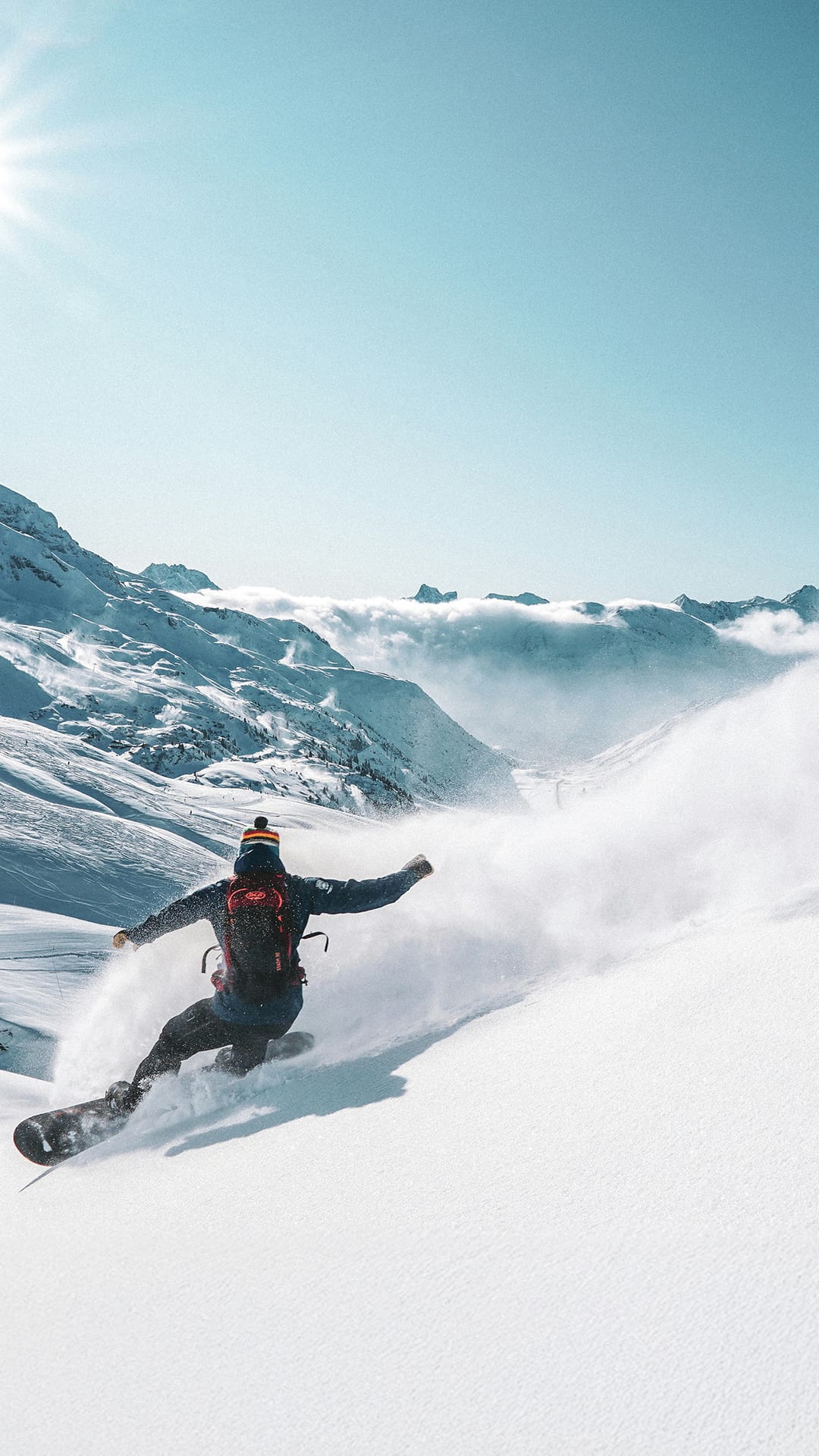
First Tracks: The Alpine Snowboard Trip That Will Ruin Every Other Winter For You
There is a sound that powder snow makes under a board that has no equivalent anywhere else in the world.
Not the scrape of groomed piste. Not the crunch of hardpack. A soft, dense compression — almost silent — as the board sinks slightly and then releases, and you are floating, briefly, in a way that the physics of it don't quite explain to the body experiencing it. The mountain drops away beneath you. The spray rises behind you. The sun is a hard white star above the peaks.
For approximately three seconds, nothing else exists.
That is what people are chasing when they book the flights, drag the gear bag through two airports, and spend a week on a mountain in the Alps. Not the après-ski, not the Instagram frame, not even the views — though the views are extraordinary. They are chasing those three seconds, repeated as many times as the legs and the snow will allow.
Everything else on the mountain is in service of that.
The Alps, Understood Correctly
The European Alps are the most developed ski and snowboard terrain on Earth — and that development is both their greatest asset and their most significant limitation.
The greatest asset: infrastructure that nowhere else matches. Lift systems that move thousands of people per hour to terrain that would take hours to access on foot. Snowmaking that extends the season at lower elevations. Grooming that produces perfect corduroy by 8am regardless of what the previous afternoon's skiers did to the surface. The resort villages that have been refining the business of keeping winter sports people comfortable and fed and warm for a century.
The limitation: all of that infrastructure exists to funnel people onto the same groomed runs, through the same lift queues, toward the same mountain restaurant at the same lunch hour.
The Alps reward the rider who is willing to step slightly off that conveyor belt. To take the side gate that opens onto ungroomed terrain. To lap the chairlift before the mountain is officially open and find the snow before anyone else reaches it. To look at the resort map and identify what's on the other side of the ridge rather than just what's on the trail map.
The mountain that most visitors see and the mountain that exists behind it are not the same mountain.
Where to Go
Verbier, Switzerland remains the benchmark for serious freeriders in the Alps — not because its groomed runs are exceptional (they are fine), but because the terrain accessible from the top of the Mont Fort cable car, at 3,330 meters, is some of the most consequential off-piste in Europe. The Vallon d'Arby, the north face descents toward Siviez, the routes that require a guide and a transceiver and a genuine respect for avalanche conditions — this is terrain that asks something of the rider before it gives anything back.
Stay in the village, not the resort. The chalets are expensive. They are worth it.
Chamonix, France is the most serious mountain town in the Alps and the one that attracts the most serious riders. The Vallée Blanche — a 24-kilometer descent from the Aiguille du Midi at 3,842 meters through the Mer de Glace glacier — is one of the great mountain experiences on Earth. It is not technically difficult. It is enormous, and cold, and remote enough that the consequences of a problem are real. Go with a guide the first time. Go in good visibility. Go early.
The town itself is worth a day — a proper Alpine working town, not a resort village, with the kind of bars and restaurants that exist to serve people who work on the mountain rather than people who are visiting it.
Arlberg, Austria — the connected resorts of St. Anton, Lech, and Zürs — is where powder riding in the Alps was essentially invented, and the terrain above the groomed pistes remains some of the best in Europe. The Valluga, at 2,811 meters, is accessible only with a certified guide and offers descents into terrain that the lift map doesn't acknowledge. The snow quality here, fed by storms that come in from the west before the moisture is stripped out by the Swiss ranges to the north, is consistently exceptional.
The Freeride Principle
Freeride snowboarding — riding ungroomed, unprepared, uncontrolled terrain — is the version of the sport that the groomed resort experience is, for many riders, a warm-up for.
It is also the version that most honestly reflects what riding in the mountains actually is, before the resort industry turned it into something manageable.
On groomed piste, the variables are controlled. The surface is predictable. The hazards are marked. The experience is reliable in the way that a well-maintained road is reliable — you know roughly what you're getting, and the surprise is bounded.
Off-piste, none of that is true.
The snow changes character constantly — wind-affected crust at the ridge, wind-deposited powder in the bowl below it, a strip of sun-affected slush on the south-facing pitch before it opens onto the shaded face where the cold dry powder has been sitting undisturbed since the last storm. Reading those transitions correctly, adjusting instantly, making decisions at speed about a surface that is revealing itself as you cross it — this is the skill that groomed riding doesn't build and freeride demands.
It also produces, when everything aligns correctly, the three seconds that started this article.
The compression. The float. The spray rising behind you into cold mountain air.
The Morning
Every serious powder day begins the same way.
You are awake before the alarm. Not because you set a second alarm, but because something in the body knows what the day holds and refuses to sleep through it. You check the snow report, though you already know what it says — you've been checking it since the day before. You eat something. You are at the lift before it opens.
The first chair of the day on a powder morning is one of the better experiences that winter sport offers. The mountain is quiet. The snow is untracked. The light, coming low across the peaks at this hour, is flat and soft and makes the untouched surface look like fabric.
You drop into it. The sound is exactly right. The spray rises.
Three seconds that justify everything that came before them.
What the Mountain Teaches
Every sport that takes place in a natural environment teaches a version of the same lesson, and snowboarding in the mountains is no exception.
The mountain is not interested in your ability or your equipment or your ambition. It will give you the best run of your life and, the same afternoon, close itself in cloud and wind and make the same terrain dangerous to the point of inaccessibility. It operates on its own schedule. The good days are not earned — they are given, when conditions align, to whoever is there and ready.
Be there. Be ready. Go when the mountain offers it and come down when it doesn't.
That rhythm — of patience and readiness and the willingness to commit fully when the moment arrives — is available at the top of any chairlift, in any mountain range, on any day when the snow is right and the sky is clear and the powder is untracked.
Everything else is just getting there.
The Alps are best accessed between December and April, with peak powder conditions typically in January and February. Off-piste riding requires appropriate avalanche safety equipment and ideally a certified mountain guide. Always check local avalanche forecasts before riding uncontrolled terrain.
The Room at the End of the Hall: What Life Inside an Elite Unit Actually Looks Like
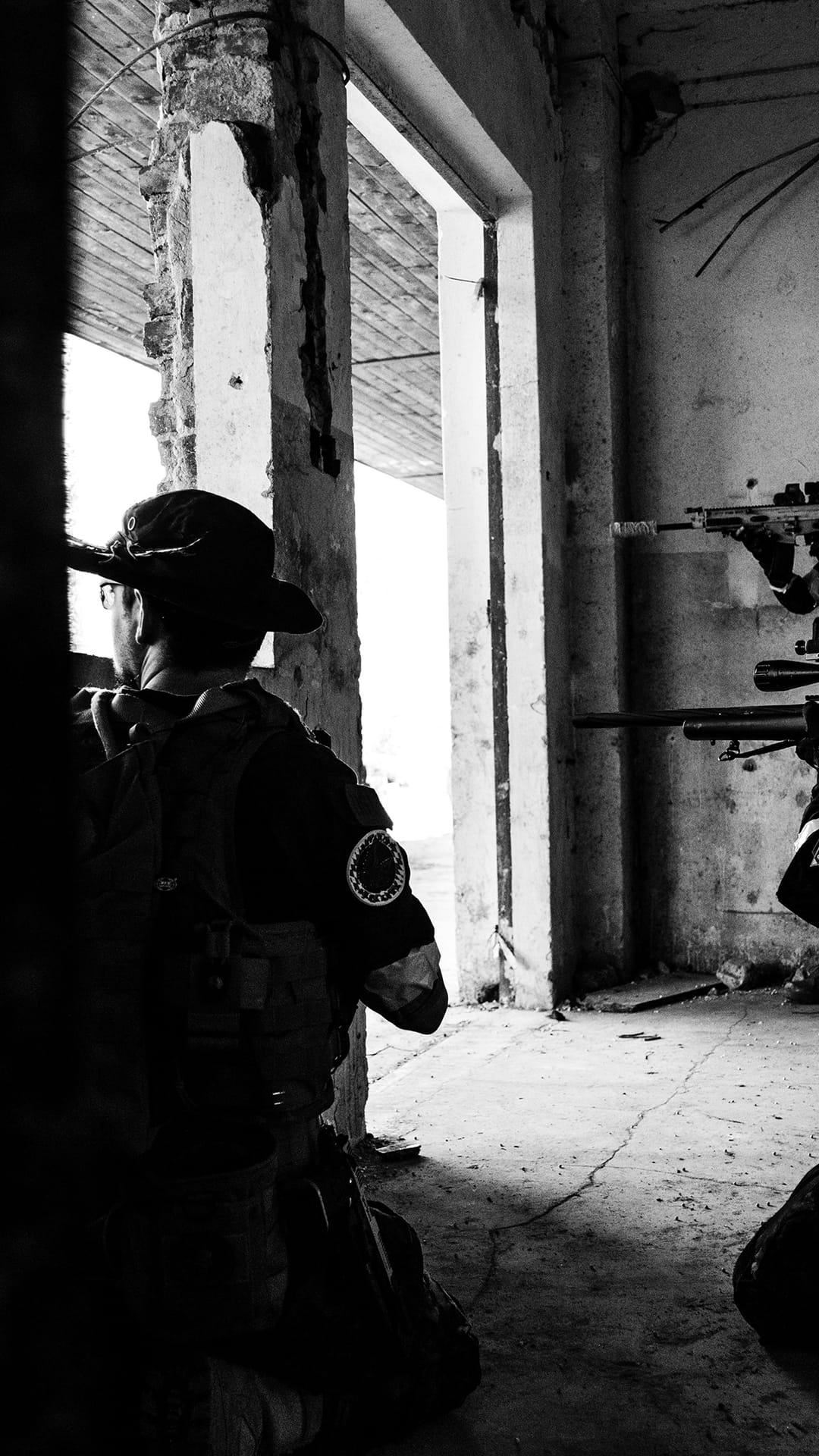
The photograph doesn't show the training.
Three figures in a ruined building, backlit by blown-out windows, rifles up, moving with the kind of coordinated quiet that looks, from the outside, like choreography. It is not choreography. It is the result of thousands of hours of repetition so complete that the movements have stopped being decisions and become reflexes — the body doing what the mind has drilled into it until conscious thought is no longer in the loop.
That process — the making of the kind of person who can function in that room — is the story that the photograph doesn't tell. It is also, for the people who have lived it, the more interesting one.
Selection
Every elite military unit in the world begins with selection — a process designed not to teach candidates anything, but to find out what they already are.
The physical requirements are severe. But physical fitness, every selection cadre will tell you, is not what selection is really testing. It is a prerequisite, not the point. The candidates who fail selection are rarely the ones who weren't fit enough. They are the ones who quit.
The distinction matters. Selection is, in large part, an extended exercise in manufacturing circumstances under which quitting seems like the rational choice — and then watching to see who quits anyway. Sleep deprivation, caloric restriction, physical exhaustion layered over days without adequate recovery, tasks that seem arbitrary and are not, pressure applied in patterns designed to reveal how a person behaves when the rational mind has been ground down to nothing.
What remains, when everything comfortable has been stripped away, is the person underneath.
That person is either someone the unit can trust their life to, or they are not. Selection finds out which.
The Team
The popular image of the elite operator is a solitary one — the lone specialist, self-sufficient and lethal, operating beyond the reach of conventional support.
The reality is almost exactly the opposite.
The defining characteristic of elite units is not individual capability. It is team cohesion — the degree to which a small group of people can function as a single organism under conditions that would fragment less integrated teams. Individual excellence is the entry requirement. What the unit develops, through years of shared training and operational experience, is something that transcends individual performance.
Trust, specifically. The kind of trust that is not a feeling but a structural fact — built on evidence accumulated over enough shared difficulty that it has become unconditional. In a room at the end of a hall, in a building that may or may not hold a threat behind every door, that trust is not an abstraction. It is the operational foundation that everything else rests on.
"You stop thinking about yourself," one former special operations veteran described it. "Not because you've become selfless in some noble sense. Because your survival and your teammates' survival are the same thing. The distinction between looking out for yourself and looking out for them disappears."
The Hours
The public-facing image of elite military service is defined by its high-intensity moments — the operation, the mission, the photograph like the one at the top of this article.
The reality is defined by its ordinary ones.
The hours in the gym before dawn. The range time, thousands of rounds, drilling the same movements until they are automatic. The classroom work — languages, regional geography, intelligence analysis, the specific knowledge required to operate in specific environments. The equipment maintenance, meticulous and continuous. The physical recovery, managed with the seriousness of professional athletes because the body is, functionally, the primary piece of equipment.
Between deployments, the preparation for deployments is the job. It is unglamorous, repetitive, and essential. The three seconds in the room at the end of the hall are possible because of the thousands of hours that preceded them. The ratio of preparation to operation is, in elite units, overwhelmingly weighted toward preparation.
This is the part that doesn't get photographed.
The Cost
Elite military service extracts a price that is not always visible at the time it is being paid.
The physical toll is the most legible — injuries accumulated over years of high-intensity training and operational stress, often managed through rather than recovered from, because the culture and the operational tempo rarely accommodate the time that proper recovery requires. The knees and shoulders and lower backs of veterans in their forties tell a story that the fitness of their thirties didn't predict.
The psychological toll is more complex and less discussed.
The hypervigilance that is adaptive in a combat environment — the constant environmental assessment, the attention to exits and threats and the behavior of people in the immediate vicinity — does not switch off cleanly when the environment changes. The emotional compartmentalization that makes it possible to function in high-lethality situations can, over time, affect the capacity for the kind of open emotional engagement that relationships require.
The transition out of elite service — which comes for everyone, eventually — involves reintegrating into a civilian world that operates at a different pace, with different stakes, where the skills that defined a career are largely non-transferable and the identity built around them requires reconstruction.
This transition is, for many veterans, the hardest thing they have done.
What the Room Requires
Back in the photograph: three figures, one room, rifles up, backlight from the windows.
What the image captures, if you know what you're looking at, is not aggression. It is concentration — the complete, disciplined focusing of trained attention on a specific operational problem. Each figure is aware of their sector, their teammates' positions, the entry points, the angles. The coordination visible in their positioning was not discussed in that moment. It was established through training so thorough that it requires no discussion.
This is what elite units produce: people who can function at the highest level of their training in conditions specifically designed to make that impossible.
The room at the end of the hall is where that investment is tested.
Everything before it is why it holds.
This article draws on publicly available accounts from veterans of special operations units across multiple nations. No classified information was used or sought.
Lather & Slow: Inside the Soap Studio That's Doing Everything the Hard Way
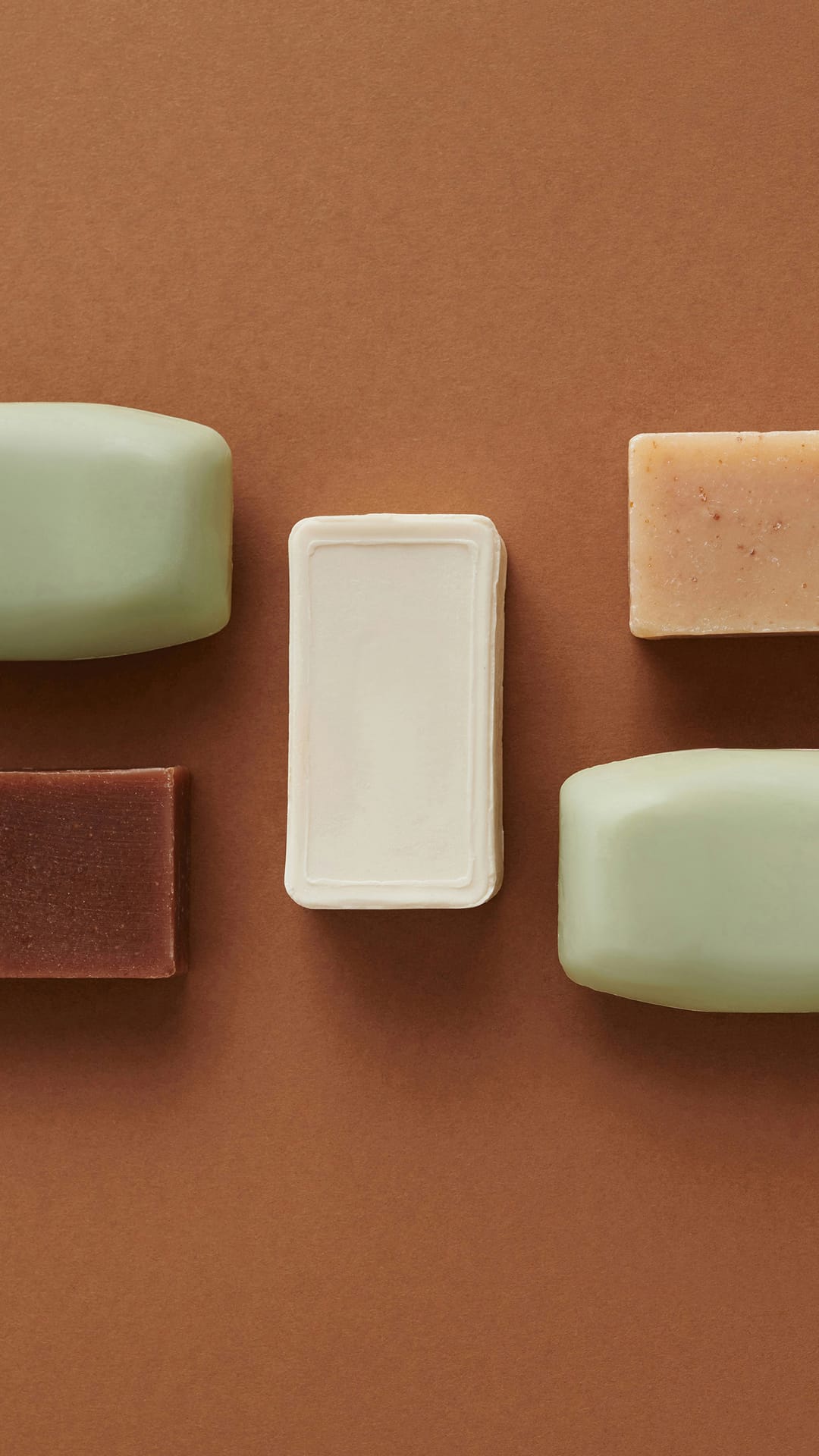
The soap on the table looks simple.
Five bars, arranged without ceremony on a warm terracotta surface — sage green, cream white, deep burgundy, sandy rose, soft jade. Different shapes, different textures, different scents that arrive before you've crossed the room. One is smooth and molded, the edges precise. Another is cut rough, its surface still grainy from the mold. A third has flecks of something visible beneath the surface — botanicals, maybe, or mineral pigment.
They are, each of them, the result of six weeks of work.
"People hear that and they think I'm being precious about it," says Nina Castillo, founder of Lather & Slow, pouring water into a vessel on the studio worktable with the measured calm of someone who has learned that rushing this part costs you everything. "I'm not. That's just how long cold process soap takes. You can't speed it up. The chemistry doesn't care about your timeline."
The Beginning
Nina Castillo did not set out to make soap.
She spent eleven years in pharmaceutical research — formulation chemistry, the science of how compounds interact in solution — before a combination of burnout and a persistent eczema diagnosis sent her toward natural skincare as both a professional pivot and a personal necessity.
"I was formulating drugs and I couldn't find a soap that didn't wreck my skin," she says, with the flat irony of someone who has told the story enough times to appreciate its absurdity. "So I started making my own. Which is what happens when a chemist can't find what she needs — she makes it."
The first batches were functional. The second were better. By the sixth month, friends were asking to buy them. By the end of the first year, she had a waiting list.
Lather & Slow launched officially eighteen months ago from a studio in her home, with five products and no marketing plan.
"I didn't have a strategy," she says. "I had soap that worked and people who wanted it. That felt like enough to start."
The Process
Cold process soapmaking is, at its core, a controlled chemical reaction — the saponification of oils and fats by an alkali, typically sodium hydroxide, that transforms the raw ingredients into soap and glycerin over a curing period of four to six weeks.
It is also, in Castillo's hands, something considerably more considered than that description suggests.
The oils she uses are sourced individually — a shea butter from a Ghanaian cooperative she has visited in person, an olive oil from a small Andalusian producer she found through a food contact, a kokum butter from India that she spent three months tracking down because the profile was exactly right for her sensitive skin formulations. Each oil brings specific properties to the finished bar: hardness, lather quality, skin feel, shelf life.
The colorants are botanical where possible — madder root for the deep burgundy, spirulina for the sage green, French pink clay for the rose. The scents are essential oil blends she develops herself, tested over months on her own skin before they make it into production.
"Every bar is a formulation decision," she says. "Not in the sense that I'm overthinking it, but in the sense that everything in there is there for a reason. Nothing is just decoration."
The Business of Slow
Lather & Slow makes, at current capacity, approximately three hundred bars per month.
This is not a number that scales easily. The studio space limits batch size. The curing time limits inventory turnover. The sourcing relationships Castillo has built — direct, personal, built on the understanding that she will take a consistent volume and pay a fair price — limit how quickly she can change suppliers.
She has been approached, twice, by distributors interested in placing her products in retail chains. Both times she said no.
"They wanted me to increase volume by four hundred percent in six months," she says. "Which would have meant finding new suppliers I hadn't vetted, cutting curing time, changing the formulations. I would have ended up making a different product. A worse product. And the whole point would have been lost."
The waiting list currently runs to six weeks. Castillo does not find this a problem.
"The people who wait understand what they're waiting for," she says. "They're not buying soap. They're buying something made with actual attention. The wait is part of communicating what that means."
The Products
The current range runs to seven bars, each with a clearly defined skin purpose and a carefully considered formulation.
The sage green bars — the most recognizable in the lineup, their smooth molded shape the result of a custom mold Castillo commissioned from a local ceramicist — are built around a high-olive base with added sea buckthorn and calendula, designed for sensitive and reactive skin. They are, unsurprisingly, the bestseller.
The burgundy bar, colored with madder root and scented with a vetiver and cedarwood blend, is the most recent addition — developed over eight months after Castillo became interested in the traditional soapmaking practices of Aleppo, Syria, where laurel berry oil has been used in soap for centuries.
"I wanted to make something that had a reference point," she explains. "Not a copy. But something in conversation with a tradition that's older than industrial manufacturing."
The cream white bar — unscented, minimal, its surface carrying the faint grid marks of the plain rectangular mold — is the one she recommends to everyone starting out.
"Start with the simple one. See if your skin is happy. Build from there."
What Slow Means
The name Lather & Slow was not an accident.
"Everything in the skincare industry is fast," Castillo says. "Fast results, fast production, fast trend cycles. The whole marketing language is built around immediacy. I wanted the name to say something different from the beginning."
What slow means, in practice, is that the product is not optimized for speed at any point in the chain. The ingredients are sourced for quality rather than cost. The process is not accelerated. The curing is complete before anything ships. The formulations are changed only when Castillo has a genuine reason to change them, not because a new ingredient is trending.
"Skin doesn't change that fast," she says. "It doesn't need a new product every season. It needs something that works, made from things you can trust, that's going to be the same next year as it is today."
She looks at the bars on the table.
"That's all I'm trying to make."
Lather & Slow ships domestically and internationally. Orders placed today ship in approximately six weeks. Custom formulations are available by inquiry.
One Road, One Rider: The Case for Going Your Own Way
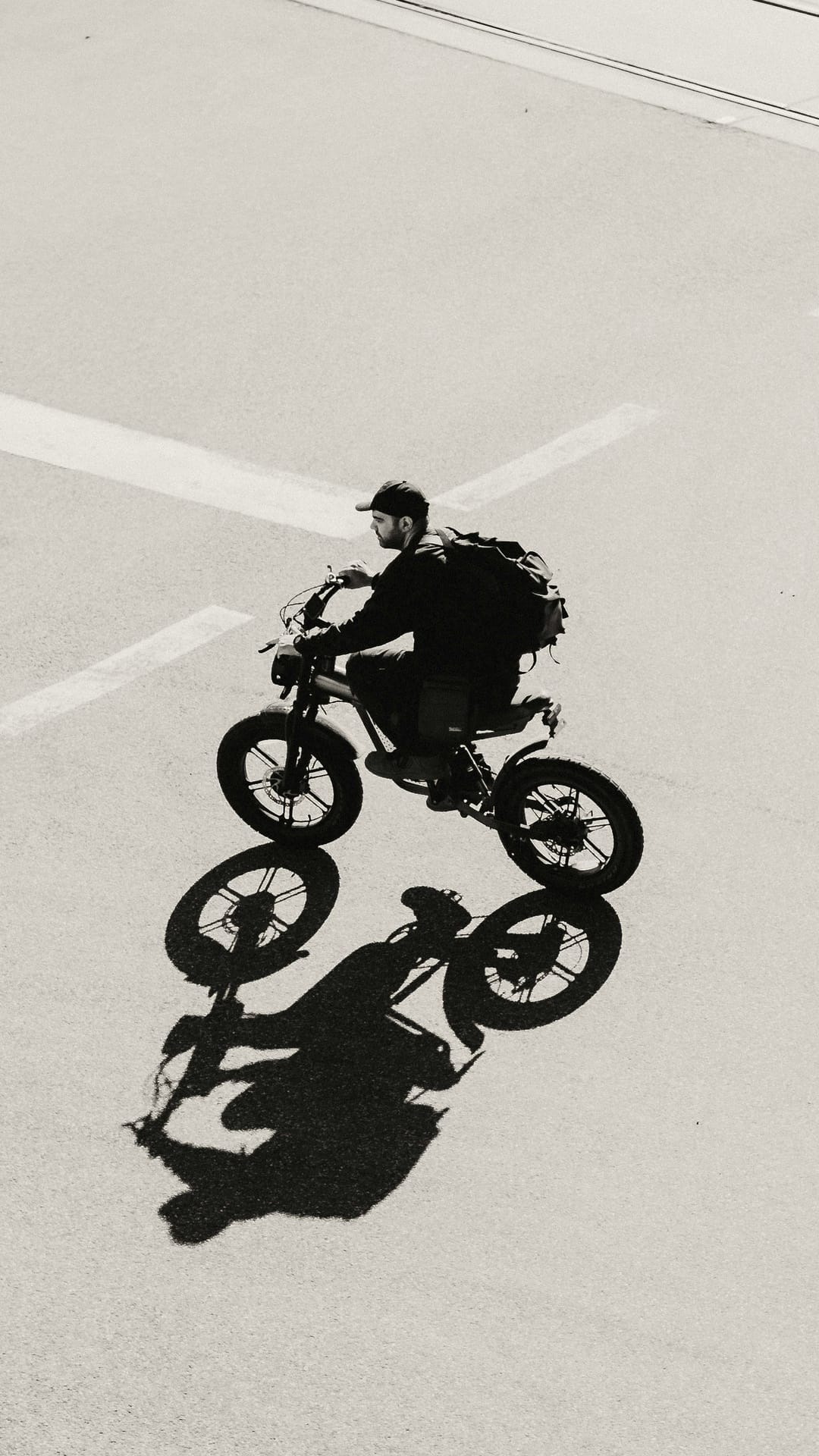
From above, the city looks like a grid. Lines and intersections, rules and directions, everyone moving in patterns that were decided long before they arrived.
And then there's the rider.
Cutting across the frame at his own angle. Backpack on, shadow stretching long behind him, going somewhere the map didn't plan for. Not faster than the traffic. Not slower. Just — different. Deliberate. His own.
That image is worth sitting with for a moment.
The Courage of the Diagonal
Most of us spend our lives moving along lines that other people drew.
The career path laid out by expectation. The route to work dictated by habit. The goals defined by what people around us decided success should look like. We follow the grid because the grid is safe, because it's legible, because everyone else is on it too and there's comfort in the crowd.
But the most interesting lives — the ones we read about, admire, occasionally envy — are almost never the ones that stayed in the lane.
They're the ones that went diagonal.
Not recklessly. Not without thought. But with a clarity of purpose that the grid can't accommodate. A decision, made quietly and usually alone, to take the line that makes sense to you even when it makes no sense to anyone watching.
You Don't Need Permission
Here's something nobody tells you early enough: you don't need anyone's approval to change direction.
Not your employer's. Not your family's. Not the industry's, the algorithm's, or the culture's. The moment you decide to move differently is the moment the new path begins — and that moment requires nothing except the decision itself.
The rider in the intersection didn't file a request. Didn't wait for the light to change in his favor. He read the space, found the gap, and went.
That's it. That's the whole formula.
The people who change their lives don't usually do it with a grand announcement or a perfectly timed plan. They do it with a small, private act of commitment — a turn taken, a road chosen, a direction held even when the grid keeps trying to pull them back into line.
Carry Only What You Need
There's something to be said about the backpack.
Not the luggage. Not the moving truck. Just a backpack — enough for today, enough for the road ahead, not so much that it slows you down.
The people who move most freely through life have figured out something that takes most of us years to learn: that the weight you carry is a choice. Not all of it, not always — life loads you up with things you didn't ask for. But the unnecessary weight, the obligations taken on out of guilt, the identities kept long past their use, the expectations you've been hauling around since someone else put them there — that weight is optional.
Travel light. Carry what matters. Leave the rest at the intersection.
The Shadow You Cast
Here's what nobody sees when they're busy going their own way: the shadow they leave behind.
The rider doesn't look back. He doesn't see the long, dramatic shadow stretching out across the asphalt behind him — the evidence of his presence, the mark of his passing, the proof that he was here and that he moved.
But others see it.
The people who go their own way — who take the diagonal, who travel light, who move with quiet intention — leave trails that others follow. Not because they set out to inspire anyone. But because there is something undeniable about a person in motion on their own terms. It gets into people. It gives them permission.
Your path is never just yours.
Start Where You Are
You don't need a new city, a new job, or a dramatic reinvention to begin.
You need a direction. One that you chose, not one that was assigned to you. And then you need to start moving toward it — today, from exactly where you are, with exactly what you have.
The road doesn't care where you started. It only asks that you show up and ride.
The best journeys rarely look the way we planned them. That's not a warning. That's the point.
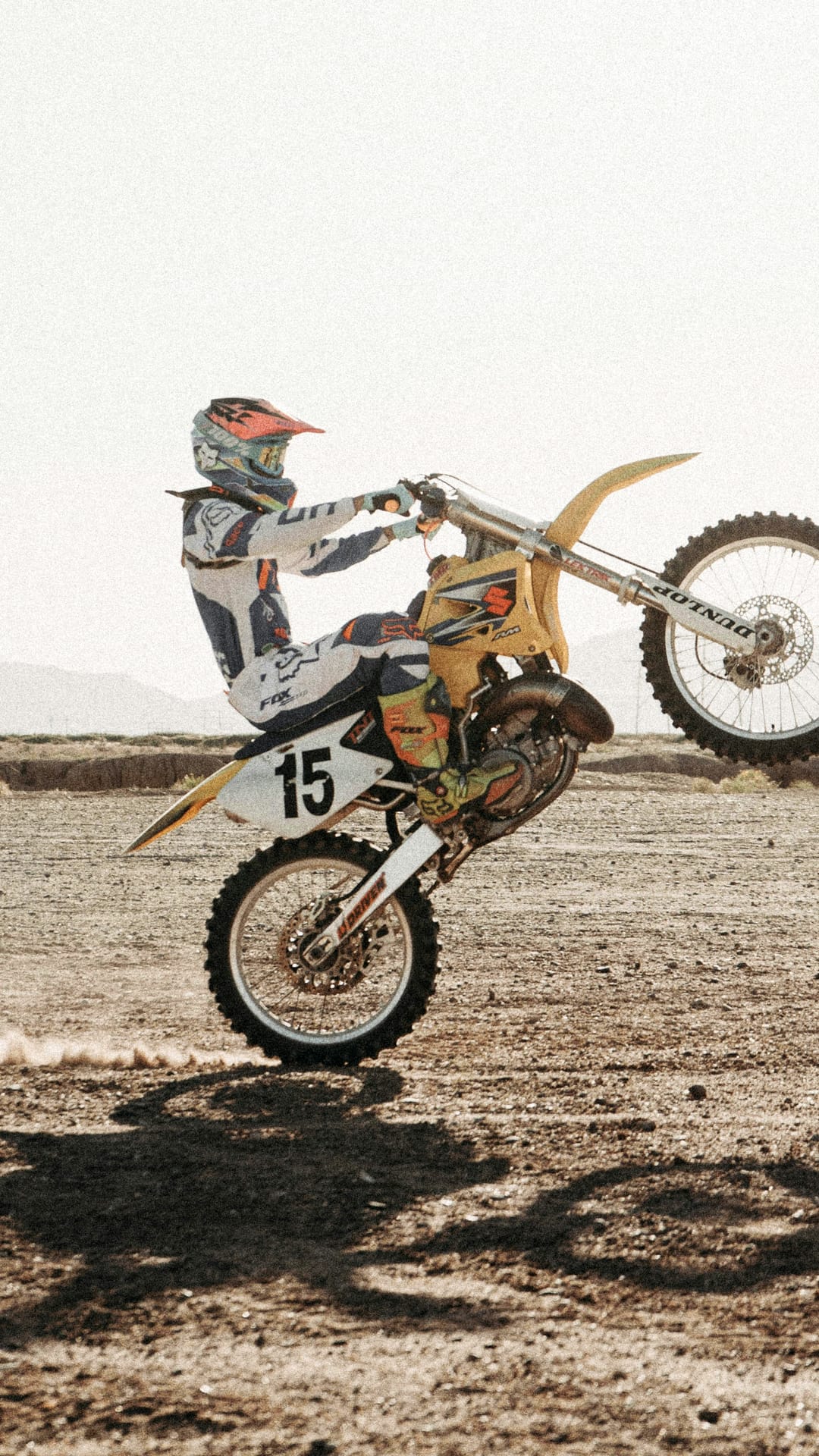
Number 15: The Quiet Rider Who's Louder Than Anyone Out There
The wheelie happens without warning.
One moment Tyler Mace is rolling across the flat desert hardpan at a measured pace, the kind of unhurried crawl that suggests a man with nowhere particular to be. The next moment the front wheel is up — way up, past the point most people would panic and chop the throttle — and he's holding it there, balanced on the rear wheel with the mountains hazy in the distance behind him and the shadow of the bike stretching long across the cracked earth below.
He holds it for a long time. Then sets it down clean. Doesn't look back.
That, in a single image, is Tyler Mace. Casual about things that should be difficult. Focused about things that look effortless. Completely uninterested in whether anyone is watching.
The Number
Ask Mace about the number 15 and he shrugs.
"It was available," he says.
That's the whole story, delivered with the flat affect of someone who has been asked about it enough times that he's committed to making the answer disappointing. There's no backstory, no tribute, no meaning he's willing to assign to it.
"Numbers are numbers. The riding is the thing."
He's been #15 for six years across three different race series. At this point, the number has meaning whether he assigns it or not. In the desert series paddock, you hear it the way you hear a shorthand — Fifteen's on the move. Fifteen found a line nobody else saw. The number has become a reputation, and the reputation has become a story, and the story is still being written.
Where He Came From
Tyler Mace grew up in Victorville, California — high desert country, the kind of landscape that looks like exactly where you'd expect a motocross rider to be formed.
His father ran a small engine repair shop. The shop always had bikes in various states of disassembly. Mace learned to ride on a 70cc that was technically awaiting a customer pickup but sat in the back lot long enough for a seven-year-old to put significant hours on it.
"My dad didn't exactly encourage it," he says, almost smiling. "But he didn't stop it either. I think he figured if I was going to break my arm, better to do it somewhere close to home."
He didn't break his arm. He got fast instead.
By fourteen he was winning local desert races in the amateur class. By seventeen he was on a semi-pro program funded primarily by his father's shop and a local powersports dealer who saw something in the quiet kid who kept showing up and winning.
"I was never the flashiest guy," he acknowledges. "I didn't do interviews. I didn't have a social media thing. I just rode. Some people thought that was a problem. I thought it was fine."
The Riding
Mace's style is difficult to categorize, which is part of what makes it effective.
He's not a pure aggressor — he doesn't throw the bike around the way some of the crowd-pleasing riders do, doesn't generate the kind of visible drama that gets clipped and shared. But he's not conservative either. The wheelie in the desert, held to a point that most instructors would call irresponsible, is representative of a comfort level with the edge of control that separates good riders from great ones.
What he is, more than anything, is adaptable.
"The desert teaches you that," he says. "The track is never the same twice. The soil changes, the light changes, what worked in the morning doesn't work in the afternoon. You have to be willing to throw out what you know and find what's true right now."
His mechanic, a laconic veteran named Pete Gruber who has worked with three other professional desert racers over a twenty-year career, puts it differently.
"Most riders ride the track they practiced on," Gruber says. "Tyler rides the track that's actually in front of him. That sounds simple. It's not."
The Bike
Mace runs a privately prepared machine — a development he's been working on with Gruber for the better part of two seasons, dialing in a setup that prioritizes feel over data.
"I'm not anti-data," he's careful to say. "Data is useful. But there's stuff the data doesn't capture. The way the front end loads through a loose corner. The way the bike communicates when you're right on the edge. That's feel. You develop that by riding, not by looking at a spreadsheet."
The Fox kit — the gear he's worn for three seasons now — is chosen for the same reason. Fit first, protection second, aesthetics last.
"If I'm not comfortable I ride distracted. Simple as that."
The Desert
Mace lives forty minutes from the nearest proper MX track and doesn't seem to mind.
He rides the open desert several days a week — the same terrain, more or less, that he raced at RedRock last weekend. Not on a marked course, not with a timer running. Just him and the bike and however much ground he feels like covering that day.
"People think you need a track to get better," he says. "You need to ride. The desert is a track. It's just a track with no rules and no ruts and no one telling you where the fast line is."
He pauses.
"That's the best kind."
What's Next
Three rounds remain in the desert series. Mace sits fourth in the overall standings, twelve points behind the leader, with the kind of momentum that makes the people ahead of him nervous.
He doesn't talk about championships. He doesn't project. When you ask him what he's focused on, the answer is immediate and unadorned.
"The next race."
Quick Fire
Favorite terrain? "Hard pack with a loose top. Honest."
Pre-race routine? "Walk the track. Eat something. Don't talk to anyone."
Biggest lesson from racing? "The track doesn't lie. You do."
If not motocross? "Probably still in the desert. Just slower."
Advice for young riders? "Ride more places. Not just tracks."
Tyler Mace races independently under the #15 banner. Follow his season at ProMX Desert Series official website.
Still Standing: What 900-Year-Old Dead Trees in the Namib Can Teach Us About Endurance
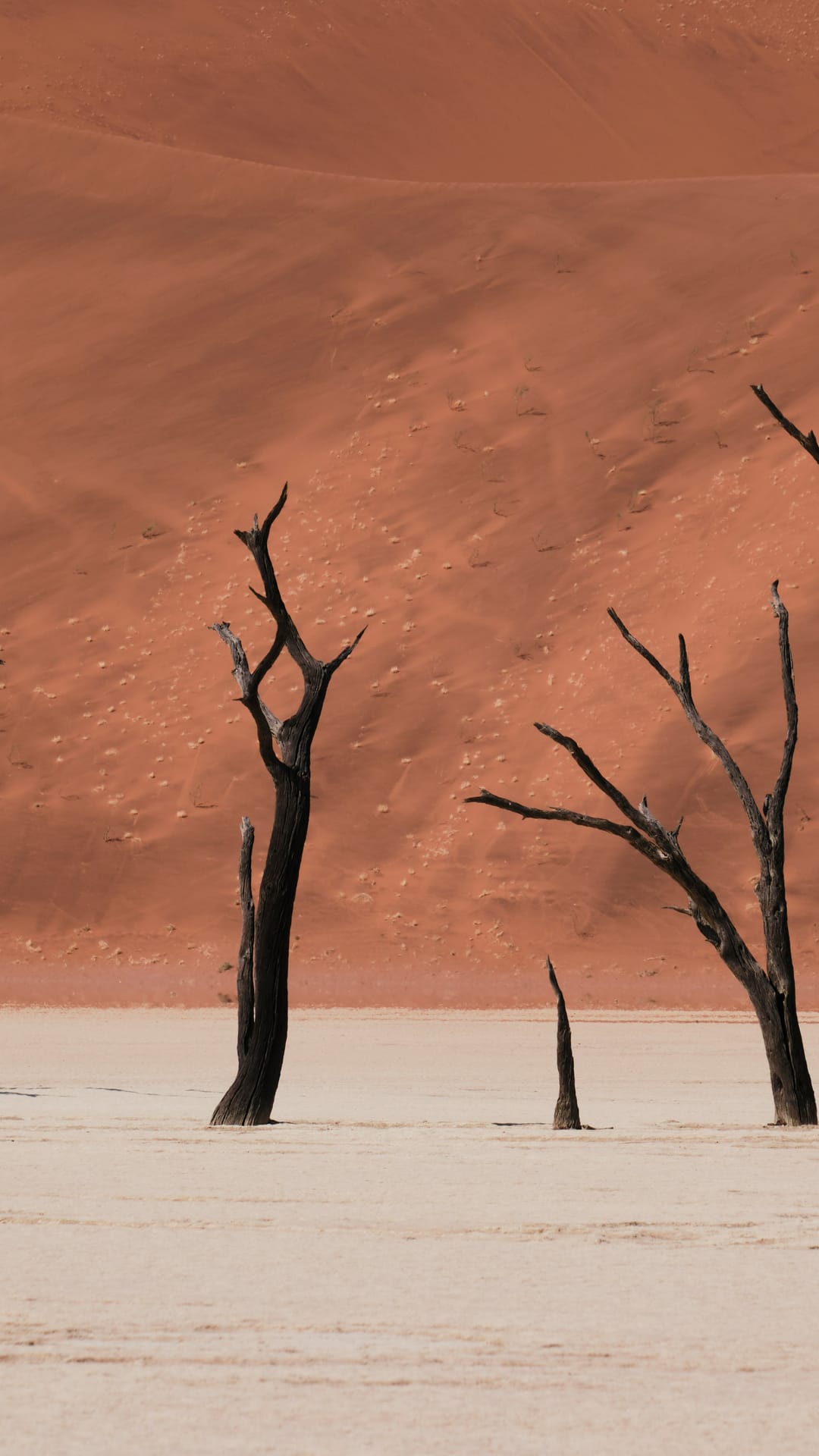
They died nine hundred years ago.
The camel thorn trees of Deadvlei — standing in a bleached clay pan in the Namib Desert, surrounded by some of the tallest sand dunes on Earth — have been dead since approximately 1100 AD, when the river that fed them changed course and the water disappeared. The desert claimed the pan. The trees died.
But they didn't fall.
The air here is too dry for decomposition. The sun is too relentless, the climate too extreme, for the ordinary processes of decay to operate. And so the trees remain — blackened by centuries of sun, stripped of everything except their essential form, rooted in white clay against a backdrop of blood-red dune — exactly as they were when the last leaf fell nine centuries ago.
They are, in the most literal sense, the most enduring things in the landscape.
And they have been dead the entire time.
What Endurance Actually Looks Like
We have a cultural image of endurance that is almost entirely wrong.
In the stories we tell, endurance looks like strength. Like forward motion. Like the athlete who pushes through the wall, the entrepreneur who keeps building after the setback, the person who gets knocked down and gets back up, visibly, defiantly, in a way that makes for a good photograph.
The trees of Deadvlei tell a different story.
Endurance, in its deepest form, is not about motion. It is about rootedness. About holding your essential form through conditions that would reduce lesser things to nothing. About remaining — not triumphantly, not visibly, not in a way that anyone is necessarily watching — simply because you are too fundamentally yourself to do otherwise.
The trees didn't survive by fighting the desert. They survived by being, at their core, something the desert couldn't take.
The Things That Strip You Down
There are periods in a life — in a career, in a relationship, in a creative practice — that function like the Deadvlei climate.
They remove everything that isn't essential. The comfort, the confidence, the easy forward momentum, the sense that things are going the way they're supposed to go. Sometimes they remove things you didn't know you were depending on until they were gone.
This process is not pleasant. It is not supposed to be.
But what it reveals, when it's done, is the actual structure of the thing. The real shape beneath the growth. The roots that were there all along, holding even when nothing above the surface was visibly alive.
The question worth sitting with, in those stripped-down periods, is not when will this end but what is still here. What has not been taken. What, in you, is too essentially itself to decompose.
That is the thing worth building from.
Nine Hundred Years of Not Falling
There is something almost defiant about the trees of Deadvlei, if you look at them long enough.
They are not alive. They are not growing. They are not doing anything that the living world would recognize as thriving. By any conventional measure, they lost — nine hundred years ago, the water left and they died and that was the end of the story.
Except it wasn't.
They are still there. Still rooted in the pan where they grew. Still reaching upward with the same branching form they had when they were living. The dunes have shifted around them, the centuries have passed over them, and they remain — not despite what happened to them, but somehow because of it. The very conditions that killed them preserved them. The extreme that ended their life extended their presence beyond anything a living tree could have managed.
Not every loss is the end of the story. Sometimes the thing that takes everything is also the thing that makes you impossible to erase.
On Being Stripped to the Essential
The philosopher Seneca wrote, two thousand years ago, that adversity is the opportunity to discover what you actually are. That the comfortable life reveals nothing — it is only under pressure, only when the easy options are gone, that a person finds out what they're made of.
The trees of Deadvlei have been making that point for nine centuries, more eloquently than any philosopher.
What they're made of, it turns out, is enough.
Not enough to keep living. Not enough to keep growing. But enough to keep standing — through drought and heat and the indifferent passage of enormous amounts of time — in the form that was essentially theirs.
That is not a small thing.
What the Desert Keeps
The Namib keeps the things that can survive it.
Not by being gentle. By being so extreme that only the most fundamental things remain. The sand that the wind has carried here is the sand that was too heavy to carry further. The life that exists in this desert — the fog-basking beetles, the sidewinder snakes, the desert-adapted elephants that walk fifty kilometers to water — is life that has been reduced to its most efficient, most essential form.
And the trees of Deadvlei, which are not alive and have not been for nine centuries, are perhaps the most honest expression of this principle: that what endures is not always what thrives, but what holds its essential form against conditions that would erase it.
You don't have to be growing to be standing.
You don't have to be thriving to be rooted.
Sometimes the most enduring thing you can do is simply refuse, at whatever cost, to fall.
Still There
The river changed course nine hundred years ago. The water disappeared. The trees died.
They are still standing.
Whatever the desert is in your life right now — whatever condition is too dry for ordinary growth, whatever circumstance has stripped the leaves and the easy forward motion away — the question the trees are asking is a simple one.
What in you is too essentially itself to fall?
Find that. Root there.
The rest can take care of itself.
Deadvlei is located within the Namib-Naukluft National Park in Namibia. The camel thorn trees are estimated to have died approximately 900 years ago and are preserved by the extreme aridity of the desert climate.
The Unhurried Continent: Why a Safari in the Maasai Mara Will Ruin Every Other Trip You Take
Nobody warns you about the silence.
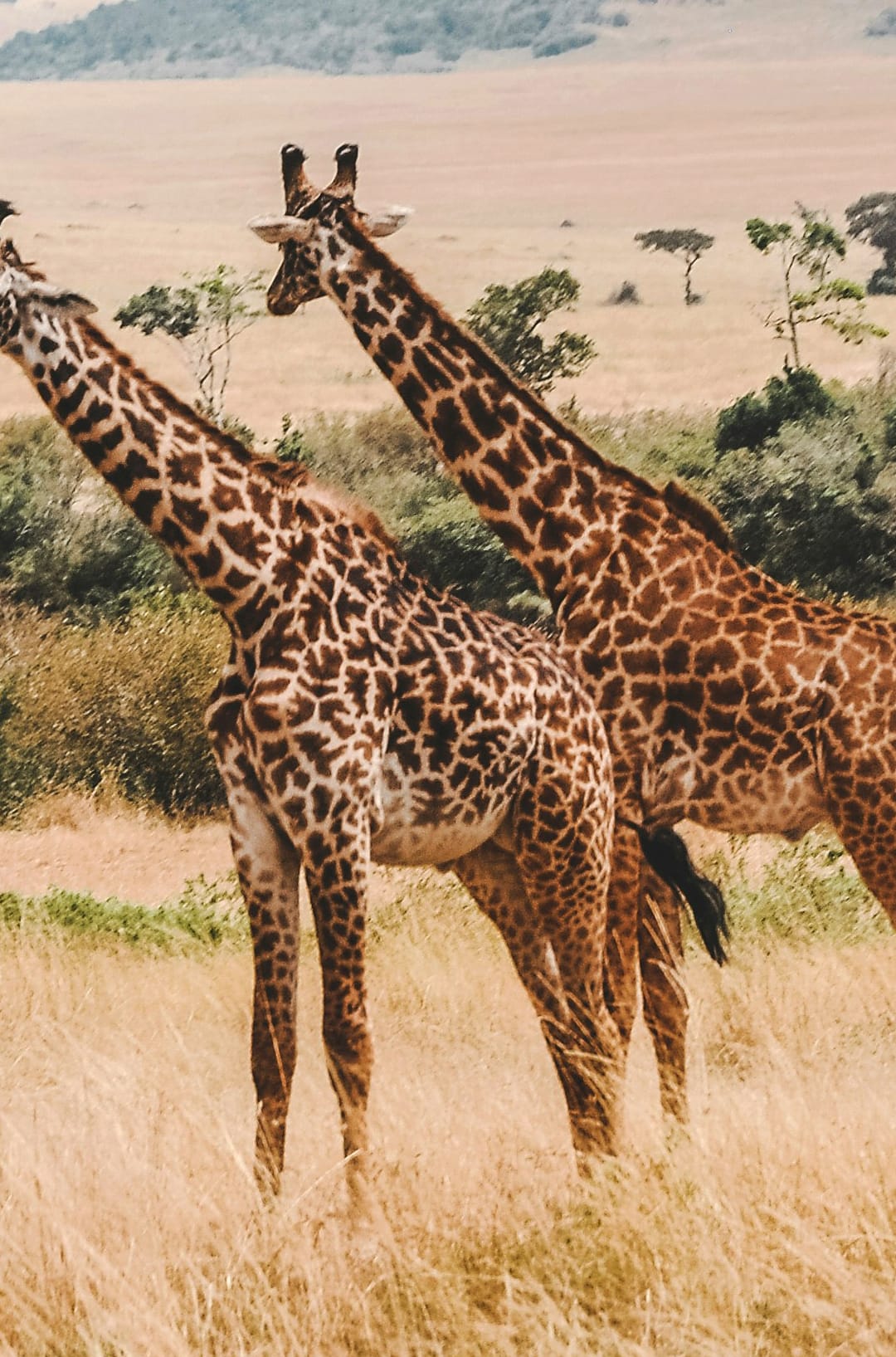
They tell you about the animals — of course they do. The lions at dawn, the elephants crossing the river, the leopard draped across an acacia branch like it's posing for something. They show you the photographs. They describe the scale of it. They are not wrong.
But the thing that stays with you, the thing that you find yourself trying to explain to people who haven't been and failing — is the silence of the Maasai Mara. The particular, enormous, unbroken quiet of a landscape that has been exactly this for longer than the concept of a landscape existed.
You stop talking. Eventually, everyone does.
Getting There
The Maasai Mara National Reserve sits in southwestern Kenya, a three-hour drive from Nairobi or — for those who prefer to arrive already transported — a forty-five minute flight in a small prop plane that skims low over the escarpment and deposits you onto a grass airstrip with no terminal, no baggage carousel, and a guide holding a sign with your name on it.
Take the flight.
The descent into the Mara by air is its own experience — the land spreading out below you in shades of gold and green and ochre, broken by the silver thread of the Mara River, dotted with the shapes of animals you're already trying to identify from altitude. By the time you land, the recalibration has begun. The pace you brought with you from wherever you came from is already starting to feel inappropriate.
The Camp
Accommodation in the Mara exists on a spectrum from the functional to the extraordinary, and the best of it occupies a category that the hospitality industry struggles to name precisely.
The great tented camps — canvas walls, raised wooden floors, an open front that looks directly onto the bush — are not rustic in any meaningful sense of the word. The beds are properly made. The food is exceptional. The service is warm and unhurried in the way that only comes from people who genuinely love where they live.
But none of that is why they're worth the premium.
They're worth it because at three in the morning, lying in the dark, you can hear the hippos in the river. Because a family of elephants walked through camp last Tuesday and will probably walk through again. Because the boundary between where you are and where the wild things are is, by design, almost nothing — a campfire, a lantern, the sound of the night doing what the night has always done here.
You sleep differently. More completely. As if something in the body recognizes that it is, for the first time in a long time, exactly where it should be.
The Morning Game Drive
The alarm goes off at 5:30am and you don't resent it.
That, more than anything, tells you something has changed.
The Land Cruiser is waiting, engine idling, the guide — Moses, in the case of our visit, a third-generation Maasai who has been reading this landscape since he could walk — already scanning the tree line with the practiced ease of someone for whom the bush is as legible as a newspaper.
The light at this hour is extraordinary. Low, golden, casting long shadows across the grass, turning everything it touches into something worth photographing. The air is cool enough for a jacket. The coffee in the thermos is better than it has any right to be.
And then, twenty minutes from camp, Moses slows without a word and points.
Two giraffes. Standing close together in the golden grass, necks crossed, turning to look at the vehicle with the mild curiosity of animals that have never been hunted here and know it. Behind them, the savanna stretches to the horizon — flat, vast, the kind of space that recalibrates your understanding of what space means.
Nobody speaks for a long time.
What You See
The Mara's wildlife density is, by any measure, remarkable.
The Big Five — lion, leopard, elephant, buffalo, rhino — are all present, though the rhino requires patience and luck. What surprises most first-time visitors is not the headline sightings but the abundance of everything else: the herds of zebra and wildebeest that stretch to the horizon during the Great Migration (July through October, and worth planning your trip around), the cheetahs hunting in the open grass, the hundreds of bird species that populate the riverine forests, the hyenas and jackals and bat-eared foxes that fill in the spaces between the larger dramas.
The Mara does not save its best for special occasions. Every drive is different. Every hour on the grass produces something worth seeing.
The Great Migration
If you can time your visit for the migration, do.
Between July and October, approximately two million wildebeest, zebra, and gazelle move north from the Serengeti in Tanzania into the Mara in Kenya, following the rains and the grass in one of the largest animal movements on Earth. The river crossings — when the herds commit to crossing the crocodile-filled Mara River in their thousands — are among the most dramatic wildlife spectacles anywhere on the planet.
They are also deeply, genuinely moving in a way that photographs do not fully capture. The scale of it. The noise. The fact that this has been happening, on this river, in this landscape, for longer than any human institution has existed.
It puts things in perspective. Most things, in the Mara, do.
Going Back
People who have been to the Mara tend to go back.
Not always immediately, not always soon — but the pull is consistent and well-documented among the people who know the place. There is something about having been somewhere that operates on its own terms, entirely indifferent to yours, that makes the ordinary world feel slightly provisional afterward.
You come back to your city, your schedule, your inbox. It all resumes. But somewhere in the back of the mind, there is a memory of two giraffes in golden light, and a silence so complete you could hear your own breathing, and a landscape that has been exactly this since before there was anyone to see it.
It tends to stay there.
Most people, eventually, go back.
The Maasai Mara National Reserve is open year-round. Peak season runs from July to October during the Great Migration. Independent guides and conservation-focused camps are available at a range of price points. Entry fees support local conservation and community programs.
Protecting New Reality: Why Privacy Is the Innovation We Keep Failing to Build
There is something telling about the way we talk about privacy in 2026.
We talk about it the way we talk about sleep, or time with family, or eating well — as something universally acknowledged to be important, routinely deprioritized, and vaguely aspirational. Something we mean to get around to. Something we know we should protect but haven't quite figured out how to, practically, given everything else that's going on.
Meanwhile, the architecture of the digital world we inhabit is built, in large part, on the systematic dismantling of it.
The Trade We Didn't Consciously Make
Most people did not sit down one day and decide to trade their privacy for convenience.
It happened incrementally, in the fine print of terms-of-service agreements that nobody reads, in the default settings of devices and platforms optimized to share rather than protect, in the slow normalization of surveillance as the background condition of digital life. Each individual step seemed minor. The aggregate was transformative.
We gave away location data in exchange for maps that worked. We gave away social graphs in exchange for platforms that kept us connected. We gave away purchase histories, search queries, reading habits, sleep patterns, and emotional states — the last one measured by engagement metrics that know, with uncomfortable precision, which content makes us anxious enough to keep scrolling — in exchange for services that were, genuinely, useful.
The transaction was real. So was what it cost.
What Privacy Actually Protects
Privacy is not about hiding.
That framing — the "nothing to hide, nothing to fear" argument — is one of the most persistent and most damaging misconceptions in the public conversation about digital rights. It reduces privacy to a concern for people with something shameful to conceal, and in doing so, it misses what privacy is actually for.
Privacy is the condition that makes autonomy possible.
When you know you are being watched — by an employer, a government, an algorithm, a platform — you behave differently. Not necessarily because you are doing something wrong, but because observation changes behavior. It narrows the range of things you are willing to try, to say, to search for, to believe. The chilling effect of surveillance is not theoretical. It is measurable, documented, and consistent across cultures and contexts.
A person who cannot think privately cannot think freely. A society in which all behavior is visible and recorded is a society in which conformity becomes the path of least resistance. That is not a future worth building toward, regardless of how useful the apps are.
The Innovation Excuse
The technology industry has, for two decades, operated on the implicit argument that privacy and innovation are in tension — that protecting one requires sacrificing the other.
This argument has been remarkably effective. It has allowed the collection of data at a scale and intimacy that would have seemed dystopian to anyone who thought carefully about it in advance, justified on the grounds that the alternative was slower progress, less personalization, fewer breakthroughs.
It is also, increasingly, demonstrable nonsense.
Privacy-preserving technologies — differential privacy, federated learning, end-to-end encryption, zero-knowledge proofs — have advanced to the point where the trade-off between privacy and functionality is a choice, not a necessity. The most capable AI systems in the world can now be trained on data that never leaves individual devices. Personalization can be delivered without central data collection. Security can be built without surveillance as its foundation.
The new reality does not demand that we choose between innovation and privacy. It demands that we stop pretending we have to.
Who Bears the Cost
The privacy debate is not evenly distributed.
The people most harmed by the erosion of digital privacy are not, generally speaking, the people building the systems that erode it. They are the people with the least power to opt out — those in jurisdictions with weak data protection laws, those whose economic circumstances make the trade of data-for-service less optional, those whose identities make surveillance more dangerous.
The journalist whose sources can be identified through metadata. The activist whose location data can be subpoenaed. The teenager whose emotional vulnerabilities are being mapped in real time by platforms optimized to exploit them. The ordinary person who simply wanted to search for a medical symptom without that search becoming a data point in a profile sold to an insurer.
Privacy is not a luxury concern. It is, increasingly, a matter of safety — and the people for whom it is most urgently a matter of safety are the ones least represented in the rooms where decisions about it get made.
Protecting the New Reality
The subtitle of the image that prompted this piece says it clearly: security that empowers innovation without compromise.
That is the correct framing. Not privacy versus progress. Not safety versus functionality. Security — real security, built into the architecture from the beginning rather than bolted on afterward — as the foundation that makes everything else possible.
This requires choices. From the companies building the systems. From the regulators setting the rules. From the individuals deciding which platforms to use and which to abandon. From the engineers who can choose to build differently — and increasingly have the tools to do so.
The person who turns away from the camera is not hiding. They are asserting something.
That some things are theirs. That not everything needs to be seen. That the right to a private self — to thoughts, movements, relationships, and questions that belong to you and not to a data broker — is worth protecting, worth demanding, worth building a new reality around.
It always has been.
Opinions expressed in this article are those of the author and do not represent the editorial position of this publication.
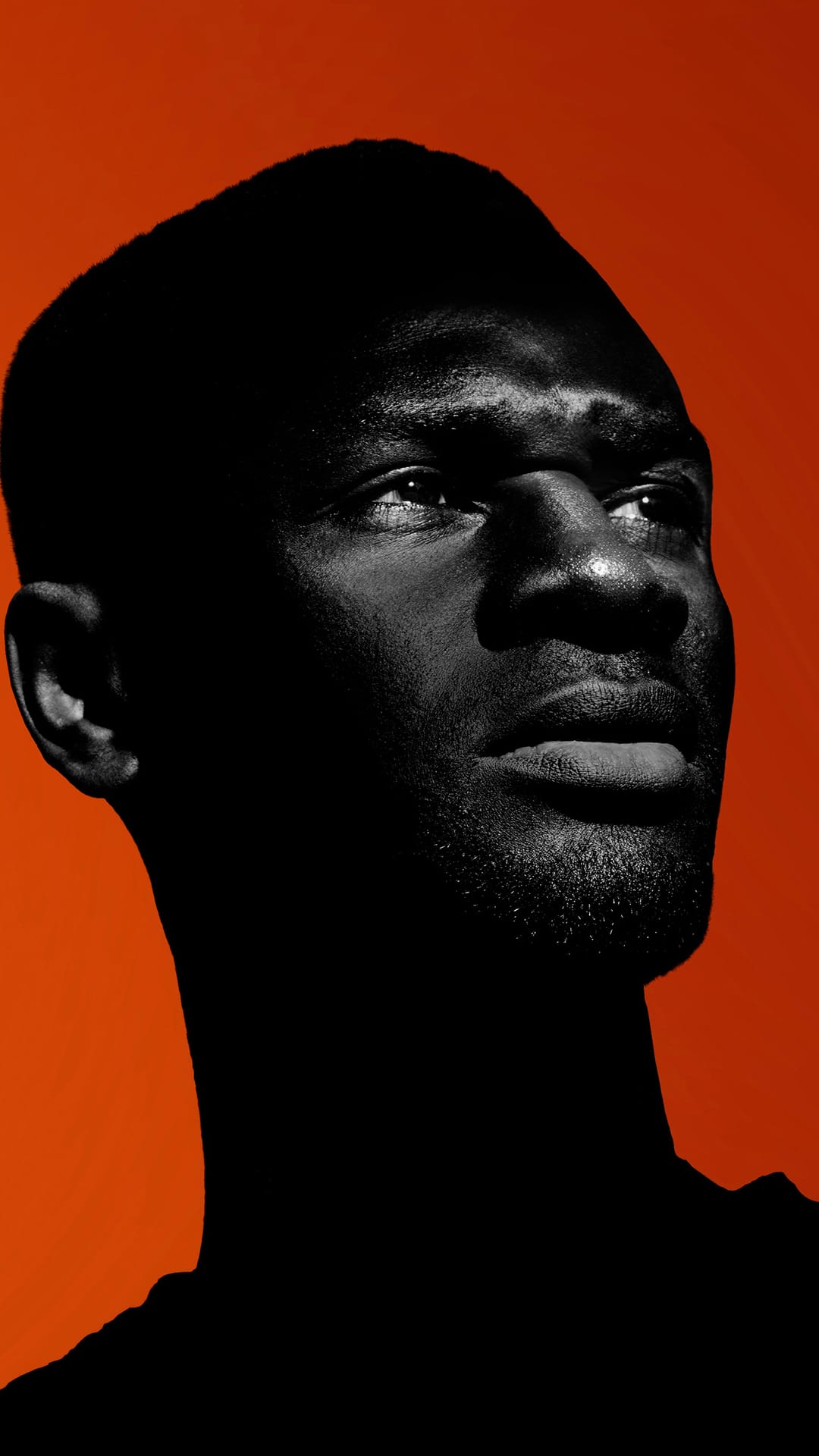
The Fire Behind the Eyes: What Nobody Tells You About Wanting More
There is a look that ambitious people share.
You've seen it. Maybe you've worn it. Eyes lifted slightly, jaw set, gaze fixed on something that isn't in the room — something further out, higher up, not yet real but close enough to feel. It's not arrogance, though people sometimes mistake it for that. It's more like hunger that has learned to be patient.
Ambition looks like fire from the outside. From the inside, it feels more like a debt you can't stop paying.
The Thing They Don't Put on the Poster
We have built an entire culture around the celebration of ambition.
The hustle. The grind. The five-year plan and the vision board and the motivational quote over the sunrise photograph. We love the idea of wanting more — we reward it, romanticize it, package it into content that gets millions of views because something in us responds to the image of a person on fire with purpose.
What we talk about less is the tax.
Ambition is not free. It costs time — obviously — but that's the easy part, the part people factor in willingly. The harder costs are less visible: the relationships that quietly erode because you were always half-present, half-somewhere-else. The joy you deferred so many times it stopped showing up. The version of yourself that existed before the goal took over, and the strange grief of not being sure where that person went.
Nobody puts that on the poster.
The Gap Is the Point — And the Problem
Psychologists have a name for the engine that drives ambitious people: it's the gap between where you are and where you want to be. That gap is uncomfortable. It's supposed to be. The discomfort is what generates movement.
But here's what the productivity frameworks don't tell you: the gap never closes.
Not because ambitious people fail — but because ambitious people, almost by definition, move the target. The moment you reach the thing you were reaching for, the horizon shifts. A new gap opens. The engine restarts. This is not a malfunction. This is exactly how ambition works.
The problem is that a life spent entirely in the gap is a life spent entirely in a state of not-yet. Not-yet successful enough. Not-yet stable enough. Not-yet done. And if you're never done, you're never fully here — never fully in the life you're actually living while you build the one you're trying to get to.
That tension doesn't resolve. You just have to decide how to hold it.
What You're Actually Paying For
Let's be honest about what ambition is really asking of you.
It's asking you to be uncomfortable on purpose, for extended periods, with no guaranteed return. It's asking you to make decisions that people around you won't always understand, in service of outcomes they can't always see. It's asking you to sit with uncertainty — not for a week or a month but for years, sometimes — and to keep moving anyway.
It's asking you to want something badly enough that the wanting itself reshapes you.
That last part is the one worth sitting with. Ambition doesn't just change your circumstances. It changes you — your priorities, your patience, your relationship with comfort, your tolerance for risk. The person who arrives at the goal is not the same person who set out toward it. Sometimes that's entirely good. Sometimes something gets lost in the transformation that you didn't mean to give up.
The price of wanting more is, in part, that you become someone for whom wanting more is the default state. That is a feature and a cost simultaneously.
The Question Worth Asking
Here's the one that cuts through everything else: whose ambition is this?
Because a significant portion of what drives people — the goals they sacrifice for, the standards they hold themselves to, the definition of success they're chasing — was handed to them by someone else. A parent. A culture. An industry. A comparison made at the wrong age that lodged itself somewhere deep and never left.
Not all of it. Some ambition is genuinely, authentically yours — born from something you love, something you believe, something that would matter to you even if nobody was watching. That kind is worth almost any price.
But some of it isn't yours. Some of it is borrowed hunger — wanting things because you were told they were worth wanting, chasing definitions of arrival that were written by people whose lives looked nothing like yours.
The work — and it is work — is learning to tell the difference.
The Fire Is Worth It. So Is the Rest.
None of this is an argument against ambition.
The people who build things, who push further, who refuse to accept the first answer the world gives them — they matter. The fire behind the eyes is not a problem to be solved. It's often the best thing about a person.
But fire needs tending. Ambition without self-awareness burns through everything — relationships, health, the present moment, the quiet pleasures that don't fit into any five-year plan. The most sustainably ambitious people are not the ones who want the most. They're the ones who know why they want it — and who have made peace with what the wanting costs.
The goal is not to stop looking up.
It's to also, occasionally, look around — at what's already here, already built, already real — and let that be enough for a moment.
The horizon will still be there tomorrow.
Opinions expressed in this article are those of the author and do not represent the editorial position of this publication.
Coming soon
This is Demo People Themes, a brand new site by People Themes that's just getting started. Things will be up and running here shortly, but you can subscribe in the meantime if you'd like to stay up to date and receive emails when new content is published!

The Language of Motion: How Speed Became the Most Powerful Design Principle of Our Time
There is a moment — fractions of a second long — when a moving object leaves a trace. Not a blur, exactly. Something more deliberate. A suggestion of where it was, and a promise of where it's going.
Designers have been chasing that moment for decades. Today, it's everywhere.
Speed as Aesthetic
We live in an era obsessed with velocity. Not just in racing or technology, but in the way things look. The visual language of speed — streaks, gradients, motion blur, directional tension — has migrated from the racetrack and the wind tunnel into graphic design, branding, architecture, and digital interfaces.
Open any major sports brand's identity system today and you'll find it: lines that lean forward, letterforms with implied momentum, color transitions that feel like they're moving even when they're standing still. It's not accidental. It's a deliberate choice to make the viewer feel something before they've read a single word.
"Static design can still have energy," says creative director Mara Solano, whose studio has worked with three Formula-class racing teams in the last four years. "But the best visual systems today — the ones people actually respond to — they have directionality. They feel like they're going somewhere."
The Physics of Visual Flow
What makes a design feel fast?
It comes down to a few fundamental principles that designers have borrowed, consciously or not, from the physics of motion.
Directionality is the most obvious — lines and shapes that point, lean, or flow in a consistent direction create a sense of forward movement. It's why racing liveries almost universally angle their graphics toward the front of the car. The eye follows the geometry and arrives at the nose, already moving.
Contrast and blur simulate the visual effect of speed on the human eye. When something moves fast enough, the brain stops resolving detail and starts reading impression. Designers replicate this with deliberate softness — sharp edges that dissolve into gradients, solid forms that bleed into their backgrounds.
Frequency and rhythm — the visual equivalent of engine note. Repeated vertical or horizontal elements, spaced tightly and consistently, create a stroboscopic tension that feels kinetic even on a flat screen. It's the principle behind the aesthetic of carbon fiber, heat fins, and the ribbed surfaces of high-performance machinery.
Put those three principles together and you get something that feels like it's doing 180mph while sitting perfectly still.
From Track to Screen
The crossover between motorsport design and mainstream visual culture is not new — but it has accelerated dramatically in the last five years.
The rise of Formula One as a global lifestyle brand, the explosion of sim racing as a spectator sport, and the growing influence of automotive culture on streetwear and graphic design have all pulled the visual grammar of speed into the mainstream. Brands that have never been near a racetrack are borrowing the language fluently.
You see it in tech product launches — the streak of light across a dark background, the ripple effect implying processing power. You see it in fashion editorial — garments photographed with motion blur as if the model is mid-sprint. You see it in music branding, in architectural visualization, in the UI of financial trading platforms.
Speed, it turns out, is not just a physical property. It's a feeling. And design has learned how to manufacture it.
The Risk of the Language
There's a tension at the heart of this trend that honest designers will acknowledge: the visual language of speed, used carelessly, becomes noise.
When everything moves, nothing is fast. When every brand leans forward, the lean loses meaning. The most effective uses of motion-as-aesthetic are the ones that deploy it with restraint — a single directional element in an otherwise static composition, a carefully placed blur in a field of sharp geometry.
"The danger is when it becomes decoration," Solano says. "Speed in design should mean something. It should tell you something about what the thing does, not just how it wants you to feel. When it's just wallpaper, you've already lost the plot."
What Comes Next
The next frontier, if the early signals are any indication, is haptic and temporal design — motion that exists not just as visual metaphor but as actual time-based experience. Interfaces that accelerate and decelerate. Animations calibrated to feel like weight and friction. Branding that behaves differently depending on how fast you're scrolling.
The goal, as always, is the same one that has driven every aerodynamicist and livery designer and motion graphics artist working in this space: to take something invisible — the feeling of speed, the sensation of forward momentum — and make it something you can see.
The best designs don't just show you fast. They make you feel it.
This article is part of our ongoing series on the intersection of sports culture and visual design.

Ambush: How Misinformation Hijacks Your Trust and What Real Media Literacy Actually Looks Like
We are living through a crisis of trust.
Not just in media, not just in government, not just in science — but in the basic shared infrastructure of knowing things. The mechanisms by which a society agrees on facts, evaluates evidence, and distinguishes reliable information from noise are under more strain than they have been in generations.
The response to that strain, for a growing number of people, has been a wholesale rejection. If you can't trust everything, trust nothing. If some news is manipulated, all news is propaganda. If some institutions have lied, all institutions are lying all the time about everything.
That response is understandable. It is also, paradoxically, exactly what makes people easier to manipulate — not harder.
What Media Literacy Actually Is
Media literacy is not skepticism of everything.
That's a common misunderstanding, and it's worth correcting directly. Blanket skepticism — the posture that all mainstream information is suspect by default — is not a critical thinking skill. It's a different kind of credulity. Instead of uncritically accepting whatever authorities say, you uncritically accept whatever contrarian sources say. The mechanism is the same. Only the direction changed.
Real media literacy is more demanding than either of those positions. It requires evaluating specific claims on specific evidence. It requires understanding how knowledge is produced — how science actually works, how journalism actually works, what peer review means and doesn't mean, what the difference is between a primary source and a commentary on a primary source.
It requires, in short, doing the work. And the work is harder than picking a side.
The Case of Space Exploration
Take space exploration as an example — a field that attracts more than its share of conspiracy thinking.
The claim that space agencies fabricate their findings or that Mars missions are staged requires believing in a conspiracy of extraordinary scale: thousands of scientists, engineers, contractors, and international partners across dozens of countries and competing governments, all maintaining a coordinated lie for decades, with zero credible whistleblowers and no physical evidence of the deception.
That's not impossible in principle. But the evidential bar for a claim that large is correspondingly high. And the evidence that actually exists — the independent verification of spacecraft trajectories by amateur astronomers, the data shared openly with international scientific communities, the photographs cross-referenced across multiple independent missions — points overwhelmingly in the other direction.
This doesn't mean space agencies are beyond criticism. They are not. Questions about funding priorities, about the commercialization of space, about who benefits from particular narratives around exploration — these are legitimate and worth asking.
But "legitimate criticism of an institution" and "everything that institution says is fabricated" are not the same claim. Collapsing the distinction between them doesn't make you more informed. It makes you less.
How to Actually Evaluate a Claim
A few principles that hold up regardless of the topic:
Follow the evidence, not the conclusion. Start with what can be verified independently, not with what you want to be true or what confirms what you already believe. The conclusion should follow from the evidence — not the other way around.
Understand the source's incentives. This applies to mainstream media and to alternative sources equally. Who is telling you this? What do they gain from you believing it? Mainstream outlets have commercial and editorial incentives worth scrutinizing. So do the people telling you not to trust mainstream outlets.
Scale your skepticism to the claim. Extraordinary claims require extraordinary evidence. The bigger the conspiracy alleged, the more evidence you should demand before accepting it — not less.
Distinguish between "I don't fully understand this" and "this is false." Complex fields — astrophysics, virology, climate science — are genuinely difficult. Not understanding the technical details of how something was established is not evidence that it wasn't established. Humility about the limits of your own knowledge is part of good thinking.
Look for independent verification. Reliable information tends to be verifiable from multiple independent sources. If a claim only exists in one ecosystem of sources that all cite each other, that's worth noticing.
The Real Propaganda Problem
Here's the uncomfortable part: propaganda is real.
Media manipulation is real. Institutional deception has happened and continues to happen. Powerful interests do shape narratives. Healthy skepticism of official sources is not paranoia — it's appropriate.
But the existence of real manipulation does not validate every claim of manipulation. And the people most loudly telling you that everything is propaganda frequently have their own agenda, their own narrative, their own interest in your distrust of every source except them.
The goal of genuine media literacy is not to find the one source you can trust completely and outsource your thinking to them. It's to develop the capacity to evaluate information yourself — imperfectly, incrementally, with humility about what you don't know.
That's harder. It's also the only version that actually works.
Eyes Open, Mind Engaged
Be skeptical. Ask who benefits. Demand evidence. Question narratives.
But do it consistently — applied equally to the sources that confirm your existing beliefs and the ones that challenge them. Applied to the contrarian as rigorously as to the mainstream. Applied, when necessary, to your own conclusions.
The answer to a world full of noise is not to stop listening. It's to listen better.
Opinions expressed in this article are those of the author and do not represent the editorial position of this publication.
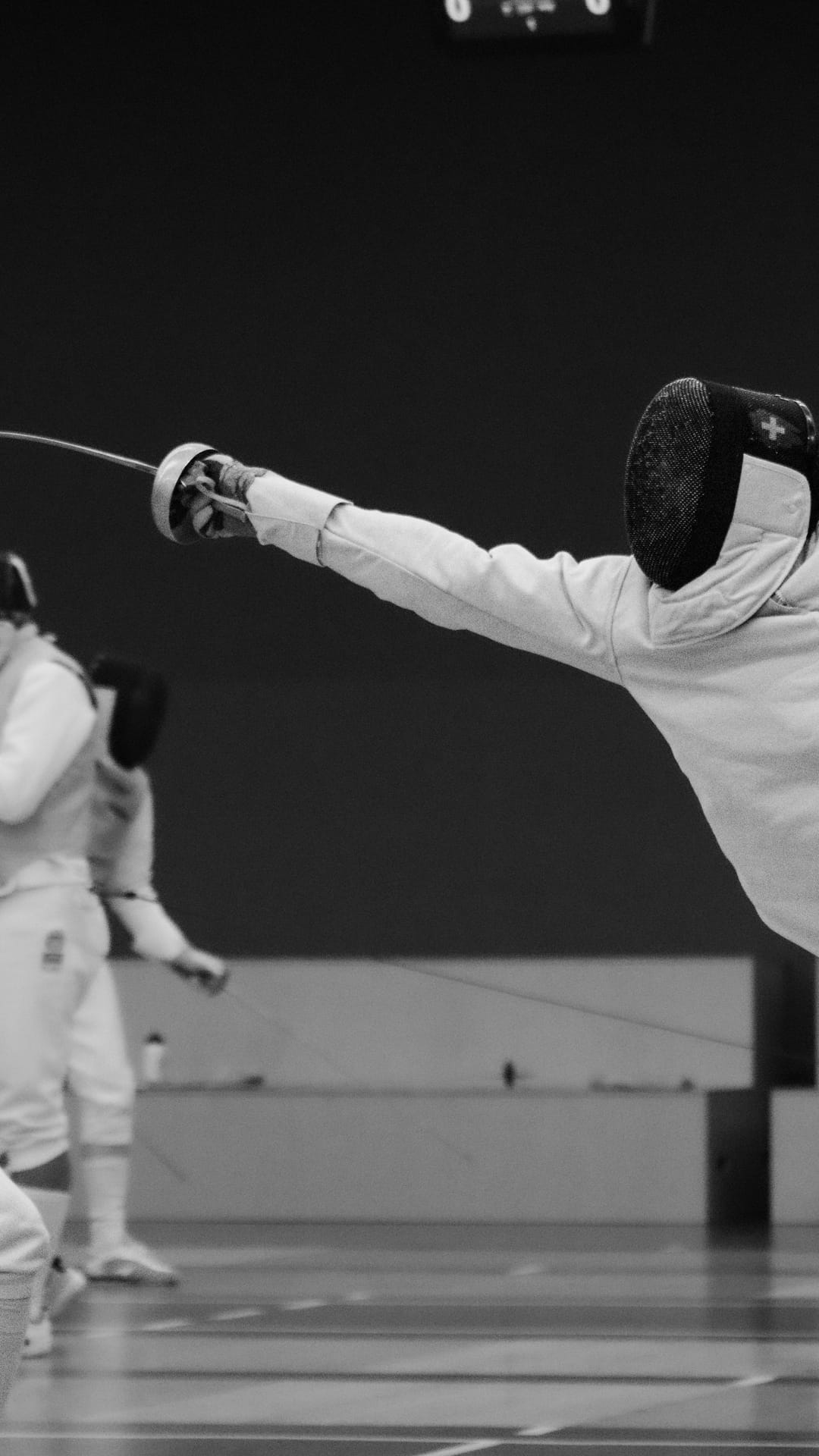
The Blade and the Strip: Why Ancient Sports Still Have Something Modern Life Doesn't
The lunge takes less than a second.
From the en garde position — weight balanced, blade extended, every muscle in a state of controlled readiness — the attack is a single explosive movement: front foot forward, rear leg driving, arm extending, point arriving at the target before the opponent's reaction time has a chance to close the gap. The entire sequence, from decision to contact, happens in approximately 200 milliseconds.
The human eye cannot fully process it. The scoring system requires electronic sensors to confirm what happened. And yet the fencer on the receiving end — if they're good enough — saw it coming. Not the lunge itself, but the intention behind it. The slight shift in weight, the micro-change in blade angle, the barely perceptible alteration in breathing that preceded it.
They read the person. In two hundred milliseconds. Under competitive pressure. With a weapon pointed at them.
This is what ancient sports preserve that modern life struggles to replicate.
What We Mean by Ancient
Fencing, in its competitive form, is a 19th-century codification of sword fighting traditions that stretch back millennia.
The weapons — foil, épée, sabre — are descendants of the dueling and military swords that shaped European history. The rules, the scoring systems, the competitive format were developed to make lethal skills safe enough to practice as sport. The white uniform, the mask, the strip of floor — these are the frame that civilization placed around something that was, for most of human history, a survival skill.
The same is true of wrestling, which appears in Egyptian tomb paintings from 2000 BC and in the ancient Olympics, and which continues today in forms that would be recognizable to those earliest practitioners. Of archery, of rowing, of the throwing events that began as training for combat and hunting. Of boxing, documented in ancient Greece and Mesopotamia, still practiced in gyms that haven't changed their essential character in a century.
These sports survived not because they were preserved in amber but because they kept being useful — because the skills and qualities they develop are not period-specific. They are human.
What the Strip Teaches That the Screen Cannot
There is a growing body of research on what is lost when physical, embodied, face-to-face competition is replaced by its digital equivalents — and the losses are not trivial.
The fencing strip is a masterclass in reading another human being in real time. Not their words, not their social media presence, not the curated version of themselves they choose to present — but their body. The way they hold tension. The tells that precede action. The difference between confidence and aggression, between patience and hesitation, between a feint designed to provoke a reaction and a genuine attack.
This is a skill that most modern environments — mediated by screens, structured by text, optimized for asynchronous communication — actively atrophy. We have become extraordinarily sophisticated at managing our digital self-presentation. We have, in the same period, had fewer opportunities to develop the older, deeper literacy of reading a person in the room.
The strip gives that back. It is unmediated, immediate, and honest in a way that most contemporary social interaction is not. You cannot bluff a good fencer for long. The body tells the truth that the face is trying to hide.
The Weight of History
There is something else that ancient sports carry that newer ones cannot: the weight of continuity.
When a fencer steps onto the strip, they are participating in a practice that connects them — through an unbroken chain of teachers and students, of technique passed from generation to generation — to every person who has ever picked up a blade in earnest. The lunge they are executing is structurally the same lunge that was executed in dueling academies in 18th-century Paris, on military training grounds in Renaissance Italy, in whatever form it took before the codification that gave it its current shape.
This is not nostalgia. It is inheritance. And inheritance, in a culture that prizes novelty above almost everything else, is undervalued to the point of being actively suspicious of.
Ancient sports are one of the places where the inheritance is still intact — where what was learned by people who are long dead is still being practiced, still being refined, still being passed forward. The student who earns a touch against their teacher is continuing something. The chain holds.
The Argument Against Obsolescence
The standard case against ancient sports is an implicit one: that skills developed for contexts that no longer exist — sword fighting, archery, wrestling — have no practical application in contemporary life and therefore no particular claim on our attention.
This argument mistakes the point.
The practical application of fencing is not self-defense with a foil. The practical application of fencing is everything the practice develops in the person doing it: the decision-making speed, the physical intelligence, the capacity to read and respond to another human being in real time, the discipline of a practice that rewards only genuine competence and cannot be shortcut.
These qualities transfer. They transfer to surgery and to negotiation and to leadership and to any domain that requires fast, accurate judgment under pressure. The ancient sport is a vehicle for developing human capacities that are not ancient at all — that are as necessary now as they have ever been.
The blade is three feet long. What it trains is not.
The Lunge, Again
Back to the strip. Two fencers, one moment, a decision made in the body before the mind has finished forming it.
The one who lands the touch read something the other didn't know they were showing. Acted on information that arrived faster than language. Committed fully to a movement that, if they read it wrong, would leave them completely exposed.
This is what ancient sports still have to teach.
Not how to fight. How to be present, perceptive, decisive, and fully committed — in a world that increasingly rewards the opposite of all of those things.
The strip is still there. The practice is still available.
The blade is waiting.
Opinions expressed in this article are those of the author and do not represent the editorial position of this publication.
Soul Products

New York T-Shirt Designs With Long Tittle on Product
0:00
/0:05
0:00
/0:06

This t-shirt is everything you've dreamed of and more. It feels soft and lightweight, with the right amount of stretch. It's comfortable and flattering for all.
Product
This t-shirt is everything you've dreamed of and more. It feels soft and lightweight, with the right amount of stretch. It's comfortable and flattering for all.
Space For Good Ideas
0:00
/0:06
0:00
/0:05
first Toggle
We’ve outfitted our Expedition Parka with everything but the kitchen sink, starting with a 100% waterproof, seam-sealed shell; cozy lining stuffed with 600 fill power down. It’s got an extended length to cover your assets, plus a plethora of pockets to protect whatever you need to carry with you
Second Toggle
We’ve outfitted our Expedition Parka with everything but the kitchen sink, starting with a 100% waterproof, seam-sealed shell; cozy lining stuffed with 600 fill power down. It’s got an extended length to cover your assets, plus a plethora of pockets to protect whatever you need to carry with you

Teesful
0:00
/0:22

Good Things Take Time, But Great Things Take Courage.

Sell

Born To Surf
A smile is

Ultimate Clothing Brand Mockups Kit
Beautiful Mockups. Real Results.
Sagesmask is a mockup library built for designers who need their work to look real, fast. Apparel, packaging, devices, advertising, everything in one place, ready to present.
The Legacy
We knew what it felt like to finish a strong concept and then spend hours hunting for a mockup that actually did it justice. Too generic. Wrong lighting. Nothing that matched the quality of the work itself.
So we built what we needed.
That frustration became Sagesmask, a growing library of premium mockups spanning apparel, packaging, devices, and advertising formats. Every file is crafted by designers who've worked across branding, print, and digital production. We know what presentation-ready looks like because we've had to deliver it ourselves.
That experience shapes every mockup we add to the collection. The lighting, the realism, the variety of formats, none of it is accidental.
$45
Test Sellfy Button

Release Sellfy Button With Long Text Tittle on Postcard or Thumbnail Designs Without Excerpt

Logo Mockup - Paper Print
This is W, a brand new site by W that's just getting started. Things will be up and running here shortly, but you can subscribe in the meantime if you'd like to stay up to date and receive emails when new content is published!
$29
What Honest Remembrance Requires
0:00
/0:15
We build monuments to the fallen. We hold ceremonies. We say the words. These things matter. Collective memory and public mourning are not nothing — they are part of how societies process collective trauma, and the alternative to remembrance is a forgetting that makes repetition more likely.
But monuments are, by nature, abstracting. They turn the specific — this person, this face, this moment in the mud — into the general: the soldier, the sacrifice, the fallen. The transformation is understandable. It is also, if it becomes the only mode of remembrance, a way of keeping the reality at a distance.

The Face in the Mud: What We Lose When War Becomes Abstract
Look at the photograph.
Not past it. Not through it. At it.
The mud is everywhere — helmet, face, hands, rifle, uniform — layered so thick it has become its own texture, obscuring the details beneath until the man and the earth are almost the same thing. His mouth is slightly open. His eyes are focused on something outside the frame, something we cannot see, something that has his complete and total attention in the way that only immediate danger commands.

Performance at the RedRock
0:00
/0:12
MOAB, UT — There are tracks that test your fitness. There are tracks that test your technique. And then there are tracks like RedRock Desert Classic — the kind that test everything you have, all at once, in 104-degree heat on terrain that looks like another planet and rides like one too.
Sunday's Desert Classic was all of that. And in the middle of it, somehow thriving, was #15 — Tyler Mace — putting together the kind of race that makes people in the paddock stop what they're doing and watch.
The Track
RedRock doesn't apologize for what it is.
Carved into the high desert outside Moab, the circuit runs through sandy washes, over compressed red dirt berms, and across a series of off-camber hillside sections that punish the overconfident and reward the patient. The soil, loose on top and hard-packed beneath, changes character by the hour as the sun moves — what was grippy at 8am becomes treacherous by noon, and the riders who adapt fastest are almost always the ones still standing at the end.
By the time Moto One dropped the gate on Sunday afternoon, the track had been baking for six hours. The ruts were deep. The berms were marbled. The inside line through the canyon section — the fast line, the line everyone wanted — was so chewed up it had effectively ceased to exist.
Perfect conditions, in other words, for someone willing to find a different way through.

Moto One: Finding the Line Nobody Else Wanted
Tyler Mace qualified fifth. He started Moto One in seventh after a mid-pack first turn and spent the opening two laps finding his feet on a track that was already eating people alive.
Two riders went down in the first four laps — one in the canyon section, one on the off-camber hillside that the locals call The Shelf. The caution didn't fly; this wasn't that kind of race. The track just kept asking questions.
Mace's answer was to go wide.
While the front runners fought over the deteriorating inside line through the canyon, Mace began threading the exterior — a longer arc, more exposure, but significantly more consistent grip. It cost him a half-second per lap in raw distance. It gave him back more than that in stability and confidence.
By lap six he was fourth. By lap ten he was third, with second-place Riley Cross clearly within range.
"I saw what was happening on the inside line," Mace said post-race, goggles pushed up, dust still heavy on his jersey. "Guys were fighting it, getting squirrelly, losing time trying to hold something that wasn't there anymore. I just went wide and trusted it."
He held third to the finish. His best Moto One result of the season.

Moto Two: The Move at The Shelf
If Moto One was about patience, Moto Two was about timing.
Mace got a better start — slotting into fourth through the first turn, clean and controlled — and immediately set about establishing rhythm on a track that had deteriorated further during the break. The surface in the canyon was now almost entirely bermed out on both sides, the inside line simply gone. Everyone was going wide. It had become the standard line.
Which meant the inside — abandoned, rough, unfamiliar — was open.
On lap seven, with Cross sitting three seconds ahead in third and the gap stubbornly refusing to close on the standard line, Mace went back inside through the canyon for the first time all day.
It was rough. It was unpredictable. It cost him in the first corner.
He came out of the section a second faster than he'd been going all race.
"I figured I had nothing to lose," he said. "The gap wasn't closing on the outside. I needed something different. The inside was terrible but it was also — nobody had ridden it in two hours. There was grip in there that nobody else had touched."
Three laps later he had Cross. Two laps after that he had second, with race leader Dom Farris still eight seconds ahead and the checkered flag four laps away.
He didn't catch Farris. He didn't need to.
Tyler Mace crossed the line in second, took the Moto Two runner-up, and walked away with his first overall podium of the 2026 season.
Overall Results — Desert Classic
| Pos | Rider | # | Moto 1 | Moto 2 | Points |
|---|---|---|---|---|---|
| 1 | Dom Farris | 3 | 1 | 1 | 50 |
| 2 | Tyler Mace | 15 | 3 | 2 | 42 |
| 3 | Riley Cross | 22 | 2 | 3 | 40 |
| 4 | Jake Soren | 8 | 4 | 5 | 33 |
| 5 | Cody Wren | 11 | 6 | 4 | 31 |

Post-Race
Farris was dominant — two moto wins, no drama, the kind of race that reminds you why he's sitting first in the desert series standings. But the story of the day, in the paddock at least, was Mace.
"He found lines nobody else was willing to try," said veteran crew chief Brad Tolliver, watching the replay on a laptop near the tech area. "That inside canyon move in Moto Two — that's the kind of read you can't coach. You either see it or you don't."
Mace, for his part, was already thinking about the next round.
"Podium's good," he said. "First overall would've been better. We'll get there."
What's Next
The desert series continues in three weeks at the Iron Valley Invitational in Nevada — a faster, more open track that should suit Mace's growing confidence. With three rounds remaining and a first overall well within reach, #15 is riding like someone who has figured something out.
Watch this space.
Full desert series standings available at ProMX Desert Series official website.
Billie Holiday
Billie Holiday (born Eleanora Fagan April 7, 1915 – July 17, 1959) was an American jazz singer and songwriter. Nicknamed "Lady Day" by her friend and musical partner Lester Young, Holiday was a seminal influence on jazz and pop singing. Her vocal style, strongly inspired by jazz instrumentalists, pioneered a new way of manipulating phrasing and tempo.
Critic John Bush wrote that she "changed the art of American pop vocals forever." She co-wrote only a few songs, but several of them have become jazz standards, notably "God Bless the Child," "Don't Explain," "Fine and Mellow," and "Lady Sings the Blues." She also became famous for singing jazz standards including "Easy Living," "Good Morning Heartache," and "Strange Fruit."
Blend Continental: Why the World's Most Discerning Travelers Are Coming Back to the Train
The platform is quiet. Snow falls in slow diagonals across the amber glow of the station lamps. Two officers in deep navy and gold stand at attention beside Carriage No. 34, white-gloved hands clasped, breath barely visible in the cold air. The train behind them is long, dark, and warm — its windows lit from within like a row of lanterns moving through the dark.
You haven't boarded yet. You're already somewhere else.
That is the promise of luxury rail travel, and it is a promise that no airport — however architecturally ambitious, however generously stocked with its business-class lounges — has ever been able to match. The journey, on a train like this, is not the inconvenience between departure and arrival. It is the point.
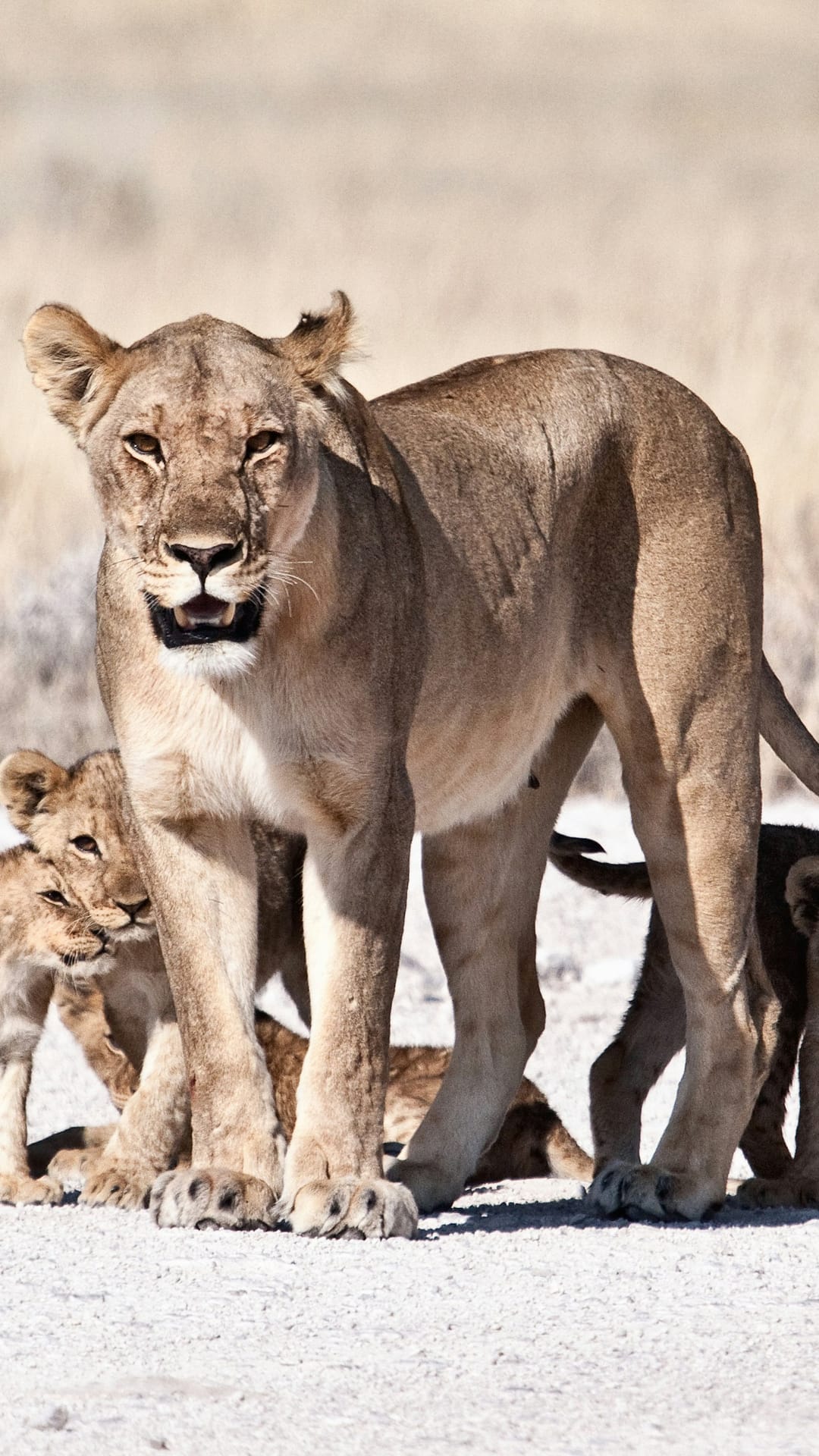
The Lioness Standard: What the Most Effective Leader in the Animal Kingdom Can Teach Us
She is not the largest animal in the savanna. She is not the loudest. She does not have the mane that fills the frame of every wildlife documentary, the roar that carries five miles across the open plain, the iconic profile that has appeared on flags and crests and corporate logos for three thousand years.
That is the male lion. He is impressive. He is also, functionally, a secondary character in the actual operation of the pride.
The lioness is the one who feeds it.
Who Actually Runs the Pride
The popular image of lion society is male-dominated — the king of the jungle, the apex predator, the singular dominant figure whose authority structures everything below him.
The reality is considerably more interesting.
A lion pride is, in practice, run by its females. The core of any pride is a group of related lionesses — mothers, daughters, sisters, cousins — who have lived together, hunted together, and raised cubs together across years and sometimes decades. They establish the territory. They conduct the hunts that sustain the group. They make the collective decisions about when to move, when to defend, when to retreat. They raise not only their own cubs but often each other's, in a cooperative childcare arrangement that has no parallel among the other big cats.
The male lions — impressive, territorial, essential for protection against rival males — come and go. The pride's female core is its continuity.
She is standing in this photograph with four cubs clustered around her legs, looking directly into the camera with an expression that contains no performance. She is not posing. She is assessing. She is, in this moment, doing exactly what she does every moment: determining what the situation requires and preparing to respond to it.

Lead From the Front
The lioness hunts at the front.
This is not metaphor. In cooperative hunts — where multiple lionesses coordinate to bring down prey significantly larger than any individual could manage alone — the most experienced hunters position themselves closest to the prey, in the most dangerous positions, where the risk of injury is highest and the margin for error is smallest.
Leadership, in lion society, is not a position of safety. It is a position of exposure. The most capable go first, take the most risk, absorb the most consequence. The less experienced learn by watching and by gradually taking on more of the burden as their skills develop.
The contrast with many human organizational structures — where leadership tends to insulate itself from the front-line risk while directing those with less power toward it — is worth sitting with.
The lioness doesn't send others into the difficult position. She occupies it.
Collective Over Individual
A single lioness can bring down prey up to twice her size. A group of lionesses can bring down prey ten times her size.
The cooperative hunting of lions is one of the more sophisticated examples of coordinated group action in the animal kingdom — involving approach angles, timing, role specialization, and an adaptive responsiveness to how the prey is behaving that requires each individual to be aware of what the others are doing while executing her own role.
There is no verbal communication during the hunt. There is no designated coordinator calling plays. There is something more fundamental: deep mutual knowledge, built over years of shared experience, that allows each individual to anticipate what the others will do and calibrate her own actions accordingly.
This is what genuine team cohesion looks like — not the product of a team-building exercise or a shared values document, but of enough shared difficulty, over enough time, that the group has developed a collective intelligence that exceeds the sum of its individual parts.
The human organizations that function this way — that have built the kind of trust and mutual knowledge that allows coordinated action without constant explicit communication — are rare, and they are recognizable by the quality of what they produce.

Protect What Matters
Four cubs. Around her legs. Looking at a world they don't yet know how to read.
The lioness's relationship to her cubs is not sentimental in the human sense. It is practical, complete, and absolute. She will hunt to feed them. She will fight — against hyenas, against rival lions, against threats that outweigh her significantly — to protect them. She will teach them, through the patient repetition of demonstrated behavior, everything they will need to survive without her.
And she will do all of this while continuing to fulfill her role in the pride — hunting, maintaining territory, participating in the collective functions that keep the group viable.
The leadership lesson here is not about sacrifice in the abstract. It is about the integration of care and competence — the understanding that protecting and developing the next generation is not separate from the work of leading, but continuous with it. That the most important thing a leader builds is not the quarterly result but the capability of the people coming after her.
Patience as Strategy
The lioness spends most of her time waiting.
This is the part that doesn't photograph well. The hours of stillness before the hunt — reading the herd, reading the wind, reading the terrain, waiting for the conditions that make success more likely than failure. The patience is not passive. It is an active process of information gathering and preparation, conducted with a discipline that the eventual explosive action makes easy to overlook.
Premature action, in a hunt, costs more than patience does. A poorly timed approach that alerts the prey means hours of reset, of repositioning, of waiting for another opportunity. The experienced hunter knows that the moment to act is specific — and that acting before it arrives is more costly than waiting for it.
This principle applies with uncomfortable directness to most of the situations in which human leaders act too early, driven by the pressure to be seen doing something rather than the discipline of waiting for the moment when doing something will actually work.
The savanna does not reward visible effort. It rewards results. And results, for the lioness, come from the patience to wait for the right moment and the decisiveness to commit fully when it arrives.

The Look
She is looking directly at the camera in this photograph.
Not with aggression. Not with fear. With the complete, unhurried attention of an apex predator who has assessed the situation and determined that the threat level is manageable. Her cubs are around her. Her posture is alert but not tense. She is present in the way that only animals — and very occasionally people — are fully present: without the internal commentary, without the performance of reaction, without anything except the actual situation and the capacity to respond to it.
That quality of presence — the ability to be where you are, fully, with the information that's actually available rather than the information you wish you had — is perhaps the most fundamental leadership quality the lioness demonstrates.
The cubs will grow into it. The pride depends on it. And the photograph, if you look at it long enough, offers it back to you as a standard.
Not the loudest. Not the largest. The most effective.
The lioness standard.
The African lion is currently classified as Vulnerable on the IUCN Red List. Lion populations have declined by approximately 43% over the past 21 years. Conservation organizations working on lion protection include Panthera, the Lion Recovery Fund, and the African Wildlife Foundation.
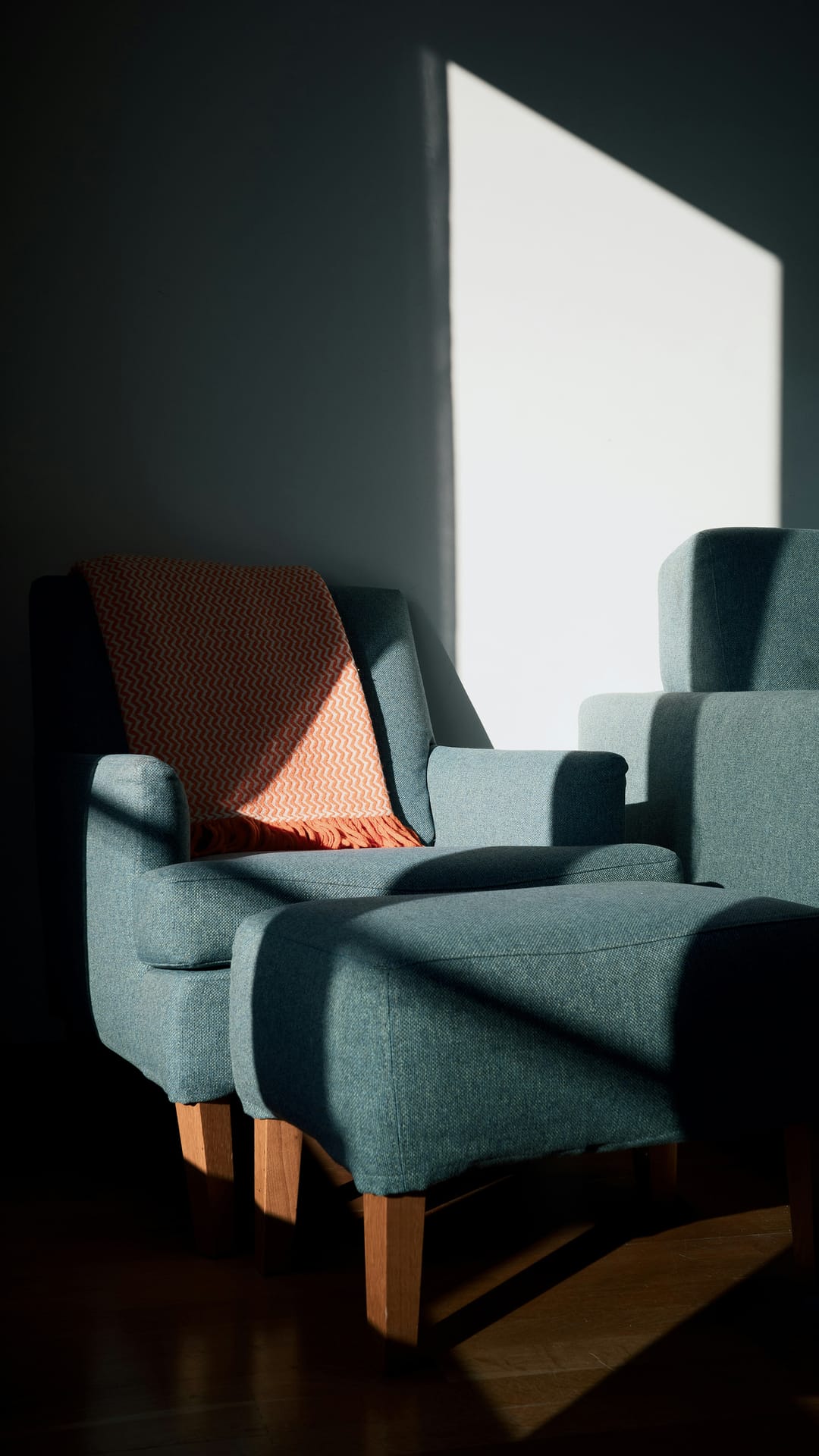
The Chair in the Light: Why the Best Interiors Are Designed Around Stillness
There is a particular kind of room that stops you at the doorway.
Not because it's grand. Not because it's expensive. But because something in it is arranged so precisely — so honestly — that walking in feels like an interruption. Like the room was already complete before you arrived.
The secret, more often than not, is a single chair placed in natural light.
Designing for the Pause
Interior design has spent the better part of two decades chasing the new. New materials, new palettes, new silhouettes imported from Milanese showrooms and Copenhagen studios. And there is value in that — the field moves, evolves, responds to culture.
But the interiors that endure, the ones that get photographed ten years after they were completed and still feel current, tend to share a quality that has nothing to do with trend cycles. They are designed around moments of stillness. Around the idea that a room should offer its occupant somewhere to simply be.
"The best brief I ever received was three words," says London-based interior designer Celia Marsh. "'Make it quiet.' Not minimalist, not sparse — just quiet. That distinction changed how I approach every project."
Light as a Material
No element shapes a room more completely than natural light, and no designer worth their fee ignores it.
The angle of afternoon sun through a west-facing window. The way a deep window reveal casts a hard-edged shadow across a textured wall. The quality of light in January versus June — softer, lower, longer — and how a room should ideally respond to both.
The best designers treat light as a material in its own right. They position seating to catch it at its most oblique, when shadows are longest and the geometry of a room becomes most legible. They choose upholstery colors that shift under changing light — a fabric that reads grey-blue at noon and nearly green by late afternoon.
"You're not decorating a room," Marsh says. "You're choreographing an experience that changes hour by hour. A chair that looks right at midday might look completely wrong at four o'clock. You have to know your light."
The Armchair as Anchor
Of all the objects that furnish a room, the armchair carries the most psychological weight.
It is, by design, a singular seat. It does not invite company the way a sofa does. It implies intention — someone chose to sit here, alone, with a book or a thought or nothing at all. Placed correctly, an armchair doesn't just occupy a corner; it defines it. It tells you what that corner is for.
The classic wingback form — deep seat, high back, generous arms — persists because it works. It creates a microenvironment within a room: a contained, sheltered space that feels private even in an open plan. The high back cuts visual noise. The arms provide boundary. The body settles in and the room, for a moment, gets smaller in the best possible way.
What you drape over the back matters too. A throw — especially one in a contrasting color, something warm against a cool upholstery — softens the formality of the form. It signals that the chair is used, loved, lived in. That this is not a showroom but a home.

The Palette of Restraint
The rooms that photograph most beautifully are rarely the most colorful ones.
There's a particular palette that recurs in the interior work that endures: cool neutrals — greys, slate blues, warm whites — punctuated by a single accent of warmth. Terracotta. Burnt orange. Ochre. One color that holds heat while everything around it stays composed.
It's a palette borrowed, consciously or not, from the natural world. Stone and shadow and a single point of fire. It works because it mirrors something the eye already knows — the way late light falls warm against a cool wall, the way an ember glows against ash.
The discipline is in the restraint. One warm accent, used decisively, does more than five competing ones. The eye needs somewhere to land.

What the Room Is Really For
There is a question that good interior designers ask early and often, and that clients sometimes struggle to answer: what do you actually want to feel in this room?
Not what do you want it to look like. What do you want it to feel like.
Because the two are not the same, and the confusion between them is responsible for most interiors that look right in photographs and feel wrong to live in. A room can be visually perfect and emotionally inert. It can win awards and fail its occupants.
The rooms that succeed — that become the ones you return to, that you describe to people when you're trying to explain why a house felt like a home — are the ones designed around an honest answer to that question.
Most of the time, when people answer honestly, the answer is some version of the same thing.
I want to feel like I can stop.
This article is part of our ongoing series on design, space, and the way we inhabit the world.
96 Celsius: The Coffee Shop That Made One Number Its Entire Philosophy
The number is on everything.
The window. The cups. The kraft paper bags that hold the house blend. Even the small chalkboard above the brew bar, where the daily filter offering is written in the same hand every morning, carries it in the corner — small, quiet, almost a signature.
96°C.
Ask the owner what it means and he'll tell you it's the temperature at which water extracts coffee most efficiently without introducing bitterness. Ask him why he made it the name of his shop and the answer takes a little longer.
"It's a reminder," says James Okafor, wiping down the brew bar with the focused attention of someone for whom the space between customers is not downtime but maintenance. "Of the margin. Everything in coffee happens in the details — the grind, the ratio, the pour rate, the temperature. You go two degrees over and you taste it. Two degrees under and you taste that too. The number is there to remind me, and everyone who works here, that the details are the whole thing."
The Origin
James Okafor opened 96 Celsius four years ago in a narrow shopfront that had previously been, in sequence, a tailor, a print shop, and a storage unit for a neighboring restaurant.
He spent three months stripping it back — removing the suspended ceiling to expose the original beams, refinishing the concrete floor, building the brew bar from reclaimed timber with a local carpenter who became, inevitably, a regular. The result is a room that feels like it has been there longer than it has: unhurried, considered, the kind of space that makes you want to slow down before you've ordered anything.
Okafor had spent eight years working in coffee before opening his own place — as a barista in two cities, as a trainer for a specialty roaster, as the kind of obsessive who takes a refractometer on holiday and thinks this is normal.
"I knew what I wanted to build," he says. "I just needed the right room."

The Coffee
96 Celsius does not have a menu in the conventional sense.
There is an espresso. There is a filter — one, changed daily based on what Okafor is currently most interested in. There is milk, steamed to order, sourced from a single dairy forty minutes from the city whose output Okafor tastes every week and will, without apology, reject if it isn't right.
That's it.
"People come in and ask where the cold brew is, where the flavored lattes are," he says, not unkindly. "I tell them we don't do those things. Most of them stay anyway. Some of them don't. That's fine."
The espresso changes seasonally — a rotating single origin rather than a fixed house blend, chosen because Okafor finds blends less interesting than watching a single origin evolve as the harvest ages. The current offering is a washed Kenyan, bright and complex, that he has been dialing in for three weeks and is finally, he says, where he wants it.
The filter changes daily because Okafor orders small quantities from roasters he admires — never enough to commit to a permanent offering, always enough to keep the bar interesting. The chalkboard above the bar carries the name, the origin, the process, and the brew temperature. Nothing else.
"If you want to know more, ask," he says. "I'll talk about it as long as you want."
The Moka Pot
On the shelf behind the bar, between the grinder and the water tower, sits a moka pot.
It is not decorative. It is the original one Okafor used when he first started getting serious about coffee — a basic aluminum stovetop model, dented slightly on one side from a move, the handle discolored from years of heat. He has never replaced it.
"That's where it started for me," he says. "My grandmother had one. Every morning, same ritual — fill it, put it on the gas, wait for it to come up. There's something about that sound, the gurgle at the end when the coffee comes through, that I've never gotten tired of."
The moka pot is, in some sense, the philosophical ancestor of 96 Celsius — a piece of equipment that demands attention, rewards consistency, and produces something completely different depending on the care you bring to it. Too much heat and it's bitter. Too little and it's flat. The margin is narrow. The details are everything.
The number made itself, in that way.
The Regulars
By 8am on a Tuesday, seven of the twelve seats are occupied by people who were here yesterday and will be here tomorrow.
There is the architect who arrives at 7:05 every morning, takes the same stool at the end of the bar, and drinks his espresso standing before sitting down to work. The two women who have been meeting here every Wednesday for three years — Okafor doesn't know what they talk about and has never asked. The delivery driver who stops in mid-route, always orders the filter, always leaves a generous tip, never stays more than four minutes.
"This is the thing I didn't fully understand when I was planning the business," Okafor says, watching the room with the quiet satisfaction of someone whose bet came in. "You're not just making coffee. You're making a place. And a place, if you get it right, makes its own people."
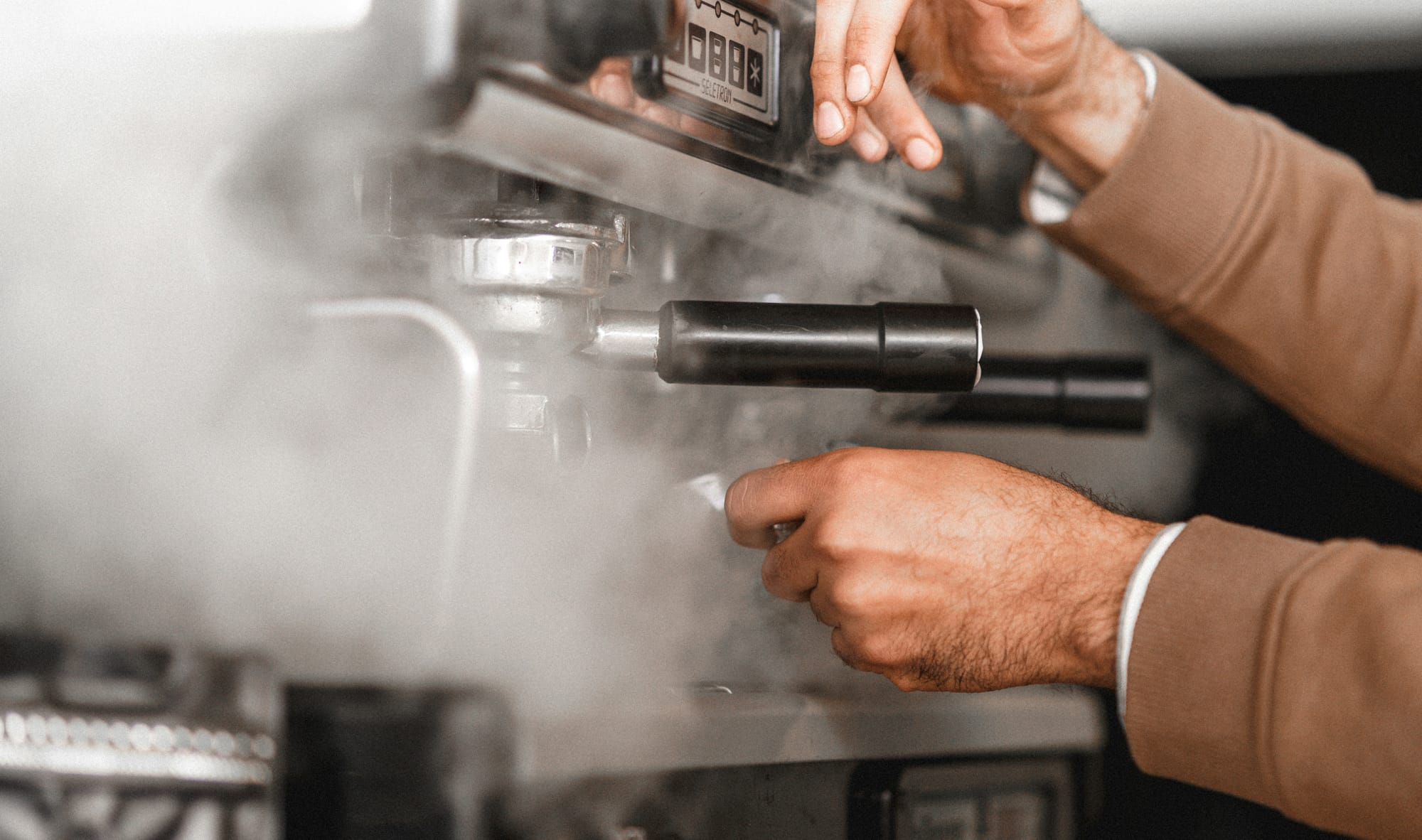
The Temperature
96 degrees. Not 94. Not 98.
The margin is two degrees in either direction, and within that margin, everything that makes coffee worth drinking either happens correctly or doesn't.
James Okafor built a business around that margin — around the conviction that the details are not supporting characters in the story of a good cup of coffee. They are the story. The temperature of the water, the freshness of the grind, the quality of the milk, the cleanliness of the equipment, the attention of the person behind the bar.
Remove any one of them and you taste the difference.
Keep all of them and you get something worth the detour — worth the line on a Tuesday morning, worth the slightly inconvenient location, worth the menu that doesn't have what you usually order.
Worth coming back to.
96 Celsius is open Monday through Saturday, 7am to 3pm. Espresso and daily filter only. No reservations, no app, no WiFi password on the wall.
"If you need the WiFi," says the small card on each table, "you might be in the wrong place."
The Light Through the Blinds: What Getting Older Actually Teaches You
There is a particular quality to the face of someone who has lived long enough to stop pretending.
Not bitter. Not resigned. Something quieter and harder to name — a stillness that comes from having been through enough that the performance of certainty no longer seems worth the effort. The face in the photograph has it. The flat cap, the coat, the striped light falling across him at an angle that makes the shadows as present as the man himself.
He is not looking at you. He is looking at something further away. Something you can't see yet.
That, more than anything, is what age gives you: a longer view.
The Things Youth Cannot Buy
There is a version of wisdom that our culture pretends can be shortcut.
Read the right books. Find the right mentor. Optimize your habits, curate your influences, compress the learning curve. The self-improvement industry is built, in large part, on the promise that the lessons of experience can be acquired without the experience itself.
Some of them can. Knowledge transfers. Skills transfer. Frameworks, strategies, and mental models can be borrowed from people who developed them the hard way and applied by people who didn't.
But the deepest things that age teaches — the ones written into the face of the man in the photograph — don't transfer that way. They have to be lived. They arrive not through reading or listening but through the accumulated weight of time, loss, error, and the slow, humbling process of finding out which of your beliefs about yourself and the world were true.
What the Years Actually Deliver
The first thing age teaches is proportion.
When you are young, everything is urgent. Every setback is a crisis. Every rejection is definitive. Every opportunity missed feels like the last one. The emotional weather of youth is intense precisely because there is no long track record to refer to — no accumulated evidence that this too, like every other thing that felt catastrophic, will eventually become just another thing that happened.
Age provides that evidence. Not as consolation, but as data. The person who has lived through enough hard seasons knows, in their bones in a way that cannot be fully communicated to someone who hasn't, that the current difficulty is not the final word. That the view changes. That what looks like an ending from inside it frequently turns out to be something else entirely from further down the road.
This is not optimism. It is perspective. There is a difference.
The second thing age teaches is selectivity.
Time, experienced as finite rather than theoretical, clarifies priorities with a ruthlessness that no productivity system can replicate. The older people I have spoken to — the ones who seem most at peace with where they are — share a quality of having shed things. Not dramatically, not all at once, but steadily: obligations taken on out of obligation, relationships maintained out of habit, ambitions inherited from other people's definitions of success.
What remains, after the shedding, is the actual list. The things that genuinely matter to this specific person, in this specific life. It is almost always shorter than the list they were working from at thirty.
The third thing age teaches is the value of ordinary days.
The young tend to orient toward the exceptional — the milestone, the achievement, the peak experience. Age shifts this orientation, gradually and then decisively, toward the ordinary. The morning coffee. The familiar walk. The conversation with someone you have known long enough that silence between you is comfortable rather than awkward.
This is not a settling for less. It is a recognition of what the extraordinary moments are actually made of — not the events themselves, but the accumulation of ordinary time that gives them their weight and meaning. The dinner that mattered because of the years of dinners before it. The view that moved you because you have been looking at views long enough to know what makes one worth stopping for.
The Shadows on the Wall
The striped light in the photograph falls across the man in a pattern that looks almost like bars — but softer. More like the light through venetian blinds on a late afternoon, the kind of light that suggests a room where time moves differently than it does outside.
He has earned that light. The shadows it casts are part of the portrait, not subtracted from it. The lines on his face are part of the portrait. The heaviness of his posture — not defeated, just settled, the posture of someone who has stopped standing up straight for other people's benefit — is part of the portrait.
Age is not the absence of youth. It is the presence of everything that came after.
What the Longer View Shows
Here is what the people at the far end of the road tend to say, when asked what they know now that they wish they had known earlier.
That the things they worried about most were rarely the things that mattered most. That the time spent managing other people's opinions of them was, in retrospect, the least well-spent time of their lives. That the relationships they invested in — really invested in, with attention and presence and the willingness to be known — returned more than anything else they did. That the body, ignored for decades, eventually presents a bill that cannot be deferred. That the work they are proudest of is almost never the work that was most celebrated at the time.
And, almost universally: that it went faster than they expected. That the decades between thirty and seventy feel, from the inside, like a long afternoon. That the urgency of youth — the sense of endless time to do the things you mean to do — was the most costly illusion of all.
The Gift Nobody Wants Until They Have It
Age is not a destination most people rush toward.
The culture we live in treats it as a problem to be managed — delayed, disguised, optimized away. The anti-aging industry is one of the largest on Earth. The premium placed on youth, in almost every domain of public life, is so pervasive that it has become background noise.
But the man in the photograph is not managing anything. He is simply present in his age the way the light is present in the room — unhurried, indifferent to whether it is admired, falling where it falls.
There is something in that worth learning before you have lived long enough to learn it naturally.
The longer view is available, in fragments, right now. The people who have it are often sitting in rooms with afternoon light falling across them, looking at something further away than you can currently see.
Go talk to them. While there is still time.
The most valuable conversations of your life may be with the oldest people you know. Ask them what they would do differently. Then ask them what they wouldn't change.
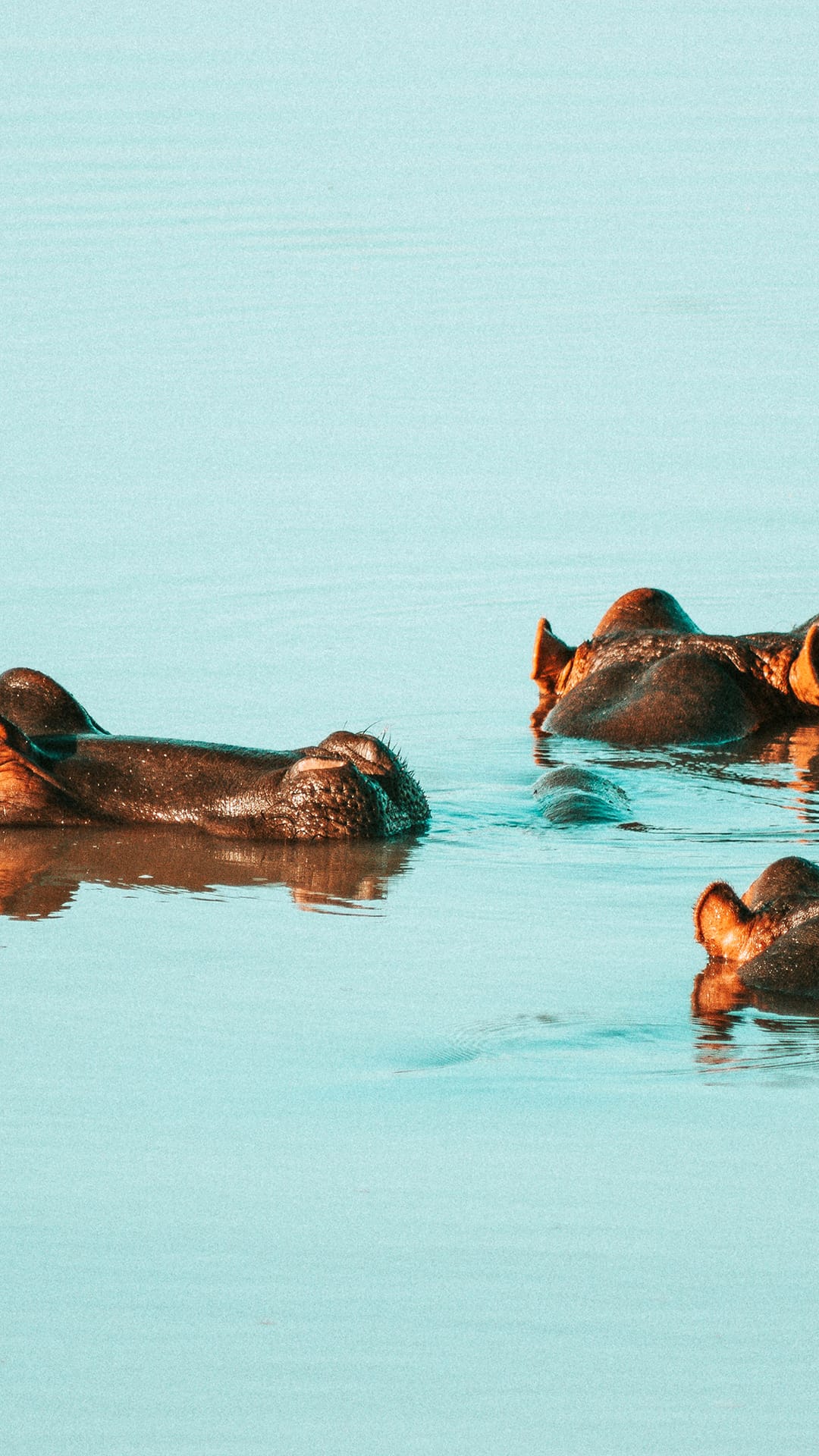
More Than a River Fixture: The Remarkable, Misunderstood Life of the Hippopotamus
From a distance, they look like rocks.
Four dark shapes half-submerged in the turquoise shallows, barely moving, eyes and ears just clearing the waterline. Easy to miss. Easy to dismiss. The kind of animal that gets overshadowed in the safari highlight reel by the more photogenic drama of lions and leopards.
Get closer — carefully, from a boat, with a guide who knows the river — and the picture changes entirely.
The hippo is watching you. It has been watching you since before you noticed it. And the calm, heavy stillness of the animal at rest conceals something that every experienced guide in Africa will tell you with the same quiet emphasis: the hippopotamus is one of the most dangerous animals on the continent, and one of the least understood.
The Basics, Reconsidered
The common hippopotamus — Hippopotamus amphibius — is the third largest land mammal on Earth, after the elephant and the white rhinoceros. An adult male can weigh over three thousand kilograms. They can run at speeds of up to thirty kilometers per hour on land, faster than most humans, for short distances. Their canine teeth can reach fifty centimeters in length.
They are also, despite their barrel-shaped bodies and stubby legs, surprisingly graceful in water — not swimmers exactly, but expert walkers along river and lake beds, capable of holding their breath for up to five minutes, their buoyancy allowing them to move with a lightness that their mass on land never suggests.
They are not, as was once commonly believed, related to pigs. Their closest living relatives are, improbably, cetaceans — whales and dolphins. The evolutionary split happened approximately 55 million years ago, which means that the hippo's family tree connects it more closely to a humpback whale than to any other land mammal.
This is the kind of fact that, once you know it, makes you look at the animal in the water differently.
A Day in the Life
Hippos are nocturnal grazers — a fact that surprises many visitors who see them motionless in the water all day and assume they are doing nothing. They are not doing nothing. They are thermoregulating.
Hippo skin, for all its thickness, is highly sensitive to the sun. They have no sweat glands, but they secrete a reddish, oily substance — sometimes called "blood sweat," though it is neither blood nor sweat — that functions as both a natural sunscreen and an antimicrobial agent. It is one of the more extraordinary biological adaptations in the mammal world, and it gives sunbathing hippos their characteristic pink-tinged sheen.
During the day, hippos rest in the water or on the banks, conserving energy and staying cool. As darkness falls, they leave the water and travel — sometimes ten to fifteen kilometers — to their grazing grounds, where they consume up to forty kilograms of grass in a single night. By dawn, they are back in the water.
This rhythm has been essentially unchanged for millions of years. The hippo is, in this sense, one of the most conservatively successful animals on Earth — a design so effective that evolution has had little reason to alter it.
The Social Structure
A group of hippos — called a bloat, a pod, or a school depending on the source — is a more complex social unit than it appears from the bank.
Pods are typically led by a dominant male who controls a stretch of river or lake shore and the females within it. He defends his territory aggressively, marking boundaries with a behavior called dung showering — scattering excrement with a rapidly spinning tail — and engaging rival males in confrontations that can be severe and occasionally fatal.
Female hippos, by contrast, form cooperative social bonds within the pod. Calves are born in the water and are closely guarded, with females sometimes forming protective circles around young animals in the presence of threats. There are documented cases of female hippos defending calves that are not their own — a degree of collective care that suggests a social intelligence more sophisticated than the animal's reputation allows for.
The sounds that hippos produce — a combination of grunts, wheezes, and the resonant, territorial call that carries for kilometers across open water — are also produced partially underwater, making hippos one of the few mammals capable of vocalizing in both air and water simultaneously.
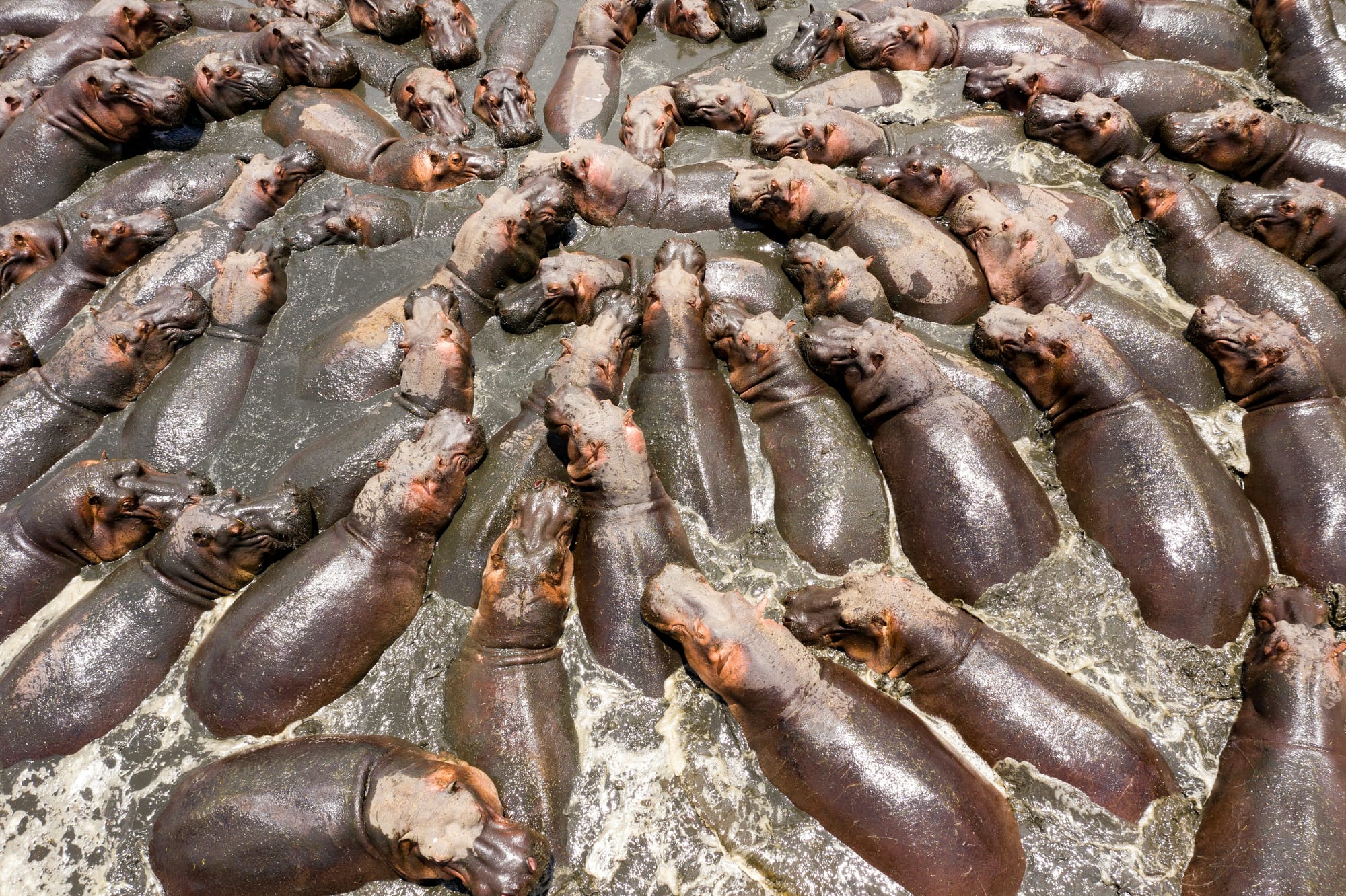
The Conservation Reality
The hippopotamus is currently classified as Vulnerable on the IUCN Red List, with an estimated wild population of between 115,000 and 130,000 individuals — a number that sounds substantial until you consider that it represents a decline of between 7 and 20 percent over the last decade alone.
The threats are familiar: habitat loss as river systems are dammed, diverted, and degraded by agricultural and industrial use; poaching for ivory — hippo canines have historically been a significant source of ivory trade — and for bushmeat; and the growing competition between expanding human populations and animals that require large territories of undisturbed river and floodplain.
Climate change adds another layer of pressure, reducing water levels and disrupting the seasonal flood cycles that hippos — and the entire river ecosystems they help maintain — depend on.
Because they do maintain those ecosystems. The hippo's role as what ecologists call an ecosystem engineer is increasingly understood and increasingly recognized as critical. Their grazing keeps riverbanks clear. Their dung fertilizes aquatic ecosystems, feeding the algae and fish that form the base of the food chain. The paths they cut through riverine vegetation create channels that other animals use.
Remove the hippos from a river system and the effects cascade through every level of the ecology.
What the Water Holds
Back on the river, the four hippos are still there.
One has opened an eye. Another has shifted slightly, creating a small ripple that moves outward and flattens in the turquoise water. A third has its mouth slightly open — not a yawn exactly, but the beginning of one, a slow display of teeth that is simultaneously relaxed and quietly authoritative.
They are not doing nothing. They are being, completely and efficiently, exactly what they are — ancient, adapted, intricately connected to the river and the ecosystem around them in ways that took millions of years to develop and could be undone in a generation.
The least we can do is look. And understand what we're looking at.
The common hippopotamus is listed as Vulnerable on the IUCN Red List. Conservation organizations working on hippo habitat protection include the IUCN SSC Hippo Specialist Group and the African Wildlife Foundation.
Four Wheels and a Board: Why Skateboarding Was Never Just a Sport
The photograph doesn't show a face.
Just feet. Corduroy pants, amber suede shoes, a black deck angled slightly off the ground on granite pavement. A shadow stretching out beside it. Somewhere in the frame, a trick is either beginning or ending — it's impossible to tell which, and that ambiguity is, somehow, exactly right.
Skateboarding has always resisted the clean narrative. The beginning and the end are less interesting than what happens in between. And what happens in between has never fit neatly into any category the mainstream keeps trying to build for it.
The Category Problem
For fifty years, various institutions have been trying to decide what skateboarding is.
A sport? It was excluded from that category for decades — too individual, too unstructured, too resistant to the scoring systems and competitive frameworks that organized sport requires. Then it was included, controversially, in the Olympic Games, and a new argument began about whether inclusion had changed it or merely revealed how poorly the category fit.
A subculture? For a generation, yes — defined by its outsider status, its DIY infrastructure, its hostility to the mainstream that had no use for kids grinding ledges in parking lots. Then the mainstream decided it had very specific use for that aesthetic, and skateboarding became one of the most commercially lucrative visual languages in the history of youth culture.
An art form? The skaters who pushed the boundaries of what was technically possible — who approached a staircase or a handrail or an empty swimming pool as a creative problem to be solved rather than an obstacle to be avoided — have always understood it this way, even when nobody else did.
The honest answer is that skateboarding is all of these things and none of them fully, and the attempt to resolve that ambiguity by assigning it a single category misses what makes it interesting.
"You start seeing everything differently," a skater once described it. "A set of stairs that everyone walks past without seeing becomes something you think about for a week. You're trying to figure out what it can do. What you can do with it."
What It Actually Is
Skateboarding is, at its core, a practice of creative problem-solving in public space.
The city — its ledges, its stairs, its banks and rails and plazas and parking structures — is not incidental to skateboarding. It is the material. Every urban surface is a potential line, a potential obstacle, a potential trick. The skater moving through a city is reading it differently than everyone else — not for the most efficient path from A to B, but for the creative possibilities embedded in its architecture.
This is not a trivial reframing. It represents a fundamentally different relationship to the built environment — one that reclaims public space as a site of play and creativity rather than pure transit. The city as skatepark is not a metaphor. It is a perceptual shift that changes how the person making it moves through the world.
The Failure Education
No sport — and for the sake of argument, let's use the word — teaches failure more consistently or more immediately than skateboarding.
You try the trick. You fall. You try it again. You fall differently. You try it again, adjust something small — the foot placement, the timing, the weight distribution — and you fall again. This process repeats, potentially for hours, potentially across multiple sessions, potentially for weeks, until the trick either happens or it doesn't.
There is no coach calling the drill. There is no teammate to cover for the failure. There is no opponent to blame. There is just the trick, and the gap between being able to do it and not being able to do it, and the decision about whether to keep trying.
The psychological resilience this builds is not incidental. It is the core pedagogy of the activity. Every skater, without exception, has spent more hours failing than succeeding. The relationship with failure that this produces — the understanding that failure is not a verdict but a step, that persistence is the primary variable, that the gap between can't and can is filled with repetition — is one of the more useful things a person can carry into any other domain of life.
The Community That Built Itself
Before skateparks were funded by municipalities, before brands decided that skate aesthetics moved product, before the Olympics made it legible to mainstream sports culture — skateboarding built its own infrastructure.
The spots were found, not made. The footage was shot on consumer cameras by friends. The magazines were produced by skaters for skaters. The culture was transmitted through VHS tapes passed between kids who had no other way to see what was being done elsewhere. The community policed its own standards — not through formal institutions but through the informal, occasionally brutal, highly effective social mechanisms of a group of people who shared a practice and took it seriously.
This self-sufficiency — the capacity to build what you need when the mainstream won't provide it — is part of what has made skateboarding so durable across decades that have seen dozens of youth cultures rise and dissolve. It doesn't require permission. It doesn't require approval. It requires a board, a surface, and the willingness to keep trying.
What the Olympification Changed
The inclusion of skateboarding in the Tokyo 2020 Olympics — and its continuation in Paris 2024 and beyond — has produced a genuine and unresolved tension in the culture.
On one side: the argument that Olympic inclusion legitimizes the activity, expands its reach, and provides pathways for young skaters in countries where the infrastructure to support the sport would otherwise not exist. The athletes who competed — many of them teenagers — were extraordinary, and their performances introduced the activity to an audience it would never otherwise have reached.
On the other side: the argument that the Olympic format — scored runs, judged by criteria developed for an activity that has historically resisted external judgment, broadcast in the format of a conventional sports competition — fundamentally misrepresents what skateboarding is. That the version of skateboarding that fits into an Olympic broadcast slot is a version that has been trimmed to fit, and that the trimming loses something essential.
Both arguments are correct. That tension is probably permanent, and that's fine. Skateboarding has always contained contradictions. It is used to them.
The Feet on the Board
Back to the photograph.
Feet on a board. A shadow on granite. A trick in progress or complete — the image doesn't resolve it, and maybe that's honest.
Skateboarding has never been fully resolvable. It has been, since the beginning, a practice that exists in the gap between categories — not quite sport, not quite art, not quite subculture, not quite mainstream. It has been uncomfortable in every box anyone has tried to put it in, and it has outlasted every attempt to define it from the outside.
The feet keep moving. The board keeps rolling. The city keeps offering surfaces to read and problems to solve.
That's enough. That's always been enough.
Opinions expressed in this article are those of the author and do not represent the editorial position of this publication.
Underwater: What Swimming at 5am Taught Me About Building a Business
At 5:15 every morning, before the city wakes up, Daniel Reeves is already underwater.
No phone. No meetings. No inbox. Just the tile lines at the bottom of the pool, the sound of his own breathing, and the particular silence that only exists beneath the surface — a silence so complete that the rest of the world, for forty-five minutes, simply stops.
He has been doing this for eleven years. Through two company launches, one near-bankruptcy, a failed acquisition, and the kind of growth that turns a two-person operation into a fifty-person organization. Through the years when the pool was the only place where the weight of the business felt, briefly, manageable.
"The pool doesn't care what happened yesterday," he says, still damp, coffee in hand, in the kind of early morning quiet that serious people seem to prefer for conversations like this. "It just gives you the lane and asks you to move."
The Business of Resistance
Swimming, if you think about it, is a terrible metaphor for easy success.
Water resists you constantly. Every stroke, every kick, every breath — taken at the wrong moment, in the wrong direction — costs you. The medium you're moving through is fundamentally indifferent to your effort. It will push back just as hard whether you're having a good day or a bad one, whether you slept well or didn't, whether you believe in yourself or not.
Reeves built his first company — a logistics software firm that now serves mid-market manufacturers across three continents — in conditions that felt, he says, exactly like that.
"The market doesn't care about your vision," he says. "It doesn't care about your deck or your passion or how many hours you're putting in. It just pushes back. And you either find a way through the resistance or you don't."
What swimming taught him, over hundreds of thousands of laps across eleven years, was that resistance is not the enemy. It is the medium. You don't get to the other end of the pool by eliminating the water. You get there by learning to move through it efficiently — to make yourself as clean as possible, to reduce drag, to find the line of least resistance within a fundamentally resistant environment.
"That reframe changed everything for me," he says. "I stopped trying to eliminate the difficulty and started asking: how do I move through this more efficiently?"
The Turn
Every swimmer knows the turn.
You're coming in fast, the wall approaching, and the question is always the same: do you hesitate, or do you commit? Hesitation in a flip turn costs you more than almost anything else in the race. The speed you carry into the wall is the speed that carries you off it. If you slow down before you get there, you lose both.
Reeves hit a wall of a different kind in year four of his first company. A major client pulled out. A key hire left. The runway, he recalls with the practiced calm of someone who has processed it thoroughly, was eleven weeks.
"I had two options," he says. "Pull back and try to conserve, or commit to the turn."
He committed. Restructured the team. Pivoted the core product. Had fourteen difficult conversations in two weeks. Went back to potential clients he'd written off six months earlier.
"The flip turn saved us," he says. "Not metaphorically — I literally thought about it in the pool one morning. You don't slow down going into the wall. You trust the technique and you push."
Eleven weeks later, they had two new contracts and a path forward.
Breathing
The hardest thing Reeves says he's learned — in the pool and in business — is when to breathe.
"New swimmers breathe too often," he says. "They're anxious about the air, so they turn to breathe more than they need to, and it breaks their rhythm, disrupts their stroke, costs them more than the breath is worth."
He pauses.
"New founders do the same thing. They're anxious, so they're constantly checking — the metrics, the competition, the investor sentiment, what somebody said on LinkedIn. They're turning to breathe when they should be in the stroke."
The discipline, as he learned it, is bilateral breathing — training yourself to breathe on both sides, at regular intervals, regardless of how anxious you feel about the air. It builds trust that the breath will be there when you need it. It frees you to focus on the stroke.
In business terms: build the systems, trust the data, check what needs checking at the intervals that make sense — and stop turning to breathe every thirty seconds.
"The air is there," he says. "Focus on moving."
What the Underwater Silence Is For
People sometimes ask Reeves why he doesn't use the pool time more productively. Listen to a podcast. Work through problems. Use it as thinking time.
He's tried. It doesn't work — and more importantly, he's come to understand that missing the point.
"The pool is where I go to not think," he says. "Or rather — to think the way the body thinks. To be in something physical and demanding and present. To exist somewhere that has nothing to do with any of it."
He believes, with the conviction of someone who has tested the alternative, that this is not wasted time. It is the source of everything else.
"The best decisions I've made — I didn't make them in a meeting or on a whiteboard. I made them in that quiet after a hard set, when everything else goes still. The pool gives me that. It gives me back to myself."
He finishes the coffee. In a few hours, the city will be fully awake and the day will begin in earnest — the calls, the decisions, the resistance.
But for forty-five minutes this morning, there was just the tile and the water and the lane.
Just a man, moving forward.
Daniel Reeves is the founder and CEO of Velotrack Logistics. He swims competitively in the masters division and has no plans to stop.
More Than Coffee: Inside Mores, the Neighborhood Café That Became a Community
On a quiet street corner in the kind of neighborhood that still has quiet street corners, Mores Coffee doesn't announce itself loudly.
No neon. No line out the door. Just a hand-lettered sign, warm light spilling through a wide front window, and the particular smell — roasted, rich, grounding — that hits you half a block before you arrive. Step inside and the noise of the city, whatever city it is, falls away. The shelves are full. The counter is unhurried. Someone behind the bar is focused on a cup with the kind of attention that makes you want to watch.
This is what a great neighborhood café looks like. This is Mores.
The Origin
Mores Coffee opened three years ago with no investors, no branding agency, and no grand launch event.
Its founder, Marcus Webb, had spent eight years working in specialty coffee — as a barista, a roaster, a trainer — before deciding that the kind of café he wanted to exist in his neighborhood didn't exist yet. So he built it.
"I wasn't trying to build a brand," he says, pulling a shot with the practiced ease of someone who has done it ten thousand times. "I was trying to build a room. A specific room, for specific people, that felt like it belonged here."
The name came from a conversation with his grandmother, who used the word — an old-fashioned term for the customs and values that hold a community together — to describe what she thought was missing from modern life. Webb wrote it on a napkin and never changed it.
"It felt right. Coffee is a ritual. Rituals are how communities hold themselves together. I wanted the name to mean something."
The Coffee
Mores sources its beans from three roasters — one domestic, two international — chosen for relationship as much as quality.
Webb visits origin when he can, and the menu reflects the seasons and the harvest. The espresso changes every six to eight weeks. The filter offerings rotate more frequently. There is always something on the bar that Webb is personally excited about, and he will tell you about it at length if you ask — and sometimes if you don't.
"I want people to taste the difference between a washed Ethiopian and a natural one," he says. "Not because they need to know, but because it's interesting. Coffee is interesting. It came from somewhere specific. Someone grew it. That story is worth knowing."
The milk program is equally considered. Three options, all sourced locally, chosen because they behave well under steam and because the farms behind them align with how Webb thinks food should be produced.
The result is a cup — whether espresso, flat white, or a carefully brewed V60 — that tastes like someone cared about it. Because someone did.
The Space
The interior of Mores was designed by Webb himself, on a budget that required creativity over expenditure.
The shelves along the back wall were salvaged from a closed bookshop two streets over. The counter was built by a local carpenter who became a regular customer. The lighting — warm, low, the kind that makes everyone look like they're in a good mood — was the one thing Webb splurged on, because he knew it would set the tone for everything else.
There are fourteen seats. Webb has been offered the space next door twice and declined both times.
"Bigger means different," he says. "I know what this place is. I don't want to find out what it becomes when it's twice the size."
The fourteen seats are almost always full. The turnover is unhurried — nobody is rushing you, and the WiFi password is written on the chalkboard, no questions asked. People come to work. People come to read. People come to sit across from someone they love and have the kind of conversation that requires a good table and no urgency.
The Regular
Ask Marcus Webb what he's most proud of and he doesn't mention the coffee awards on the shelf behind him, though there are several.
He mentions a woman named Diane, who started coming in three years ago, two weeks after Mores opened. She came every morning. She always ordered the same thing. She always sat at the same table by the window. She and Webb exchanged maybe fifty words in the first six months.
"Then one day she told me that coming here was the only part of her day that felt like hers," he says. "That it was the one place where nobody needed anything from her. She just got to sit and drink coffee and be a person."
He's quiet for a moment.
"That's what I was trying to build. That's the whole thing, right there."
What Small Means
Mores will not become a chain. Webb has been approached — twice, now — by people with money and expansion plans, and twice he has said no.
"There's a version of this that scales," he acknowledges. "I've thought about it. But the thing that makes Mores what it is — the sourcing relationships, the fact that I'm behind this counter most mornings, the way the regulars know each other — that doesn't scale. You can't franchise a feeling."
What he is interested in is longevity. In being the kind of place that exists in twenty years, that becomes part of the furniture of a neighborhood, that people describe to newcomers as something they need to know about.
"I want to be a landmark," he says. "Not famous. Just — here. Still here."
Finding Mores
Mores Coffee is open Tuesday through Sunday, 7am to 4pm. No reservations. No app. Just show up.
Some things are still that simple.
All Peoples, All Dreams: Why Space Cannot Belong to the Few
There is something quietly unsettling about an astronaut sitting alone in the dark.
Not in space — just in a chair. In a room with no walls visible, no context, no mission patch identifying which agency or corporation sent them there. Just a figure in a suit, helmet on, facing forward. Waiting, perhaps. Or simply existing in the particular stillness of someone who has looked at the vastness of space and come back changed.
The image asks a question that the space industry has been slow to answer honestly: who is all of this for?
The Dream Was Never Private Property
Humans have been looking up for as long as there have been humans.
Every culture, on every continent, developed its own cosmology — its own stories about what the stars meant, where they came from, what our relationship to them was. The Polynesian navigators who crossed the Pacific by reading the night sky. The astronomers of ancient Mesopotamia who mapped the movements of planets centuries before the telescope. The Aboriginal Australians whose astronomical knowledge is among the oldest and most sophisticated on Earth.
The dream of space is not a Western invention. It is not a Silicon Valley invention. It is not the property of any nation, any agency, any billionaire with a rocket company and a vision statement.
It belongs, in the most fundamental sense, to everyone who has ever looked up.
Which is everyone.
What Happened to That Dream
Somewhere between the universal human impulse to understand the cosmos and the current state of the space industry, something narrowed.
The first era of space exploration — competitive, costly, geopolitically charged as it was — at least carried a nominal commitment to humanity as a whole. The Apollo missions planted a flag, yes, but they also left a plaque: We came in peace for all mankind. The International Space Station, for all its political complications, was at least international in name and to some meaningful degree in practice.
The current era is different. The dominant narrative now is one of private enterprise — rockets owned by corporations, missions funded by billionaires, the vocabulary of space increasingly borrowed from venture capital. Disruption. Market opportunity. First-mover advantage.
These are not the words of a species reaching toward the stars together. They are the words of an industry extracting value from a frontier.
The Equity Problem Nobody Wants to Name
Here is the question that gets asked too rarely in the coverage of commercial space: who decides who goes?
Right now, the answer is money. A seat on a commercial orbital flight costs more than most people on Earth will earn in a lifetime. The astronaut corps of the major agencies is more diverse than it was fifty years ago — genuinely, meaningfully more diverse — but it remains a vanishingly small group selected by institutions that are themselves concentrated in a handful of wealthy nations.
The people most affected by the decisions made about space — about resource extraction, about orbital debris, about the long-term governance of beyond-Earth environments — have the least voice in making them. This is not a minor procedural concern. It is a structural problem with consequences that will compound over decades.
When we decide, implicitly or explicitly, that space belongs to those who can afford it, we are making a choice about what kind of future we are building. We are deciding that the oldest human dream is a premium product.
What "All Peoples" Actually Requires
Saying that space belongs to everyone is easy. Making it true is harder — but not impossible, and not without precedent.
The frameworks exist. The Outer Space Treaty of 1967 established that no nation can claim sovereignty over celestial bodies — that the Moon, Mars, and the spaces between them are the province of all humanity. That foundation is imperfect and increasingly strained by commercial pressures, but it is a foundation.
What it requires now is extension: to ensure that the governance of space reflects the diversity of the species it claims to represent. That the scientific knowledge generated by space exploration is shared openly, not locked behind proprietary agreements. That the nations and communities currently excluded from the conversation are brought into it — not as recipients of a dream someone else is having, but as participants in shaping what that dream becomes.
This is not naivety. It is the minimum condition for space exploration to mean what its most eloquent advocates claim it means.
The Figure in the Chair
The astronaut in the image is alone.
That is, perhaps, the honest picture of where we are: a human in the dark, suited up, capable of going somewhere extraordinary, but sitting still. Waiting. The technology exists. The will, in certain quarters, is enormous. What remains unresolved is the question of direction — not the orbital mechanics, but the moral ones.
Where are we going, and are we going together?
The dream of space is all peoples' dream. It always has been. The work of this generation is to build a space program — and eventually a space-faring civilization — that actually reflects that.
The chair in the dark doesn't have to stay empty.
But who sits in it matters.
Opinions expressed in this article are those of the author and do not represent the editorial position of this publication.
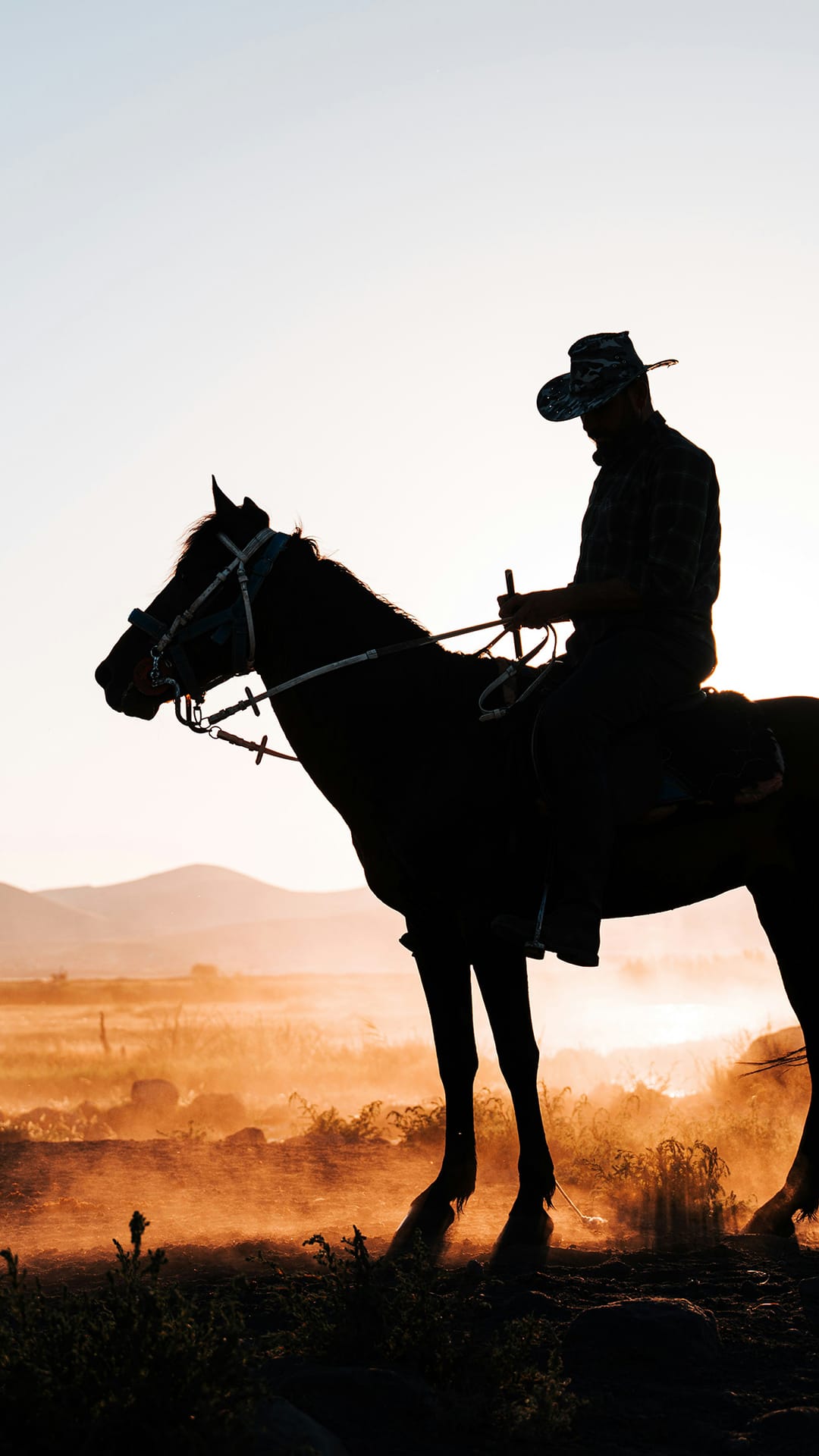
Dust and Gold: The Modern American West Road Trip You Need to Take Before Everyone Else Does
There is a moment, somewhere on a two-lane highway in the American West, when the last cell signal drops and the last podcast ends and the landscape takes over completely.
The sky is enormous. The road is straight for longer than seems reasonable. The dust from a dirt track off to the right hangs gold in the afternoon light, and somewhere in the middle distance a figure on horseback moves through it all at the pace that the West has always moved — unhurried, deliberate, belonging to a rhythm that has nothing to do with yours.
You slow down. Not because you have to. Because the landscape asks it of you.
This is what the American West road trip does to people. And it is, right now, one of the last great travel experiences that rewards showing up without too much of a plan.
Why Now
The American West has been a travel destination for generations, but something has shifted in the last few years.
The national parks — Zion, Bryce, Arches, the Grand Canyon — are increasingly managed experiences, with timed entry permits, crowded trails, and the particular exhaustion of a beautiful place that too many people are trying to experience simultaneously. They are still worth visiting. They are no longer the point.
The point, increasingly, is everything between them.
The two-lane state highways that connect small towns with populations under a thousand. The BLM land that stretches for miles without a fence or a sign. The roadside diners that have been serving the same breakfast since 1974. The ghost towns that are genuinely ghostly, not curated. The ranches that offer a night or a week in the kind of landscape that the Instagram version of the West can only approximate.
The travelers who have figured this out are keeping it relatively quiet. The window, as with all things worth experiencing before they become overrun, is open but not indefinitely.
The Route
There is no single correct American West road trip, which is part of what makes planning one so pleasurable.
What follows is not a definitive itinerary. It is a suggestion — a loose arc through terrain that rewards deviation, built around the principle that the best discoveries on a road trip are the ones that weren't on the map.
Start: Marfa, Texas
Marfa is the established entry point for a certain kind of West Texas experience — equal parts art world outpost and genuine high desert town, with a quality of light that painters and photographers have been chasing for decades. Spend two nights. Drive the Pinto Canyon Road south toward the border. Eat at the food trucks on the square. Wake up early and watch the sky turn colors over the Chinati Mountains.
Then head north. The real trip begins when you leave.
Through New Mexico
The drive north from Marfa into New Mexico passes through terrain that looks like it was designed for exactly this purpose — wide basin valleys, the Sacramento Mountains rising in the east, the occasional roadside shrine marking something you'll never know the full story of.
Alamogordo and the White Sands National Park are worth a stop — walk into the gypsum dunes at dusk when the light turns everything impossible colors and the temperature drops fast. Camp if you can. The night sky here is one of the darkest in the continental United States.
From there, north to Santa Fe — a city with the density of cultural experience that justifies two or three days — and then west into the high plateau country that most people drive through without stopping.
Stop.
The Colorado Plateau
The stretch of country that covers the Four Corners region — southeastern Utah, northeastern Arizona, southwestern Colorado, northwestern New Mexico — is arguably the most dramatic landscape in North America.
Canyon de Chelly. Monument Valley at dawn before the tour groups arrive. The Valley of the Gods, which has all the drama of Monument Valley and a fraction of the visitors. Canyonlands, which requires more effort to experience properly than most people are willing to give it, and rewards that effort accordingly.
This is the part of the trip where you stop checking the schedule. The roads demand attention. The landscape demands attention. The combination produces a kind of presence that is difficult to manufacture and impossible to buy.
North to Montana
The drive north from the Colorado Plateau through Utah and into Wyoming and eventually Montana is a week or two if you do it properly — which means stopping when something looks interesting, taking the unpaved road when it seems like it might lead somewhere, eating in towns where you're the only out-of-state plate in the parking lot.
The Bighorn Mountains in Wyoming. The Beartooth Highway, the most spectacular paved road in the country, open only in summer, crossing the Beartooth Plateau at nearly eleven thousand feet. The first sight of the Northern Rockies appearing on the horizon when you come north out of the basin country.
Montana is the destination, in the sense that the trip has one. But the truth is that every mile of it is the destination.
How to Do It Right
Take longer than you think you need. The temptation to cover ground is real and almost always wrong. The best experiences on a Western road trip are the ones that happen when you're not trying to get anywhere.
Get off the highway. The interstates are efficient and completely beside the point. The two-lane state and county roads are where the West actually lives.
Talk to people. The rancher at the gas station. The woman running the only diner for sixty miles. The retired park ranger at the campground. The West is full of people with stories, and they will tell them to anyone who isn't obviously in a hurry.
Bring more water than you think you need. This is not a metaphor.
Leave the itinerary loose. The best version of this trip is the one where you find the dirt road that leads to the canyon that nobody told you about. You can't plan for that. You can only leave room for it.
The Golden Hour
Every evening, somewhere on this trip, the light will do something extraordinary.
It happens fast — twenty minutes, maybe thirty, when the sun drops to the right angle and the dust in the air catches it and everything turns gold. The shadow of a horse and rider stretches across the ground. The mountains in the distance go purple. The sky above them stays pale and enormous.
You stop. You get out of the car. You stand in it.
This is the thing that no photograph — however good, however carefully composed — fully captures about the American West. The scale of it. The way it makes you feel simultaneously very small and very present. The particular quality of being somewhere that has been exactly this for longer than any human structure has stood.
Drive west. Find your golden hour.
It's out there. It's waiting.
Best driven between May and October. Summer temperatures in the desert Southwest can exceed 110°F — plan accordingly and carry extra water. Many of the best roads are unpaved; a high-clearance vehicle is recommended but not always required.